ReasonForOurHope

Friday, June 10, 2022

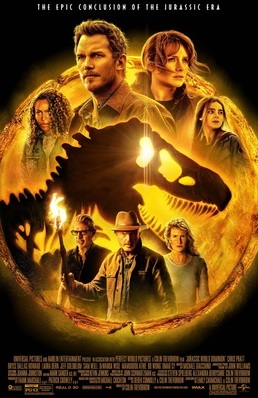
Film Flash: Jurassic World - Dominion


15 words or less film review (full review to follow soon)


Like two Jurassic movies for the price of one.  Both of them terrible.


Catholic Skywalker: Most- Read Film Review

 I have to admit that this one took me by surprise.  This review has over a thousand reads.  That may be small potatoes for most websites, but that is huge for this little blog.

My best guess as to why this one was so popular was because of Catholic parents.  As the content of children's movies becomes more and more questionable, I would imagine a number of Catholic parents would google the title of the movie and the "Catholic film review" to see if there was anything quesitonable.

Let me know if you think my review holds up:


Film Review: Moana


Sexuality/Nudity No Objection 
Violence Acceptable
Vulgarity No Objection
Anti-Catholic Philosophy No Objection

The biggest problem with Moana is that it feels like I've seen this movie before.

A common problem in the movie industry is returning to the well one too many times to try and repeat the formula for success.  You can see this especially in superhero origin films.  And it is hard to argue against the financial sense that this makes.  And the same is true of Disney Princess Movies.
And Moana is no exception.

The story takes place in the Pacific on the island of Motunui, a small tropical paradise.  But the chief's young daughter Moana (Auli'i Cravalho) longs for adventure in the great wide somewhere beyond the reefs of the island.  She finds reason to venture forth when something starts corrupting the island's resources.  It turns out that a demigod named Maui (Dwayne Johnson) stole the heart of a Te Fiti (a small stone with the power to give life) and unleashed a darkness that slowly began to corrupt the oceans and eventually touching Motunui.  Moana has been chosen by the ocean (portrayed here as a sentient being), to find Maui and return the heart of Te Fiti and save her people.

Visually, the movie is gorgeous.  Motunui in particular looks so beautiful that it is actually presents a problem: why would anyone ever want to leave?  We are meant to sympathize with Moana's wanderlust, but Motunui feels to comfortable for that.

The music is fairly good as well.  But Disney has set the bar incredibly high for their songs.  I am firmly convinced that one of the reasons The Princess and the Frog did not catch on was because early 20th Century Jazz is not a big crowd pleaser.  There is nothing to the level of "Let it Go" or "A Whole New World" in here.  But there are about 3 or so songs that have very pleasing melodies with very passionate swells.

And it is when compared to its other Disney predecessors, the movie feels like a bit of a retread.

Moana's relationship with her father Chief Tui (Temura Morrison) feels exactly like Ariel and Triton from The Little Mermaid.

Moana is constantly called to remember who she is and where she came from like Simba from The Lion King.

The anthropomorphized relationship with mother nature is incredibly reminiscent of Pocahontas.

The independent non-Princess mentality comes right out of PIXAR's Brave.

Maui has the same personality issues that were found in Hercules (and his tattoos are reminiscent of the Grecian singers from that film).

And there is a thematic connection which I will not spoil here regarding the main villain and Frozen.

Speaking of the villain, there is no strong personality like Urusla, Gaston, or Jafar to be found here.  Yes, when they visit the realm of monsters, they encounter gigantic crab named Tamatoa (Jemaine Clement) who shoots out several one-liners.  But the existential threat to the people never feels personal.

Another frustrating thing about the movie is that it never lays out its internal logic.  As mentioned before, the ocean is a sentient power that often acts supernaturally to aid Moana and Maui.  But there are times when our heroes need the ocean's help but receive none.  There is no explanation of why or under what circumstances the ocean will play a part in the narrative.  I kept thinking: "This movie would be over in minutes if the ocean kept helping them."  You may object and say that it is only a children's movie.  But even the simplest children's films should hold to some kind of internal logic and consistency.

Despite these complaints, I would not categorize Moana as a bad film.  There was nothing in it that I found offensive or bad.  Yes, it relies on pagan imagery and religious mythology, but those are acceptable modes of telling a legendary story.

And children will greatly enjoy it, especially the silly chicken HeiHei (Alan Tudyk).  And the adventure is wide in scope with dazzling vistas.

I just wish it didn't feel like I'd seen it all before.

3 and 1/2 out of 5 stars.

Wednesday, June 8, 2022

Trailer Time: Black Adam


Black Adam is one of the most fascinating characters in the DCU.

For most of his existence in comics, he was a stereotypical villain.  But in the pages of Justice Society, evolved into something much more complex.  More than any other character in the comics, he vacillates between villain, hero, and antihero.

I really like the look of Dwayne Johnson as Black Adam.  The shot of him flying between the jets looked all kinds of awesome.  

I also think that they captured his spirit when he talked about being a hero who kills.  That is essential to the character.  I'm not saying I agree with Black Adam's philosophy, but I like that the film makers understand the character and his perspective.  

It was also very cool to see Dr. Fate, Atom Smasher, and Hawkman.  My big critique is that I don't have a strong sense of the story.  Also, I want to see if Johnson can pull off the menace of Black Adam.  As an actor, he has incredible charisma.  But you have to believe that Black Adam could murder you on the spot if you fail to live up to his sense of justice.

Thoughts?

Tuesday, June 7, 2022

Film Review: Top Gun - Maverick


Sexuality/Nudity Mature
Violence Mature
Vulgarity Acceptable

Anti-Catholic Philosophy Acceptable

I was not a big fan of the original Top Gun.  Before going to see the sequel, I sat down and did a re-watch.  While I did not find the story very engaging, the scenes were burned into my memory from repeat viewing on my impressionable mind back in the 1980's.  Because of this, the combination of charismatic actors, high-flying action, and a truly "of-the-era" soundtrack, Top Gun can never lose its iconic status.  For that reason the sequel will never be as iconic.

But Top Gun: Maverick is better than the original.

Set decades after the first movie, Pete "Maverick" Mitchell (Tom Cruise) is called on by Admiral Tom "Iceman" Kazansky (Val Kilmer) to teach a group of the Navy's best pilots to take out a heavily fortified lab where WMD's are being created.  It appears to be a suicide mission, but Maverick is determined to come up with a plan to bring everyone home.  His methods are constantly questioned by his CO Admiral Beau "Cyclone" Simpson (Jon Hamm).  He has a team of hotshot pilots that includes Bradley "Rooster" Bradsaw (Miles Teller), the son of Maverick's co-pilot "Goose" (Anthony Edwards).  Not only is there a bitter history between the two because of the death of his father, but there are more issues bristling under the surface.  In the meantime, Maverick rekindles a romance with local bar owner Penny (Jennifer Connelly) as he tries to hold the team together as they prepare to face near-certain death.

As plots go, it feels like something that could come out of any of the Top Gun clones that came out in the '80's.  But its what director Joseph Kosinski does with it.

This is a movie to see in the movie theaters.  My wife and I made sure to see this on an IMAX screen so we could have the maximum picture and sound quality.  From the opening shots that are almost exactly like the original until the final minutes, we were constantly blown back by the experience.  The roar of the engines and the whipping movement of the camera made us feel like we were being hit with G-forces.

One of the movie's big selling points is that there is very little CGI.  I am not someone who decries special effects.  Even though I know that the original Death Star run in Star Wars was done with models, I felt completely invested because of the emotional connection I had with the characters.  In this case, the emotion caused me to suspend my disbelief.  That suspension is the essential quality you need to be drawn in.  Anything that is an impediment to that suspension can be disastrous.  For example, I think of the barrel chase from The Hobbit: The Desolation of Smaug.  The artificiality of that scene made me feel less viscerally invested because it made it more difficult to suspend my disbelief.

Top Gun: Maverick does everything it can to ground you in the reality of what is happening.  When you see Maverick fly vertically between two jets, you get a thrill of danger that I don't think would be there if it was CGI.  When you watch the actors react to the G-forces and sudden aerial shifts, it makes you buy into the danger that they are facing in the sky.  

Because of that sense of danger, Top Gun: Maverick stands out from other movies of this era.  I'm sure all of the stunts were done to the utmost safety measures, but it feels dangerous.  It's the thrill of watching the trapeze artist do a triple-summersault in the air: even if there is a safety net, you feel the exhilaration of the stunt.

This credit has to be given to Kosinski.  His placement of the cameras and composition of the shots led to the intesity of the experience.  

The performances are also very good.  Cruise is as good as ever, using all of his charisma while not trying to be the guy he was in the original.  His Maverick is someone who is living with his mistakes and coming to the realization that his time may be coming to an end.  Add to that the responsibility he feels towards Rooster, and you have some very nice character development.  His interactions with Teller are some of the best scenes in the movie.  Teller is excellent in his role, making sure to not do an impression of Edwards, but embodying enough of his personality so that we beleive the family relations.  The movie avoids tearing down Maverick or deconstructing his persona.  In fact, his recklessness is something that is seen as missing from the modern world and so his presence adds value.  When too many franchises seek to tear down their original characters and replace them with new ones, Top Gun: Maverick decides instead to lift everyone up.

The weakest part of the movie is the romance.  That isn't a knock against Cruise or Connelly.  It's just that it feels so tacked-on to the main plot.  In fact, Cruise and Connelly have great chemistry.  My wife commented how refreshing it was to see a middle-aged actress who wasn't trying to look 20 years younger and still look very attractive.  She brings an incredible feminine energy that matches Cruise.  But I just wish it had more to do with the main story.

Thematically, the movie deals with the nature of risk vs. recklessness.  Maverick is an action movie not only in content but in theme.  One of the recurring lines is "Don't think."  Normally, I would be very uncomfortable with this type of advice.  As a philosopher, I tend to be suspicious of an ethos that says to ignore reason.  But really, the philosophy of the movie is not over-think.  The great tragedy of Hamlet is that the main character cannot bring himself to do what he must.  Top Gun: Maverick is about trusting yourself when you have to make a tough, split-second choice.

In this regard, you should be able to trust your "gut" if you've properly trained yourself.  "Don't think" would be terrible advice for someone who was not trained.  But when you are in the heat of the moment, you have to go with your instincts.  If your character has been properly formed in this area, then you can act decisively.  

And that is something that Top Gun Maverick makes no apologies for.  It is an film that pushes the very masculine trait of risk to the point of recklessness.  Maverick's greatest strength is also his greatest weakness: he is willing to go father than anyone else.  This is high risk, which could lead to disaster, but it is also high reward.  

(On a side note, the comic book fan in me came alive when I realized that Maverick and Hal Jordan are essentially the same person.  Once I imagined Maverick wielding a Green Lantern ring, I could completely see the parallels between the two characters.)

This is a movie that does not try to preach at you.  It presents our military as flawed, but courageous men and women.  It is a movie that wants you to have a powerful experience that you are going to remember after you leave.

When it comes to this goal for Top Gun: Maverick, mission accomplished!


Monday, June 6, 2022

New Evangelizers Post: Pentecost: Receiving Power


I have a new article up at NewEvangelizers.com.  

One of the things I’ve learned in my years of teaching is to take I am not always the best and most original thinker. I am blessed to be surrounded by those with wisdom and spiritual insight. Recently, my spiritual director came up with a wonderful analogy about Pentecost that I think would be helpful to everyone. So I will share it here.

Do you have a cell phone?

I imagine that you do. In fact, I would guess to say that if it isn’t with you right now, you know exactly where it is. In recent years, we have become completely connected to these devices. With them, we can tap into the collected human knowledge available online, we can contact friends and family through the phone and social media, and we have access to apps that should bring us enjoyment.

But through it all, we are keenly aware of how much power our cell phones have at any given time. We look to see how much battery charge is left before we have to plug it in. Most of us are very diligent about charging the phone every day, sometimes multiple times a day just to make sure we keep the energy.

Could you imagine only charging your cell phone once a week? For many of us that is unthinkable. If we did that, our phones wouldn’t function properly.

Why do we think of spiritual life as being any different?

Allow this over-simplified analogy: Think about your phone. Someone had to engineer the physical parts and circuitry and then put the materials together to form it. Then someone had to develop the software to run all of your apps and programs. But none of that matters if you do not have the power to make it perform its function. Without the power, it is just an incredibly expensive brick.

God the Father created us. He made us after His image and likeness. We are created with His plan and purpose. Jesus came and gave us the Way to live an authentic human life with the Gospel. The world is filled with lots of different philosophies and foolishness that leads us to empty, broken lives. Only by living according to the “program” of Christ can our lives run properly. But none of that matters if we do not live in the power of the Holy Spirit.

Again, that is a radical oversimplification. But Jesus promised to send us the Paraclete, the Advocate of the Holy Spirit to give us power. The Apostles gathered in Jerusalem right after the Ascension. They were made and prepared by the Father and the Son, but they hid in the upper room. They were waiting for the power of the Holy Spirit. Once they received that power, they could unleash all of His gifts to them.

We are required as Catholics to encounter the Blessed Trinity at Mass every Sunday. But why would we limit this to only once a week? I suppose there are those who would only charge their phones once a week, but they would not be able to fully enjoy and utilize all of the “gifts” on that phone.

The coming of the Holy Spirit was not a one time event at Pentecost. It is a constant call of the Christian.

When I was in college, I was at mass and the priest told the story of one of the Desert Fathers and one of his disciples. The disciple asked what he must do to become a saint. The Desert Father told him to love God above all and love his neighbor as himself, to dedicate himself to prayer, and follow the commandments. When the disciple said that he did all this, but was still not a saint, the Desert Father burst into flames and said, “Why not be on fire?”

Whether real or a fanciful legend, the point is the same: we must be set on fire with the Holy Spirit. As a teacher, I spend every day teaching about Jesus. But there are times when the grind of everyday life tempts me to look at my vocation as a job rather than a joy. The only that prevents me from doing that is when I “recharge” and receive the power of the Holy Spirit. Christianity is not about following a program. It is about being totally consumed by the reckless, raging fire of God’s love. The Holy Spirit is represented by fire because love is a fire. It burns, it ignites, it warms, it fuels.

The Holy Spirits gives us the power of wisdom, understanding, counsel, fortitude, knowledge, piety, and fear of the Lord. He melts our hearts of stone and gives us hearts of flesh. Jesus told us not to worry about what we are to say, but that the Holy Spirit would give us the words (Luke 12:11-12). Without the Holy Spirit, we are just a human brick, incapable of living to our potential. But with the Holy Spirit, there is no limit to the miracles that can occur in our lives.

If only we were as vigilant about powering our souls as we were about powering our phones!


You can read the whole article here.


Sunday, June 5, 2022

Sunday Best: Catholic Skywalker - Most Read Post: Sinners in the Church

 Of all of the things I have written these last ten years, the most read article I have written has been for NewEvangelizers.com: "Sinners in the Church."  Nearly 15,000 people have read this post.  

My guess is that for some reason the Google algorithm put this high on a page of searches (though I have not checked) for when people ask this question.


People often point out how sinful the Church is.  Whether it was the sexual abuse scandal in all of the headlines or the hypocrites trying to kill each other getting out of the parking lot after mass, our Church seems to be soaked in sin and corruption.

This is one of the fundamental principles of Protestantism.  Luther and others started their movements because they believed that the Catholic Church was so corrupt and had strayed so far from the teachings of Christ that a new Church had to be founded that was in line with the original Church from the first century (to be fair Luther himself only held this belief after he was kicked out of the Catholic Church).

This is also the reason why there are so many different Protestant denominations.  If a faction in that church believes that their leadership has been corrupted, then that faction forms a new church that is more in line with the primitive church.  And when that group has dissent, their dissidents will form their own church based on their vision of the primitive Church.

And while the problem of Church corruption is an important one for Protestants, it is also challenging for Catholics.  Take the issue of authority.  We believe that the pope, bishops, and priests are given special authority in the Church because they share a distinct connection to Christ through Holy Orders.  We must respect that authority.  But what if the person with that authority is sinful, corrupt, and evil?

This should not shock us in the least!

Let’s go back to the beginning.  The end depends upon the beginning.  If you want to truly understand what a thing is, you go its origin.  From that, you can extrapolate most of the important information you need.

Go back to Holy Thursday Night.  It is the greatest night in the history of the Church.  If Pentecost is the birthday of the Church, then we should look at Holy Thursday as the conception.  It was when Christ gave us the source and summit of our faith: the Eucharist.  And he gave us the priesthood when he ordered those at table to “Do this in memory of Me.”  He gave the 12 a model of service by washing their feet.  He promised them that the Holy Spirit would come to them and work through them.

It was the night of greatest revelation when Jesus said that He told them everything, especially His new commandment: “Love one another as I have loved you.”  There has never been a night of greater power, intimacy, and holiness than Holy Thursday Night.

It is the greatest night in the history of the Church.

It is also the worst night in the history of the Church.

Those to whom Jesus had given authority went with Him to the Garden of Gethsemane, and they ALL fell asleep.  All of those ministers of the Eucharist abandoned Him when the guards came.  Peter, who we would call today our first pope, committed the greatest sin you could in the original Church: apostasy, which is to deny the Lord.  And one of those 12 betrayed Jesus to death.

Notice here, not a single one of those leaders was faithful (though John does return to the cross).  One of them is a greedy murderer who backstabs the Lord and one of them, the first pope, publicly denies Christ.  There is no night worse than Holy Thursday night.

Yet if I can believe that Christ is still with the Church after this, if I can believe that the Church is the true Church even when ALL of those chosen leaders commit horrible sin, then why should I be shocked when I see sinful leaders in the Church today?

Holy Thursday night is Church history in miniature.  From that one night we know that throughout the history of our Church there will be great holiness and glory alongside horrid corruption and sin.  Of course it should hurt us to see sinful ministers, but this should not surprise us because it was there at the beginning.  And if on Holy Thursday night the Church did not cease to be the true Church because of the weight of its sin, then why should it now?

And when I go to Church and I see that it is full of sinners and hypocrites, I am actually relieved.  Because if the Church is not going to kick them out, if they are allowed to stay, then there is hope for a sinner like me.

We should expect sinners to be in the Church.  Not wanting to go to Church because there are sinners there is like not wanting to go to a hospital because there are sick people there.  The Church is a hospital for sinful souls.

You can read the rest article here.

Wednesday, June 1, 2022

Best of Catholic Skywalker: God is a Joke

 Below is the first essay I wrote for this blog in my original post 10 years ago.  I don't know how well it holds up today, but I hope it does.


God is a Joke


As a kid, I loved riddles. Still do. I can remember being a pluckish 9-year-old, bored out of my mind at my cousin’s wedding. I was too young to simply enjoy the celebration of friends and family, but I was too old to just sit in a corner pretending the tiny plastic swords from the bar were
miniature lightsabers. I sat at a table of adults and teens sharing riddles. I remember it vividly because I realized that I could figure out most of the answers. While other adults were puzzling with furrowed brows, I paced up and down the banquet hall in my little suit and tie, trying to think while blocking out the lyrics to “Dancing Queen.”

Riddle: “A man ties a dog to a 10 foot rope. The dog’s water dish is 20 feet away. How does the dog get the water?”
Answer: (see bottom of essay)

Riddle: “In 1980, Sarah was 15 years old. In 1985, Sarah was 10 years old. How can this be?”
Answer: (see bottom of essay)

If you’re anything like me, you took a few moments with the above riddles. You stopped reading and thought it through. You looked at the data over and over again. You hesitated to skip down to the answer, because you wanted to see if you could reason it out for yourself. Did you get it right? Did you get the mental cramp from twisting your mind around a dozen possible answers? And did you get the thrill of vindication at the end of your cerebral gymnastics, when you looked at the answer and saw that you were right?

And did you feel smart?

That is the purpose of a riddle. It acts as mental exercise. Riddles are different than trivia because to be good at them you don’t have to be like Hans Gruber and reap the benefits of a classical education. Even a 9-year-old, bored at a wedding can jump into the fray. And we tend to intuitively regard the master of riddles above the master of trivia. The riddle master may not have as much content in his mind, but he has insight. He looks at the problem with his laser-critical eye and is able discover the truth.

The riddle strengthens the riddle master. Riddles force you to think laterally. You need to alter your normal way of thinking because something does not fit. The data has to be examined from another angle. Only then can the answer present itself. And the reward for your strain is the simple knowledge that you are right. You have figured it out. You are smart.

At least this was how 9-year-old me felt. I looked at the clues, made the deductions, and discovered the truth. In my mind I was a pint-sized Sherlock Holmes. And I fell in love with riddles.

But riddles aren’t jokes.

And herein lays, I believe, the fundamental point of frustration that so many of us run into when pursuing the question of God. We treat God like a riddle. We look at the problem with our laser-critical eye; we examine it from every possible angle. How old is God? Is He all good? If so, why is there evil? What is His nature? His will? Philosophers since ancient Greek times have wrestled with these questions. Here were riddles worthy of Oedipus and the Sphinx. And let us not forget the fundamental question: Does God even exist? What are the clues we can use to unlock the answer to this riddle? So many of us believe that if we just put the pieces together the answer will reveal itself and the riddle will be solved.

But God is not a riddle. Yes, there is an answer to this question, the deepest of all our questions. But it is not the kind of answer we are looking for. We will never solve the riddle of God for one very simple reason:

God is a joke.


Before we go any further, let’s contrast the riddle and the joke.

Question: “What’s E.T. short for?”
Answer: (see bottom of the essay)

Question: “What’s the definition of ‘procrastination?’”
Answer: (see bottom of the essay)


Now, unlike the riddles at the beginning of this essay, I’m sure you didn’t wait and puzzle out the answer to these questions. You went right to the bottom to see the answer. Of course we don’t call the end of a joke “the answer.” We call it the “punch line.” This phrase, which probably has its origin in early 20th Century American slang, is a vivid contrast to the “answer” we find in a riddle. “Answer” carries with it a sense of discovery. A page has been turned; a door has been unlocked. “Punchline” comes at you sideways when you weren’t even looking. The rug has been pulled out from under you. Like the magician, the comedian has dazzled you with a surprise.

But the single most glaring distinction between riddles and jokes is the element of joy. By “joy” I mean mere delight and mirth. I would use the word “pleasure,” but I want to talk about that which lightens the heart and bursts through our egos to cause, quite against our wills sometimes, that singularly human activity of laughter. (In contrast, the marital act, which I’m sure most would call “pleasurable,” would probably suffer if one of the partners engaging in it spontaneously broke into giggles).


Now we come to the “question” of God. And this I think is where most everyone has come upon the fundamental mistake. As I stated earlier, the “question” of God is not a riddle. It is a joke.

This is not to say that God is illogical. Far from it. The best jokes are the ones that have a very clear logical thought process. If they did not, we could not follow the comedian from set-up to punch line.

Joke: A mailman comes to the front gate of a fenced in house only to be greeted by a vicious barking dog on the other side. The mailman looked up at the man sitting on the front porch and asked, "Is your dog going to bite me?" The man on the porch said "No." The mailman went to unlock the gate, but the dog did not back down. Again he asked the man on the porch "Is your dog going to bite me?" Again, the man on the porch said "No." So the mailman entered the gate and the dog immediately jumped on him and attacked him. The mailman shouted, "YOU LIED! YOU SAID YOUR DOG WOULDN'T BITE ME!" The man on the porch shouted back, "That's not MY dog."

The joke is very logical. It follows a very clear line of thinking. And so does the question of God. When it comes to God, we do not need to abandon our reason in order to enter into the joke. In fact, it is more logical to approach God as the Great Joke rather than the Great Riddle. You can figure out a riddle. But you shouldn’t figure out a joke.

If there is delight to be found in the riddle, as my younger self found, it is from the pride received at feeling so clever. I pieced together the clues to understand the answer. But this CANNOT be done with God. All of the great saints understood this, especially St. Thomas Aquinas, who made clear that human reason would always fall short of understanding God because God is, above all, mystery. He is too big to fit into our little brains.

One of my favorite stories about the nature of mystery involves the other great medieval mind: St. Augustine of Hippo. The legend goes like this: Augustine had been in enveloped in great frustration because he could not understand the dogma of Trinity. How could there be 1 God and 3 Persons? It literally pained his mind. One day Augustine was walking down a beach and saw a little boy running to the ocean. Filling a cup with water, the boy dumped it into a hole that he had dug. After watching for a bit, Augustine asked the child what he was doing. The child said “I am going to put the whole ocean into this hole.” Augustine replied “But child, it is impossible for you to put the whole ocean into this hole. The ocean is too big, and the hole too small.” The child looked at him and said, “And so it is impossible for you to understand the Trinity,” and he disappeared. (Rim shot)

After that, Augustine understood: Trinity is a joke, and not a riddle. But rather than this causing him to abandon reason, he was now better equipped to talk about the Trinity in a more rational way. Augustine at last understood that Trinity was not something to be could be fully understood. The Trinity is something to enjoy.

Have you ever simply enjoyed the Trinity? Have you let yourself be caught up in the Love Story of God the same way we get caught up in the love story of Sam and Diane, Pacey and Joey, Jack and Rose, Ross and Rachel, etc. etc. We should. It is the greatest love story of all time and beyond.

Love stories are very much like jokes. You have the set-up followed by the unexpected punch line. And every time love is discovered between 2 lovers, it is always a surprise. There’s always something new about it, as if it has been discovered for the very first time. Happily married couples wonder whether anyone in the world could possibly be as happy or if only they have unlocked this magical secret of the universe. Romantic love goes beyond the logical realm of the riddle and finds its home in the joyous delight of the joke.

Romantic love, at its best, should be a reflection of the Divine love. And this too is better reflected in joke than riddle. Because with love, as with the joke, you have to give over a little of yourself. When 2 people share riddles, they engage in mental jousting. They are Bilbo and Gollum, dueling not with swords or fists but wits. Riddles are designed to create distinctions, i.e. I am smarter than you. Jokes are not designed to focus conflict AT the other, but to draw you closer TO the other. How often when we try to make friends do we crack jokes? Probably more so than riddles. If our jokes make someone laugh and vice-versa, it means that our minds have entered into a common frame where we can meet, not compete.

The dueling nature of riddles cannot be overemphasized. Here, the riddle master and the riddle solver are both active. But with jokes, the comedian is active while the audience is passive. Here is another reason why we tend to approach God like a riddle. In our hubris, we think that we can understand Him, and by understanding, conquer Him. Of course, most of us don’t admit to this, but often we want to learn about something to gain power over it. We read computer manuals so that we can figure out how to get our WI-FI to find the Xbox. We read about cars so that we can maintain it ourselves and not have to take it in to Leon at the Jiffylube. If we understand God, understand how He works, then we can best “manage” God and fit Him more efficiently in our lives. At least I believe that is the secret Promethean motive behind keeping God at a distance by treating Him as a riddle.

But with God, as with the comedian, there must be on our part self surrender. When we hear a joke, we listen as we are taken down a long, seemingly aimless road until we turn the corner and find a mini-surprise party waiting for us. The joy of a joke is not figuring out the ending, as in a riddle, but in being led to the ending. In fact, if we figure out the punchline to a joke before we are led there, our delight is diminished.

This can be easily seen in the life of Christ. Often, the Pharisees would pester him and test him and try to figure out who He is. In fact some got so frustrated that they came right out and ask, “Can’t you just tell us plainly who you are?” They thought the Messianic prophecies were riddles to be deciphered. But when Jesus came to them, he was not at all what they expected. He came at them sideways. He could not simply tell them who He was because that would have been like giving away the punchline before the set up. He had to lead them from the beginning: his conception in Nazareth (Can anything good come from Nazareth?). Then he brought them to Bethlehem, where He is born in a barn, like something out of an 80's sitcom.

In His public life, Jesus winkingly toys with the Syrophoenician woman (even the dogs get scraps), winds up his disciples (Why don’t you give them something to eat yourselves), and enters Jerusalem majestically on His Messianic ass (i.e. His donkey). But all that is still only the set-up for the ultimate joke: the Paschal Mystery. How confounded everyone was at the scandalous Passion! How the called out to Him “Come down from the cross and we will believe!” As if that would produce the logical evidence to command their assent! Almost no one could figure Him out, even the thief on his left. But the thief on his right got it. Rather than taunting or teasing Jesus, the good thief says, “Remember me when you come into Your Kingdom.” He got the joke. Why him and so few others? The good thief doesn’t just suffer alongside Jesus. He suffers with Jesus. He travels on that way to dusty death metaphorically holding His hand. He did not fully understand Christ, but He fully experienced Him. And by experiencing Him, he came to know Him.

He got the joke.

Now, if the story ended at Calvary, then we would have to say that the Gospel was a bad joke. But the punchline does not end in pain.  It ends in joy; it ends in Resurrection.

The people wanted a Messiah to free them, and so He has.  But He did it in a way that no one expected. He came at them sideways.  And now they are free not just from political oppression but from the oppression of sin and death. In our life, we want a God who loves us. And He does, but He does it in an unlooked for way: He died for us. We want to be happy in the here and now. He brings happiness in the now and forever. We Christians should always believe in happy endings. Our story is the happy ending. We let the Great Comedian lead us down the long winding road of our lives so that when it comes to the great punchline, our hearts will be filled with mirth and our spirits with laughter as He says to us, “Welcome home by good and faithful servant.”

And if He doesn’t say that, try telling Him the one about the man who named his dog "Stay." Then shimmy up and over the pearly gates while He’s laughing.


ANSWER RIDDLE 1: The other end of the rope is not tied to anything
ANSWER RIDDLE 2: The two years in question refer to B.C. not A.D.

ANSWER JOKE 1: “He has little legs.”
ANSWER JOKE 2: “I’ll tell you tomorrow.”