ReasonForOurHope

Showing posts with label Spirituality. Show all posts

Monday, September 21, 2026

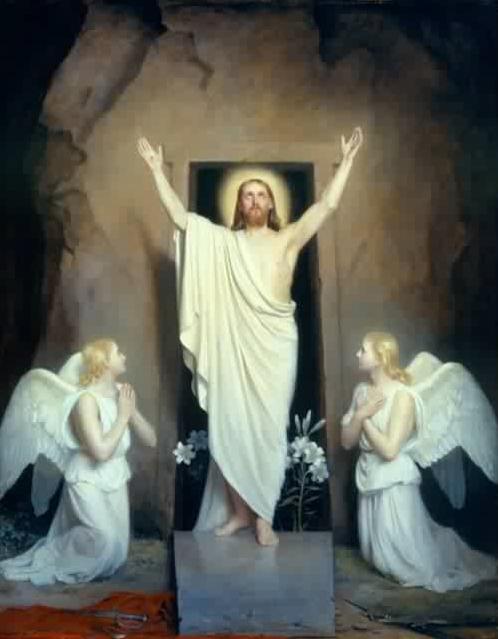
New Evangelizers Post: Follow Me


I have a new article up at NewEvangelizers.com.  

Amen, amen, I say to you, unless a grain of wheat falls to the ground and dies, it remains just a grain of wheat but if it dies, it produces much fruit. Whoever serves me must follow me, and where I am, there also will my servant be. The Father will honor whoever serves me.
(John 12:24-25)

Follow me.

Two simple words that Jesus said to all of His disciples. Two simple words that we find in today’s Gospel. Two simple words that all of us have heard in our hearts.

Christ used the image of the seed to represent change. I would imagine for most of us, seeds of change were planted in our hearts not just from one single source, but from all the many gentle nudges of the Holy Spirit through those we encountered. That question, “Have you thought about this ministry?” or that comment, “You would be good at that ministry,” were moments when Our Lord was planting the seed of change in you.

But in order for that seed to grow, there is one thing that we must do: follow Him.

In her book Forming Intentional Disciples, Sherry Weddell speaks about the apathy that is found in many of us Catholics, where many make religion a mindless habit. In this way, we compartmentalize our hearts and separate God from our daily lives. I’m sure that doesn’t apply to most of you who are reading this. But I must confess that in my first year of Diaconate formation, I looked at my classes and my assignments as things that needed to get done; they were boxes that had to be checked off in order to work my way to ordination. By God’s grace, I have come to understand that while this is a time of work, it is more importantly a time of formation. CS Lewis wrote, “we might think that God wanted simply obedience to a set of rules: whereas He really wants people of a particular sort.” In other words, this is a time for God to change me.

And that is why following Him can be a little scary because it is a kind of death because it is a transformation. God is calling us out of our comfort zone to become something else. This means we have to let go of our old selves. Following will cost you, just as it did the many of the saints; just as it did all of the 12.

Following is an act of faith because we don’t know what it will cost us. I think of Samwise Gamgee in The Lord of the Rings who decided to follow his friend Frodo into the fires of Mordor. Sam gave up so much to follow him. But in the book, one of the things that made Sam the saddest was having to throw out his cookware. It seems like such a silly thing to be upset about. And yet, how many of us have those little indulgences of life and the Lord says that we follow Him, we have to let it go?

We are transformed by following Him. And we follow Him because He redeemed us.

The first movie I ever saw in the theater as a kid was Flash Gordon. It is a silly sci-fi film, but in the movie Flash and one of his enemies are forced to fight to the death. When his enemy is most vulnerable, Flash saves his life. To express his gratitude and change of heart, all his enemy can say to Flash is: “Where you go: I follow.”

Today is the feast of St. Matthew. In the Gospel of Matthew, Jesus comes to him when he is a tax collector and he simply says: "Follow me."

On the show The Chosen, one of my absolute favorite moments comes from an interaction that the Apostle Matthew has with his old bodyguard Gaius. The roman is worried about so many important things with his family and his responsibilities. Matthew looks at Gaius and says, "I have only one thing to do today: follow Him. The rest takes care of itself."

You can read the whole article here.


Monday, September 7, 2026

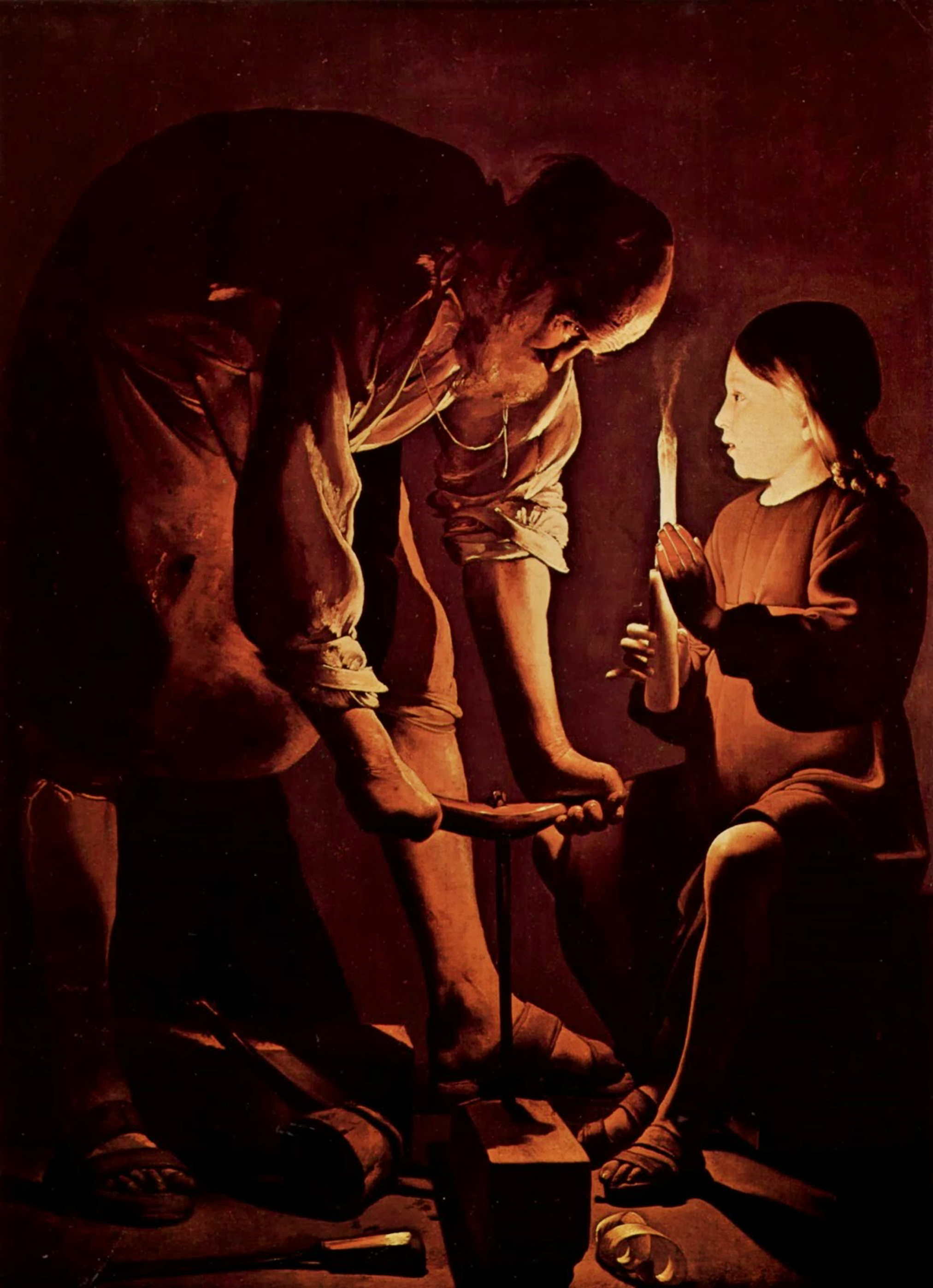
Labor Day Prayer to St. Joseph 2026


(repost)

Happy Labor Day!

I remember during the early days of the pandemic, I was so worried that the school where I teach was going to lose enrollment and shut down.  As often as I complain about the toil of work, I am reminded how ungrateful I am for the privilege of working in a Catholic school (or to have a job at all for that matter).  It is truly a blessing to be given labor to help build up the Kingdom of God.

As I have written before, I credit St. Joseph for all of my jobs.  I pray that, like him, I can be a good worker and provider for my family and work the best that I can to be a model of moral manhood.

I pray that St. Joseph bless all the work of our hands that we all build up the Kingdom of God together.

Oh, St. Joseph, whose protection is so great, so strong, so prompt before the throne of God. I place in you all my interests and desires. Oh, St. Joseph, do assist me by your powerful intercession, and obtain for me from your divine Son all spiritual blessings, through Jesus Christ, our Lord. So that, having engaged here below your heavenly power, I may offer my thanksgiving and homage to the most loving of Fathers.
Oh, St. Joseph, I never weary of contemplating you, and Jesus asleep in your arms; I dare not approach while He reposes near your heart. Press Him in my name and kiss His fine head for me and ask him to return the Kiss when I draw my dying breath. St. Joseph, Patron of departing souls - Pray for me.

Tuesday, April 21, 2026

New Evangelizers Post: The ABC's of Mercy


I have a new article up at NewEvangelizers.com.  

Two Sundays ago we celebrated the Feast of Divine Mercy.

On that Feast, we remember that the Mercy of God is offered to us and that it can transform our lives and the world. One look at the world around us today, and there is little doubt that we could use all the mercy that we can receive.

I don’t know about you, but I like things simple. And I’ve found that this devotion breaks down into simple ABC’s. (to be clear, this is not my original idea, but comes from the devotion itself).

A. Ask for Mercy

Our Lord desperately wants to forgive us and bring us home. The only barrier to this is that we have to choose this. In the Parable of the Prodigal Son, the father waited patiently for his wayward child to come home. But he could not force his son to return. The son had to choose to swallow his pride and return to the father to seek forgiveness. The good news for us is that, just like the father in the parable, God will rush to us if we return to Him. The entire treasury of Divine Mercy is waiting for us if only we ask. It seems unbelieveable that God’s generosity can fall on us like this, but it’s true.

Think of Peter and Judas. Both greatly betrayed the Lord on Holy Thursday. Both ran out into the darkness when they sinned. But Judas gave into despair. Peter went back to the Lord. And at that charcoal fire on the sea shore, Peter told Christ he loved Him for each time that he betrayed Him. Peter was completely forgiven because he sought God’s mercy. Judas did not. But I have no doubt that forgiveness would have been his if he returned like Peter did. As (soon to be Beatified) Fulton Sheen said, the great tragedy of Judas’ life is that he is not St. Judas.

B. Be Merciful

Once we have received mercy, it is our responsibility to be as Christ and give mercy to others. I have found that this is so much easier when we come face-to-face with our own sinfulness and experience the full mercy of God. In that light, how can we not be merciful to others? In the Parable of the Unforgiving Servant, a master forgives one servants large debt, but that servant does not forgive another servants much smaller debt. If we ask and receive God’s mercy for our sins against Him, then I must forgive others when they sin against me.

This is difficult, to be sure. For this reason, we must pray constantly for the grace to be forgiving. You may be a much better person than I am, but I have to struggle against pettiness and resentment for every hurt and slight, whether real or imagined. I have to constantly ask God to give me a forgiving heart. And when Our Lord reminds me of how much mercy He has given me, it becomes so much easier to be merciful to those who do me wrong.

C. Complete Trust in God’s Mercy

For me, this is the most difficult. I am someone who becomes overwhelmed by the full weight of my sins. But we are called to trust in God’s mercy.

I think it is telling that at the bottom of the famous Divine Mercy portrait of Jesus, the words are “Jesus, I trust in You!”

We have to trust in God’s mercy, otherwise we will let sin hold sway over our lives. This is a common tactic of the evil one. After he tempts us to sin, he hits us with overwhelming guilt. Now there can be a healthy guilt that brings us to repentance. But there is an unhealthy guilt that overburdens us and obscures the light of God in our lives. Remember our Lord said, “If the Son sets you free, you will be free indeed.” (John 8:36) CS Lewis said that “I think that if God forgives us we must forgive ourselves. Otherwise, it is almost like setting up ourselves as a higher tribunal than Him.” (Letters of CS Lewis) And of course we must remember the words of Pope St. John Paul II who said “We are not the sum of our weaknesses and failures, we are the sum of the Father’s love for us and our real capacity to become the image of His Son Jesus.”

You can read the whole article here.


Monday, April 13, 2026

New Evangelizers Post: The Soul and the Stone


I have a new article up at NewEvangelizers.com.  

Stone.

That word is so heavy. It carries such weight. We say of things that they sink like a stone. We order stone countertops because they endure. They withstand weather and use and time. And when my mother passed, we ordered a head stone to place by her grave.

I can still remember the last time I saw her face. I was sitting in the funeral home with others as they closed her casket for the last time. When that happened, I thought to myself, “That was the last time I would ever see her face.”

I wonder if that is how Mary Magdalene felt at Christ’s tomb.

It says at the end of the Passion in Matthew that “Mary Magdalene and the other Mary were sitting there opposite the tomb.” (Matthew 27:61). As they were sitting there I can imagine that the Marys sat there think that this was also the last time that they would ever see the face of Jesus. I think of them staring at that stone at the entrance of the tomb. Jesus said He would return. But they saw His death.

And stone is so heavy.

We all have stones in our lives. I can imagine that most of you reading this have lost loved ones and have laid them beneath the gravestone. The reality of death is so tangible and inescapable. But the stones in our lives aren’t always about death. Some of us struggle with sin and addiction. Perhaps our relationships are broken. These weigh on us like stones. Their weight feels so unmovable that we think that this will never change.

And inside, especially as we get older, we can feel the stoniness of our hearts. As children we are open and vulnerable. But as we encounter pain, betrayal, and loss, we steel ourselves against that pain. And slowly we turn our hearts to stone. There is a calcification that happens in our lives were we become intrenched in our own way of doing things, our own way of seeing the world. And as time goes on, we think change is impossible because our hearts have slowly become heavy, heavy stone.

But this is the place where faith means the most.

God told us ” I will give you a new heart and put a new spirit in you; I will remove from you your heart of stone and give you a heart of flesh.” (Ezekiel 36:26)

For God, nothing is impossible. Even the stones in our hearts can be transformed. And we know He has the power to do this because He came back from the dead.

This is not easy to believe sometimes. I can still feel the loss of my mother and the empty space in my heart from her death.

But I have to believe that I am going to see her again. I have to believe that one day, I will hear her voice and hold her hand.

I have to believe this because Jesus told me that this would happen. He promised that when He said, ““I am the resurrection and the life. The one who believes in me will live, even though they die.” (John 11:25). We put this verse on my mother’s headstone. That way, when we looked at the heaviness of the stone as Mary Magdalene did, we are reminded of His promise that death is not the end.

He can roll way any stone in our lives because that is what He did to that stone at His tomb. But He asks that we believe, that we trust in Him.

You can read the whole article here.


Sunday, April 12, 2026

Divine Mercy 2026


File:Kazimirowski Eugeniusz, Divine Mercy, 1934.jpg


(repost from 2018)

Very few feast days are as important to me as today.

Much of what is printed below I have written before.  But with each year I age, I become more and more aware of how much I need God's Mercy.

There is a story about Socrates I heard once.  A phrenologist came to Athens and claimed to be able to read people's souls by studying the contours of their head.  Socrates, being a person who was open to new ideas asked to be tested.  The phrenologist examined Socrates and said that his skull showed he was proud, lustful, greedy, wrathful, and other things like this.  Socrates' followers began to laugh at this diagnosis of their moral teacher.  But Socrates very seriously rebuked them and said, "This man is telling the truth.  I struggle with these every day of my life."

I bring this up because sometimes when I tell people that I am the biggest sinner that they've met, they think I am only giving some kind of pious hyperbole.  But it is far from the case.  The only soul I can see into is my own and I see much darkness there.  No, I am not about to catalogue all of my vices.  But sometimes when I receive compliments of a moral or spiritual nature, I burn a little inside.

This is partly my fault.  I have found that when people give you compliments the most gracious thing to do is to accept it and say thank you.  Otherwise, that person feels admonished.  Also, I think I put on too much of a holy exterior image.  That isn't to say that I am not spiritual.  But sometimes I feel like the charge Jesus leveled against the Pharisees applies to me:  "Woe unto you, scribes and Pharisees, hypocrites! for ye are like unto whited sepulchers, which indeed appear beautiful outward, but are within full of dead men's bones, and of all uncleanness." (Matt 23:27)

Especially as a religion teacher, the weight is sometimes overwhelming (though I speak as a weak man).  I stand in front of others proclaiming Christ while I too often fail in following Him.  Every day I pray before Jesus, "Please do not hold my sins against my students, but help me to give them only You!"

I bring all of this up only to emphasize how absolutely important today's feast is to me.

The Feast of Divine Mercy reminds me that though my sins burn and blister my heart, Jesus has an ocean of Mercy to drown that fire.

I know that God owes me nothing.  Or rather, what He owes me is wrath.  But He wants to give me Mercy.  It would be just if I received punishment.  But He wants to pour out forgiveness.

If it were not for Christ's incredible emphasis on His Mercy, I think that I would fall into despair.  It takes so much faith to believe that God is not fed up and disgusted with my lack of progress in the spiritual life.  But even that is my own projection of my weak love onto the infinite love of God.

And even here in this struggle, there is a grace.  As 2 Corinthians 4:7 says, "But we hold this treasure in earthen vessels, that the surpassing power may be of God and not from us. "

My own weakness is there to keep me from ever thinking that the good that comes about through me is somehow from me.  All the good that I have ever done is only by the power of God.  He is the treasure, I am the earthen vessel.  Glory be to Him.

So today, please turn to His Mercy.

It does not matter what your sin is, He wants to forgive you!  He wants to put that old life behind you and begin again.

It does not matter how many times you've turned back and turned away.  Today, return to His Mercy.

Yes, you have sinned.  Join the club.  I am a lifelong member who has not graduated from even the most basic lessons.  I say this not to minimize my sins or your sins.  Every sin is another nail to pierce the Flesh of the Lamb of God.  We must be truly sorry and accept responsibility for them and resolve to sin no more by God's grace.

And then we must embrace His Mercy.

As one website writes:

The Divine Mercy message is one we can call to mind simply by remembering ABC: 

A - Ask for His Mercy. God wants us to approach Him in prayer constantly, repenting of our sins and asking Him to pour His mercy out upon us and upon the whole world. 

B - Be merciful. God wants us to receive His mercy and let it flow through us to others. He wants us to extend love and forgiveness to others just as He does to us. 

C - Completely trust in Jesus. God wants us to know that the graces of His mercy are dependent upon our trust. The more we trust in Jesus, the more we will receive. 

(http://www.thedivinemercy.org/message/)


And on this Feast Day, I invite you to pray with me not only the Chaplet of Divine Mercy (click this link to learn how) and pray with me the Divine Mercy Litany:

The Love of God is the flower—Mercy the fruit. 

Let the doubting soul read these considerations on Divine Mercy and become trusting.

Divine Mercy, gushing forth from the bosom of the Father,
I Trust in You.
Divine Mercy, greatest attribute of God, 
I Trust in You.
Divine Mercy, incomprehensible mystery, 
I Trust in You.
Divine Mercy, fountain gushing forth from the mystery of the Most Blessed Trinity
, I Trust in You.
Divine Mercy, unfathomed by any intellect, human or angelic,
I Trust in You.
Divine Mercy, from which wells forth all life and happiness,
I Trust in You.
Divine Mercy, better than the heavens,
I Trust in You.
Divine Mercy, source of miracles and wonders, 
I Trust in You.
Divine Mercy, encompassing the whole universe, 
I Trust in You.
Divine Mercy, descending to earth in the Person of the Incarnate Word,
I Trust in You.
Divine Mercy, which flowed out from the open wound of the Heart of Jesus, 
I Trust in You.
Divine Mercy, enclosed in the Heart of Jesus for us, and especially for sinners, 
I Trust in You.
Divine Mercy, unfathomed in the institution of the Sacred Host,
I Trust in You.
Divine Mercy, in the founding of Holy Church, 
I Trust in You.
Divine Mercy, in the Sacrament of Holy Baptism, 
I Trust in You.
Divine Mercy, in our justification through Jesus Christ,
I Trust in You.
Divine Mercy, accompanying us through our whole life,
I Trust in You.
Divine Mercy, embracing us especially at the hour of death,
I Trust in You.
Divine Mercy, endowing us with immortal life, 
I Trust in You.
Divine Mercy, accompanying us every moment of our life,
I Trust in You.
Divine Mercy, shielding us from the fire of hell, 
I Trust in You.
Divine Mercy, in the conversion of hardened sinners,
I Trust in You.
Divine Mercy, astonishment for Angels, incomprehensible to Saints,
I Trust in You.
Divine Mercy, unfathomed in all the mysteries of God,
I Trust in You.
Divine Mercy, lifting us out of every misery, 
I Trust in You.
Divine Mercy, source of our happiness and joy, 
I Trust in You.
Divine Mercy, in calling us forth from nothingness to existence,
I Trust in You.
Divine Mercy, embracing all the works of His hands,
I Trust in You.
Divine Mercy, crown of all of God's handiwork, 
I Trust in You.
Divine Mercy, in which we are all immersed, 
I Trust in You.
Divine Mercy, sweet relief for anguished hearts, 
I Trust in You.
Divine Mercy, only hope of despairing souls, 
I Trust in You.
Divine Mercy, repose of hearts, peace amidst fear, 
I Trust in You.
Divine Mercy, delight and ecstasy of holy souls, 
I Trust in You.
Divine Mercy, inspiring hope against all hope, 
I Trust in You.

To The Divine Mercy
I fly to Your mercy, Compassionate God, who alone are good. Although my misery is great and my offenses are many, I trust in Your mercy, because You are the God of mercy; and, from time immemorial, it has never been heard of, nor do heaven or earth remember, that a soul trusting in Your mercy has been disappointed.

O God of compassion, You alone can justify me and You will never reject me when I, contrite, approach Your Merciful Heart, where no one has ever been refused, even if he were the greatest sinner (1730).

[For Your Son assured me:] Sooner would heaven and earth turn into nothingness than would My mercy fail to embrace a trusting soul (1777).

Jesus, Friend of a lonely heart, You are my haven, You are my peace. You are my salvation, You are my serenity in moments of struggle and amidst an ocean of doubts. You are the bright ray that lights up the path of my life. You are everything to a lonely soul. You understand the soul even though it remains silent. You know our weaknesses and, like a good physician, You comfort and heal, sparing us sufferings — expert that You are (247).

In Thanksgiving
O Jesus, eternal God, I thank You for Your countless graces and blessings. Let every beat of my heart be a new hymn of thanksgiving to You, O God. Let every drop of my blood circulate for You, Lord. My soul is one hymn in adoration of Your mercy. I love You, God, for Yourself alone (1794).


To the Mother of God
O Mary, my Mother and my Lady, I offer you my soul, my body, my life and my death, and all that will follow it. I place everything in your hands. O my Mother, cover my soul with your virginal mantle and grant me the grace of purity of heart, soul and body. Defend me with your power against all enemies, and especially against those who hide their malice behind the mask of virtue (79). Fortify my soul that pain will not break it. Mother of grace, teach me to live by God's power (315).

O Mary ... a terrible sword has pierced your holy soul. Except for God, no one knows of your suffering. Your soul does not break; it is brave, because it is with Jesus. Sweet Mother, unite my soul to Jesus, because it is only then that I will be able to endure all trials and tribulations, and only in union with Jesus will my little sacrifices be pleasing to God. Sweetest Mother, continue to teach me about the interior life. May the sword of suffering never break me. O pure Virgin, pour courage into my heart and guard it (915).

Sunday, April 5, 2026

Alleluia! Christ is Risen! - Easter 2026


"Who [indeed] is the victor over the world but the one who believes that Jesus is the Son of God?"


Today I was thinking very much of my friend Matt who passed away this past June.  I was also thinking of something my friend Plucko said once: "If there is no afterlife, then everyone's life is tragic."

This, of course, does not prove that there is life after death.  But it does highlight how drab our world truly would be if there was nothing more than this life.  Every love you ever have would only be a temporary thing.

But in our bones we know that love is forever.  This includes the love of friends.

I think this is why we still love the dead.  You could write it off as some sort of coping mechanism of the mind.  But I think that it reaches into that deep reality that we know: that this life is not the end.

Today is the day that reminds us of that.  Jesus Christ rose from the dead to show us that our end is not the grave but life!  In Him, if we truly love each other, then we can hold onto each other forever.

Because of Jesus, one day I hope to see my friend again and shake his hand.  I live in this hope because the One who promised to me is trustworthy.  Jesus is offering us eternal love.  This means that He can make our loves eternal.

For those of you who have lost loved ones, I grieve with you.  But I offer you the hope that can only be found in Christ: hope that parting is not permanent.

Because death has been defeated by the Lord of Life!

He is Risen.


Alleluia!

Thursday, April 2, 2026

Divine Mercy Novena Starts Tomorrow


(most of the text below is a repost from 2022)


A reminder that the Divine Mercy Novena begins tomorrow (Good Friday) and continues through until Mercy Sunday.  You can find the novena here:


https://www.ewtn.com/catholicism/devotions/novena-13366

This has been a powerful and profound devotion in my life and many graces have come to me through a devotion to Jesus' Divine Mercy.  

Very recently, I experienced such an overwhelmingly powerful act of mercy.  I am acutely aware that under Divine Justice, there is much for which I have to answer.  Each day I seem to be racking up a debt of sin.  But even more concretely, the way I treat the people I claim to love is often selfish and shameful.  When confronted with this reality, I often shrink with shame.  I struggle with this.  I think that God loves me but because of my sins, He doesn't like me very much.  It is an image that is horribly unfair to Our Lord.

Sin is a real barrier between God and us, but God's love is greater than that.  Not too long ago, I had to admit my faults to someone, expecting them to return to me bitter (but just) judgment.  Instead, this person simply smiled at me and told me that all was well.  There was no trace of bitterness or judgment.  There was only pure kindness and love and a joy that I could unburden myself on them.  

This act of mercy lifted a great burden from my heart.  And it acted as a symbol for how God's mercy is similar.

It is a beautiful lay your faults bare to someone and have them look beyond them is a beautiful thing.  Too often I think we define ourselves by our sins.

Pope John Paul II once said that we are more than the sum total of our sins.

God sees us as we are, beyond our sins.  He wants us to come to Him and lay our sins on His mercy.  

I look forward to joining all of you in spiritual communion through this novena.

In these days with all of the worries and struggles that we have, we have a greater need to throw ourselves at the Mercy of God!

Wednesday, March 25, 2026

New Evangelizers Post: The School of the Cross


I have a new article up at NewEvangelizers.com.  

Recently I was speaking with a priest and said something that has stayed with me. He said, “Priests are trained to go to the school of the cross.”

He said that it is a constant learning experience for priests to come back to the cross of Christ and to learn from Him. On that cross, we learn what it is to be a priest, to be a Christian.

I would imagine that many of us have been going to the school of the cross during this Lent. We have made certain Lenten sacrifices. Perhaps we attended extra liturgical events like the Stations of the Cross. These things we do in order to draw closer to the cross of Christ and to learn from the school of the cross.

There is a story that St. Maximillian Kolbe had a vision when he was young. He was presented a crown of glory and a crown of thorns. He was told to choose one or the other. Maximillian chose the crown of the thorns. He wanted to have the same crown that Jesus had in this world. He was learning from the school of the cross.

Those who know his story mostly know about how it ends. But Maximillian spent his whole life at the school of the cross. He traveled the world spreading the good news. He founded radio stations to broadcast the Gospel as far and wide as he could. He dedicated his life day after day to God. He picked up his cross and died to himself every day. This is part of the lesson from the school of the cross: if you die to yourself every day, then your final day is just another day that you have to die.

The school of the cross helps remove the sting of death. We see this in Maximillian’s story. I always find it fascinating that all of his great evangelical work is often forgotten. He is remembered most for the thing he did when he was reduced to just a number. Maximillian was sent to Auschwitz. One day, the commandant chose ten men from his barracks to be placed into a room and deprived of food and water until they died. One of the condemned men fell to his knees begging to be spared because he had a wife and child. Maximillian stepped forward and requested to be taken to death in this man’s place. When the commandant asked if Maximillian knew the man whose place he was taking, the priest said no. But Maximillian said that the man had a wife and child, but he did not. Maximillian was taken and locked away with the other without food or water. Normally, the prisoners in this situation would be howling like beasts by the second day. But the guards who witnessed this said that they only heard prayers and singing from that cell. After ten days, Maximillian and few others were still clinging to life. The guards took them and injected them with carbolic acid to kill them.

Maximillian Kolbe learned from the school of the cross. He spent his whole life giving his life away so that he could do it in that final moment. At the school of the cross, he learned that real love is sacrifice.

Pope Benedict XVI made this point clear when writing about Jesus. Our redemption from the cross is not about the blood that was shed per se. If that were so, then it would make God the Father a blood God who desired violence to satisfy His vengeance. But Pope Benedict XVI said that the reason Christ goes to the cross is because it is the only way we would ever truly know who God is: God is love.

And love is expressed in complete self-donation. Jesus on the cross shows us that He is willing to pay any price just to have a chance that we would choose to be with Him forever. And in that love learn how we are supposed to love each other. We are to give our lives away.

You can read the whole article here.


Monday, March 9, 2026

New Evangelizers Post: Heaven Begins on Earth


I have a new article up at NewEvangelizers.com.  

“I’d rather laugh with the sinners than cry with the saints.”

For some reason that line from Billy Joel’s song “Only the Good Die Young” kept coming to my head. And it kept coming back to me because I can’t help but feel like that is how the world sees holiness. To be holy is to leave in pain and penance, to deny yourself of every comfort and pleasure so that one day God will pay you back in heaven.

But this is not the message of our Lord and this is not the witness we have in the saints.

To be sure, Jesus promises heaven to those who live a life of holiness. But too often we can reduce this promise to something transactional: “If I do what God asks me to do, then God owes me heaven as my reward.” But real Christian life is nothing like this.

When Jesus speaks to us about Eternal Life, the afterlife is part of what He means. But Pope Benedict XVI made clear that “’Eternal Life’ is life itself, real life, which can also be lived in the present age.” (Jesus of Nazareth, Vol 1)

In other words, you don’t have to wait to die to go to heaven; heaven begins now.

Take a look at the lives of the saints. I have studied the lives of many of these holy men and women. And what I’m about to say, I say not just as a believer, but as a student of history: You will never find anyone in history who suffered more than the saints. Many of them died painful martyr deaths. Many endured painful diseases like cancer, leprosy, and tuberculosis. And many endure heartbreak at the loss of loved ones or the rejection they felt from family members. As I said, no one in human history suffered more than the saints. Which is why this next truth is so very odd:

No one in history was happier than the saints. When you read their writings and enter into their stories, you encounter a joy that is beyond compare. In Acts of the Apostles, Peter and John are scourged for preaching about Jesus. When they are released, they rejoice that they had been found worthy to suffer for His name.

This seems so counter-intuitive to our world. The world says that we should do everything we can to avoid pain and suffering. Today, we have every single material and physical pleasure available to us. And yet if we are honest, fewer and fewer of us are truly happy.

In the Beatitudes from the Gospel of Matthew, the word “Blessed” could also be translated as “Happy.” “Happy are the poor in spirit… Happy are the clean of heart… Happy are the merciful…” One of the reasons we don’t usually us that translation is that happiness is sometimes boiled down to a simple emotional state: a feeling that comes and goes.

But the happiness of the saints is not a transitory thing. That is because they are beginning to experience heaven on earth.

I know someone at my work was recently diagnosed with cancer. Any of us who have experienced this or had loved ones experience this, knows how devastating this is. And she spoke to me about the heartache and tears that she went through in those early days. But I’ve had the privilege of spending more time with her, talking with her and praying with her. Perhaps in my arrogance I thought that I could somehow comfort her. But every time I end a meeting with her, I’m the one who is more uplifted. Her suffering is very real and tangible. But so is her faith, her peace, and her love. That is because she has a happiness deeper than a sentiment or feeling. There is a joy in the center of her soul that cannot be taken away. This is the same joy that we see in the saints we celebrate today. And this is what Jesus is saying in the Beatitudes.

In the Beatitudes, Jesus says that heaven is waiting for us. But He is saying more than that. He’s saying heaven is here in our hearts. Heaven is here in our souls.

What makes heaven heaven? I mean, what is it that really makes it the paradise that we all yearn for?

The answer is simple: God. In heaven, we are with God.

You can read the whole article here.


Monday, February 23, 2026

New Evangelizers Post: The Holy Spirit Brings Us Peace


I have a new article up at NewEvangelizers.com.  

Ash nazg durbatulûk, ash nazg gimbatul, ash nazg thrakatulûk, agh burzum-ishi krimpatul

Klatu, Barata, Nikto

Yub nub, eee chop yub nub Ah toe meet toe peechee keene G’noop dock fling oh ah

Okay, just so we are clear, you are not seeing things and I am not having a medical emergency. I would imagine that no one here had any idea what I was writing (unless you are like me and big fans of the made-up languages of The Lord of the Rings, Return of the Jedi, and The Day The Earth Stood Still).

But I would ask you to imagine for a moment that I continued to write like that for the entire essay. Perhaps I am wrong, but I would imagine that you would tune out. How could you pay attention if you couldn’t understand what I was writing? There would be a separation between us that would occur.

That is what happened at the tower of Babel. When God separated the language of the people there, they could no longer live together and there was division. But as we see in Acts of the Apostles at Pentecost, everyone could hear the Apostles in their language. Why?

We see why in the Gospel of John. Jesus brings to the disciples the Holy Spirit. And He brings something else very important, that we can hear in His first words to them after the Resurrection: Peace.

The Holy Spirit brings us Peace.

Sometimes we think of war as the opposite of peace, and in many ways it is. But above all, the opposite of peace is disharmony. We find this disharmony when we don’t get along with people in our families, our work, and our neighbors. Sometimes this lack of peace comes out in explosive fights over who left the milk on the counter, but often it manifests as low-simmering resentments. Someone does something to get on our nerves or annoys us like taking the last donut in the break room. And we create a story about them in our minds that justifies how we feel. And the resentment grows and we lack peace.

But the Holy Spirit has come to us to give us peace.

A lot of research has been done over relationships that fall apart. From what I have gathered, there are many reasons why this happens, but one of the most common reasons that couples gave was this: “we stopped talking to each other.” Somewhere along the way, they no longer spoke each other’s “language” and division occurred. The Holy Spirit helps us to reach beyond our own “language” and speak to another.

There may be some of us who remember when our Holy Mass was all done in Latin. After Vatican II, we moved to our own native languages. While Latin is beautiful, most of us, I would imagine, do not speak Latin. And just as I spoke unrecognizable words at the beginning of this essay, I would imagine it would be easy for some to tune out of the liturgy. But now that we are speaking the same language, we can be drawn into our Eucharist. We can reflect together on the words and what they mean in our hearts, “This is My Body, which is given up for you!” “This is the chalice of my blood…” “Lamb of God, You take Away the sins of the world… Grant us peace.”

A huge part of having peace is understanding each other’s language. Perhaps many of us see the political divide we have in the world and it seems like there can be no peace, especially if we spend any time on social media. But I wonder how often our political discussion comes down to yelling past each other rather than talking with each other? And our political rift widens.

But the Holy Spirit is not a Spirit of division, but a Spirit of unity! As Paul reminds us in Romans, we are all baptized in One Spirit and we are One Body in Christ. The Holy Spirit moves us to this unity, this peace.

When I was in grade school, I was a gigantic wrestling fan. I had posters of Hulk Hogan, Ricky “The Dragon” Steamboat, Andre the Giant, Randy “Macho Man” Savage, and the rest. My mom would even take me to the Richfield Coliseum to see them wrestle live. And I knew that my mom had zero interest in wrestling. But she went because she knew it was important to me. She was trying to speak my language.

You can read the whole article here.


Monday, February 9, 2026

New Evangelizers Post: Entering the Desert of Lent


I have a new article up at NewEvangelizers.com.  

Did you know that up to half of all teachers quit teaching within the first 10 years of their career? It has one of the highest exit rates of any profession.

And there I was early in my teaching career having one of the worst years of my life. The students didn’t get along with me, the commute was incredibly long, and I had been given a new subject to teach only a few weeks before the beginning of the school year. I was developing an ulcer and I was floundering. I found myself day after day in the chapel praying to God saying, “I don’t know if I can do this anymore.”

And then one day my principal happened to stop by the chapel and he could tell that I was spiraling. Without even meaning to, I spilled all of my troubles and he patiently listened. Then after I finished ranting, he paused and he said something I will never forget:

“You are in the desert now. God will see you through. And when you come out of it, you will be a stronger teacher.”

All of us are together are about to enter the desert of Lent. But it is important to remember that in the Gospel of Matthew, it says that Jesus was “led by the Spirit” into the desert. And we are the same as we are led by the Spirit to enter into this holy season. But make no mistake, it is a desert. On Ash Wednesday we will pray and fast together and take up individual penance and sacrifice.

And we are led by the Spirit here to remind us that throughout life we all go through the desert, whether we want to or not. The great saints like Teresa of Avila would go through times called the “Dark Night of the Soul” where they received no comfort or consolation from their spiritual life. But for those of us who are not yet saints, we still walk through the desert. Those of us who are married, after that honeymoon ends and you have arguments about leaving dirty clothes on the floor or who should take out the garbage our marriage can enter into that desert. Those of you who are athletes, as much as you love what you do you hit that wall, the drudgery and then you enter the desert.

Sometimes we enter the desert when we least expect it. My wife and I entered the desert once when she unexpectedly lost her job. Money was so tight that sometimes our groceries for the week would be a couple jars of peanut butter and a few loaves of bread. I entered the desert with my mom when she got sick with cancer and I would sit there holding her hand for hours as she lay in that hospital bed. I remember sitting there desperately wanting her to know that she was not alone.

Because one of the worst things about being in the desert of our lives is that we can often feel alone.

But our Gospel today reminds us that we are never alone.

First of all, we are in this together. On Ash Wednesday we will walk around with the ashes on our foreheads. We don’t do it to brag about how holy we are in our penance. We do it to show to each other that we are not alone. Look around at the people in church. We gather around the Eucharistic Table as a reminder that we are not alone.

And God is with us in this desert of Lent.

When Jesus was in His desert, He showed how to draw closer to God. He was there for 40 days and He was hungrier than I ever will be. And when Satan tempted Him to break His fast, Jesus turned to the Word of God.

In fact, for all of His temptations, Jesus relied on Scripture. His time in the desert wasn’t just about denying Himself, but it was about drawing closer to the Father. I mentioned my wife and I entering the desert when she lost her job. It was a very anxious time where we didn’t know if we could even afford our house anymore. But when I would be overwhelmed and Satan was trying to focus only on my fears, I googled “Scripture quotes for when I am afraid,” and I would turn to His word. I let His Word comfort me, even when things felt impossible. I let His Word see me through the desert.

All of us will be doing that very thing. Like Jesus, we gather at Church to attend to God’s Word. We are there because we hunger not just for human bread, but the Bread of Life that will come to us on that altar.

You can read the whole article here.


Monday, January 26, 2026

New Evangelizers Post: Practicing the Presence of God in the Eucharist


I have a new article up at NewEvangelizers.com.  

When I was in grade school, once a month we would gathering around the Blessed Sacrament in adoration. And when we would go there for our holy hour, my grade-school self would tell you: I was so bored. I would kneel, close my eyes, and count the seconds until it ended.

You have to understand: I was raised Catholic all my life, but the Eucharist was not important to me. My parents would have to drag me kicking and screaming (sometimes literally) to Sunday mass and I was a terror to them for long because I was SOOO bored. I couldn’t wait to get out of there and get back to all of the fun things I had waiting for me back home like my action figures, comic books, Nintendo (Princess Peach wasn’t going to rescue herself!). Eventually I made my first communion and from that point on when we went to mass I would walk up the communion line and the minister would say “Body of Christ,” I would mindlessly respond “Amen.”

I look back on my younger self and I see someone who was in the presence of God, but I had no awareness of it.

Hebrews 12:22 says that we have come to Mount Zion, the heavenly Jerusalem. When we are around the altar, with us are countless angels with all of the souls in heaven. In this room with us are Sts. Peter, Paul, Michael, Joseph, Mary Magdalene, Carlo Acutis, Therese of Lisieux, Francis of Assisi, Maria Gorettie, Joan of Arc, and so many others. And yet, how often do we come here unaware of their presence.

At least, that’s what I was, until I was 17. I made a retreat where things changed. At one point on that weekend, we had a Eucharistic Adoration like I had in grade school. And just like all throughout grade school, I knelt and closed my eyes, and began counting the seconds until it ended. What I didn’t know was that the group I was with were Charismatic Catholics. For those who have never been with the Charismatics, they can be very vocal about their faith. So as we knelt, I was surrounded by people shouting their prayers towards the Blessed Sacrament saying: “Praise you, Jesus, Glory and honor to you, Jesus, I love you Jesus, my Lord and my God!”

I remember thinking: this is weird. I was incredibly uncomfortable as I continued to count the seconds until it ended. But then as they kept shouting their praise and I knelt in silence, a thought occurred to me. I have been Catholic all my life and every time I went to communion and they said “Body of Christ,” I would respond, “Amen.” My thought was this: If I really believed what I said I believed, how could I not be filled with joy in the presence of God?”

And then I opened my eyes and I saw Jesus. I don’t mean I had an apparition. But when I looked at the Host, I was given the eyes of faith and I experienced the presence of God. Faith is gift. I didn’t earn it and I don’t deserve, but it was given to me that night. And that is when everything changed for me. I began to mass every day. It set me on the path that led me to my life as a theology teacher and God willing soon an ordained deacon.

That isn’t to say I became a saint. For those who are watching The Chosen, I love the way it shows the Apostles have a life changing experience by the presence of God, but they still screw up like we all do. But they are continually transformed by being in the the presence of God day after day.

Dr. Peter Kreeft said that the heart of the spiritual life is to practice the presence of God.

God is all around us. He is not only in the church, but He is with us when we leave, at work, school, home… His presence never leaves. But we can ignore it. I did for many years. And even now I can get so caught up with work or home life that I can still forget.

But we go to the Eucharist to help us practice the presence of God. We go to Mount Zion to experience His presence. Even Jesus gave us this model. At least four times in the Gospels, Christ would go up to the mountain to pray. Why a mountain?

Perhaps it’s because on that mountain, He was removed from ordinary life, from all of the crowds and noise and demands of daily life. He could then practice the Presence of His Heavenly Father. The Eucharistic table is our mountain. In this space we are removed from ordinary life, if we allow it. Here we can remove ourselves from the noise and demands of daily life and practice the presence of God.

And if we let it, something amazing can happen: we can let God’s presence live in our hearts. And His presence can give us peace, a peace the world cannot give. His presence can fill us with the love that is the deepest longing of our hearts. St. Augustine said that our hearts are restless until they rest in God. Our lives can change.

One of my favorite stories from the Gospels is the story of the woman with the hemorrhage. She had been suffering for 12 years but she pushed through the crowds in the street to touch Jesus’ clothing and she was healed. I love this story because Jesus was probably touched by hundreds of people in that crowd, but only one was healed. And the difference was faith. She believed in the presence of God in Him.

How many times did I go to receive communion when I was young and received the Body of Christ thoughtlessly, like I was getting a snack in the lunch line? I touched Christ, but my life was not changed. But when I practiced the presence of God, every time I received the Eucharist, my heart is touched by Him.

And here is the wonderful thing: when we experience His presence here on our Mount Zion, we can then better practice His presence when we leave this place. We can better see Him in our friends, family, and co-workers. We can even experience His presence in our work, our chores, and even our crosses. I encourage you to take this experience of God here and practice His presence every day this week. Take a moment every day to ask God to reveal His presence in your daily life.

You can read the whole article here.


Monday, January 12, 2026

New Evangelizers Post: The Cappadocian Settlement and the Trinity


I have a new article up at NewEvangelizers.com.  

Today’s article is going to take a bit of a deeper dive into Church history and theology. Particularly, we are going to look a the Cappadocians and their influence on our theology of Trinity.

When people refer to the Cappadocians, they often mean the early Church fathers from the 4th century located in Central Asia Minor, in and about the region of Galatia. Among these are great saints such as Basil the Great, Gregory of Nyssa, and Gregory of Nazianzus. And these men wrote extensively about the Trinity and helped shaped this central doctrine of the faith.

To understand this, we have to understand the Cappadocian settlement. In the early Church there was a great deal of confusion about the Trinity. It was clear that the Father and the Son and the Holy Spirit were divinely connected, but there was difficulty squaring it away with the uncompromising monotheism that Christians inherited from Judaism. If God is Father, Son, and Holy Spirit, does that mean that there are 3 Gods? This was obviously contrary to Scripture. But if you said that the Son or the Spirit were not God, then you would fall into heresies like Arianism, Subordinationism, and Modalism. This led to the Cappadocians, who lived in the Eastern Church in and around modern day Turkey, to come up with a way to talk about God’s oneness and threeness as seen in the symbol.

Part of the issue deals with the language used to describe the Trinity. It was settled by the Church that God is one ousia. This word was synonymous with the word hypostasis, which means substance. It is very clear that God is one substance. The first Capodocian settlement made the distinction between ousia and hypostasis. In this view, ousia would still mean substance. So no matter what, God is still one substance. But the Cappadocians now took hypostasis to mean idiomata, which means the qualities of being a Person. On this view, God is one ousia and three hypostasis.

But the Father is not the Son, nor the Spirit. The Son is not the Spirit nor the Father. And the Spirit is not the Father nor the Son. That is because they are distinct hypostasis. Each has distinct qualities of personhood. For example, the Cappadocians saw that the Father’s idiomata was unbegottenness, the Son’s idiomata was begottenness, and the Spirit’s idiomata was procession. The Father cannot be the Son, because the Son is begotten and the Father is unbegotten. He also cannot be the Spirit, because the Father does not proceed from the Son and Spirit. The Son cannot be the Father, because the Son is begotten and the Father is not. The Son cannot be the Spirit, because He is begotten by the Father, but he is not in procession between the Father and the Spirit. And the Spirit cannot be the Father nor the Son because of the reasons already mentioned.

The second Cappadocian settlement had to deal with Aristotle’s 10 Categories. Aristotle categorized qualities of substances into ten categories. There was one essential property: being. The other properties like posture, relation, etc, were accidental properties. Because being is an essential property, it properly belongs to God. That is why Father, Son, and Spirit are God, who is Being Itself. But the Cappadocians took one of the remaining 9 categories and pointed out that it was also an essential quality of God: relatio or relation. For the Cappadocians, God’s very nature necessitated that each person of the Trinity was in relationship to the other. This, Cappadocians argued, was not an accidental property of God, but an essential one. God is not only essentially one Being, but He is also in relationship to each Person in the Trinity. That is why the Father cannot be the Son and neither of them are the Spirit. That is because relatio requires distinct persons for each Person of the Godhead to be in relationship to.

You can read the whole article here.