ReasonForOurHope

Sunday, January 30, 2022

Sunday Best: STEVEN SPIELBERG MOVIES RANKED - #3 - Indiana Jones and the Last Crusade


Indiana Jones and the Last Crusade is not just the greatest Indiana Jones movie.

It is the greatest adventure movie of all time.

Back when Kingdom of the Crystal Skull came out, I did a marathon of the first three Indiana Jones movies.  I skipped through the highlights of Raiders and Temple of Doom.  But I found that I couldn't skip through Last Crusade.  Every single moment kept me glued.

When it comes to doing an action/adventure film, there is a tightrope when it comes to tone.  If you get too violent it can be off-putting.  If you go too light, the stakes no longer feel real.  I know a lot of people love the Brendan Fraser Mummy movies.  But this is a good example of what I am talking about.  I never cared for the movies because they were too violent and too silly at the same time.  

But Indiana Jones and the Last Crusade finds the balance perfectly.  Spielberg is able to find just the right tone.  The movie is innocent without being corny.  It is dangerous without being dark.  It is fun without being silly.  It is profound without being pretentious.  

The opening sequence with River Phoenix as the young Indiana is a delight to watch.  The chase through the circus train is a wonderful throwback to old serial adventures.  Spielberg's use of the camera is so inventive and dynamic.  Watch where Indiana swings around on the water pipe only to find himself face-to-face with his antagonist.  This all leads to the beautiful single shot that ends with the frame of Indy running away to freedom.  

This scene also sets up the relationship of Indy to his father.  In just a few seconds, the emotional distance is established.  Once again, we see Spielberg do the same thing he did in ET where the adult's face is not shown.  This may have been done so they could save Sean Connery's first reveal, but it works so well to show the lack of connection between Henry and Indy.  That's why Indy turns to strange antagonist as his role model.

And I love the thing that the stranger says, "You lost today kid, but that doesn't mean you have to like it."  There is so much here to understand Indy's character.  Throughout the series of films, Indy loses.  

A lot.

He is not a Mary Sue who is perfectly able to meet any situation.  He loses over and over again.  But what makes him such a great adventuring hero is that he hates losing so much that he doesn't give up.  He keeps moving forward.  

The action set pieces are superb.  Every danger has with it a little thrill of fun.  In the original script, Indy and his father simply take off from the Nazis castle and then decide to go to Berlin.  But Spielberg understood the pacing of action films and that there needed to be an exciting chase in between.  I am one of the few people who really enjoyed Wonder Woman 1984, but one of my big critiques was that there was about an hour of the movie where there was no action.  Spielberg understands how the action set pieces create the connective tissue that holds whole movie together.

One of the things that sets this apart from the other Indiana Jones films is how shocking the movie is.  After multiple viewings, I sometimes forget all of the twists I did not see coming.  After Marion and Willie, Elsa seemed to be another side kick/love interest.  I honestly did not see coming how she was a double agent the entire time.  This puts you deeply into Indy's perspective of betrayal and disappointment.  I love the fact that just as they get out danger from the castle, they have to travel all the way to Berlin to get the diary.  But I do remember so distinctly the moment that Henry gets shot by Donovan.  If you see the way the shot is set up, it perfectly alludes to what is going to happen with both Henry and Indy framing Donovan.  But by drawing all of your focus on Donavan and Indy, Spielberg does a slight of hand so that the sound of the single shot causes a jolt up your spine.  

The shocks also have the funniest moments of all the Indiana Jones movies.  The set up and punchline to the Marcus Brody joke is so genius because of the way Ford commits in his performance and the way Spielberg used the camera with that intense push in to the absolutely jarring cut to the Iskendren marketplace.  There is also the wonderful wordless interplay that happens after Henry says "She talks in her sleep."  This was a place where Spielberg knew how to hold the moment just a little too long for comfort in order to maximize the laughs.

But my favorite surprise is like the best surprises because they are the ones that you should have seen coming but never do.  After Donovan chooses poorly, Indy has to find the grail.  He looks and says seven words that my young mind had never considered: "That is the cup of a carpenter."  And then Spielberg pans across and through all of the shiny golden goblets to find a humble non-metalic chalice sitting there.  Not only is this historically on-the-nose, but it is incredibly Christological.  Jesus lived a life of humble simplicity and so many people never realized that He truly is the Son of God.  

The McGuffin at the center of the story is the Holy Grail.  Here we once again see Spielberg's amazing respect for Christianity.  Never once does he take a cheap shot at Christ or the faith.  Everything is treated with reverence.  This culminates in one of my favorite scenes in any movie where Indy has to make the leap of faith.  Harrison Ford's performance is outstanding, where he has to take his life into his hands and trust that he will not fall.  I think of that moment often when God is calling me to put my trust into His hands.  Spielberg resists the common Hollywood urge to turn faith into gullibility and the story involves the hero helping others out of the darkness of belief.  Instead, Indy is brought into the light of faith.

But one of the things that makes this movie work is that it has more depth than it appears.  Spielberg often stated that the real McGuffin is not the Grail, but the relationship between the father and the son.  On a meta level, Indiana Jones was Spielberg's way of doing his own version of James Bond.  So both on screen and in real life James Bond "fathered" Indiana Jones.  But on a deeper level, it is about all fathers and sons.  If you look at Spielberg's earlier movies, you see a lot of un-idealized fathers.  You have ones who are criminals (Sugarland Express), those who abandon their families (Close Encounters of the Third Kind), and even horribly abusive ones (The Color Purple).  In Spielberg's own life, his parents had divorced when he was a child and growing up he put the blame on his own father for the failure of the marriage (not knowing that it was his mother who cheated).

In this movie, you can see Spielberg the man coming to terms with his own father.  Perhaps this was partly a reflection on his own fatherhood.  But the relationship between Indy and Henry feels so real because of all of the distance and closeness at the same time.  There is so much left unsaid between fathers and sons, but there is also a lot of room for adventure.  The quiet moment on the blimp where the two share a drink is so well executed and captures all of the little spaces that exist between fathers and sons.  

The story is about how the son has to continue the work of the father.  Indy literally has to finish his father's quest in order to save him.  But the true goal of the quest is not the "prize" as Ilsa thought.  Henry says that he received "illumination," something he prays for at the beginning of the movie.  But the Grail gave him the illumination to see that his real treasure was his son.  But it is deeper than this: he sees who his son really is.

The problem with parents and children is that children grow up.  But in the parents' eyes, you are still their child.  While the bond of love that this gives is wonderful and holy, it does cause an impediment for most fathers and sons.  Fathers can see their sons as their children, but they have a hard time seeing them as men, as equals.  Henry loves Indy in his own way and even as his affection grows, he still calls him "Junior."  

But then we have one of the best moments Spielberg ever filmed.

Indy tries to save Elsa, but her greed for the Grail pulls her away.  Ford does an amazing job as you hear the utter desperation in his voice for her to turn to him and give him her hand.  But her obsession takes her over and she falls to her doom.  As a kid seeing this movie in the theater, it was a shock that Indy would not save the girl.  

But then Indy falls over and Henry has his hand.  Immediately Indy reaches for the Grail.  I remember people in the theater back in 1989 started to laugh as he begins to ape Elsa's words all over again.  But Indy's obsession is different.  In that moment he isn't seeking personal glory.  He is trying to fulfill his father's dream.  And then comes the moment:

The music and sound fade out and very calmly, Henry calls his son "Indiana" for the first time.  This is a complete shock that pulls Indy out of his obsession.  For the first time in his life, his father looks at him and really sees him as the man he has become.  And then finally, Henry says, "Let it go."  Henry has in his hands the only prize he really needs: the man who is also his son.  Indy has to turn away from simply being a dutiful son and must embrace his father also as a man.  Spielberg films these few seconds with perfect framing, sound, music, and performance.  They have saved each other and their relationship.

This movie also has one of the few truly perfect endings.  With our heroes triumphant, they literally ride off into the sunset.  With the perfect use of John Williams iconic score, I can still see the silhouettes of Indy, Henry, Marcus and Sallah as they ride off west with the sun shining back at us.  If there as ever a more fitting final shot to a film, I'm not sure I've seen it.

Indiana Jones and the Last Crusade is one of the reasons Spielberg really is the best filmmakers of all time.  He understands that art has the purpose to entertain and the elevate.  He is able to make the most profound mysteries of human relationships and present them in a bold and grand adventure.  

Chesterton says that "The Iliad is only great because all life is a battle,  The Odyssey because all life is a journey, The Book of Job because all life is a riddle."

Indiana Jones is great because it reminds us that all life is an adventure.


Tuesday, January 25, 2022

Film Flash: The Tragedy of MacBeth (Apple TV+)

 A king's head lies on top of a bloody sword.


 15 words or less film review (full review to follow soon)

One of the best Shakespeare movies I've seen.  Visually powerful nightmare.  Washington/ McDormand are amazing.

Sunday, January 23, 2022

Sunday Best: STEVEN SPIELBERG MOVIES RANKED - #4 - Saving Private Ryan

Saving Private Ryan poster.jpg


MANY SPOILERS BELOW

The movie begins with an apology.


The opening scene of Saving Private Ryan begins with the World War II veteran walking the cemeteries of Normandy with his family.  He walks ahead in solitary remembrance ahead of his family.  He is isolated from them in a way that can never really be bridged.  He lived through something they will never fully understand.  As he walks, his son takes a photo and is promptly chastised.  This is Spielberg's Mea Culpa to his audience.  This is him acknowledging that he is only the photographer standing on hallowed ground.  While he wants to honor the memory of the heroes, he is someone who is forever on the outside of the Greatest Generation.

It has been nearly 25 years since this movie came out and it has lost none of its power.  To this day, it is considered the gold standard of modern war movies.  You also see all of Spielberg's skills as a director on display.  I am convinced that he won his 2nd Directing Oscar on the strength of the Normandy Invasion scene, and it is well deserved.

Very few movies have made me feel viscerally transported somewhere.  The storming of the beaches as presented in the movie is forever burned in my mind.  With no musical fanfare, gone is the illusion of any kind of glossy glory.  The opening dutch angle shot of the beach lets you know that you are about to enter a nightmare, from which you may not emerge.  But the only way to survive is forward.  Spielberg pulls no punches with that first moment the doors are lowered and have the transport boat is immediately mowed down by machine gun fire.  What follows is 20 minutes of the most riveting cinema in movie history.

At the front of it all is Tom Hanks, giving one of the best performances in an already amazing career. This would be the first time Hanks and Spielberg would work together and they would continue on with five collaborations so far.  Hanks gives a powerful and restrained performance that is a master class in stillness.  The final shot of Hanks at the end of that D-Day sequence is a marvel as the Spielberg trusts the actor enough to push the camera in so closely to his eyes.

The trust between director and actor can be seen in many little moments.  When Hank's Capt. Miller goes to report to the Colonel, you can see how he gazes at the unfair luxuries that certain soldiers get while he has to shut up and follow orders.  

The battle scenes are not the only places where Spielberg uses his talents.  Go back and watch the scene where Ryan's mother receives the notifications of her sons' deaths.  You see the brilliant use of reflection in the window and Spielberg's affinity of the single shot and it pans across and perfectly frames the event without a single word being said.  Notice too the contrast in color palate.  Home is this golden, heavenly place that is only dreamt of while living in the blue, drab nightmare of war.  This is summed up in that amazing silhouette shot of Miller standing by the barbed wire facing the tree.  That pastoral home life is so close and yet so far.

This movie also shows how Spielberg is a master of scale and detail.  He is able to convey the immensity of the Allied forces in a simple exposition scene between Miller and Sgt. Horvath (Tom Siezmore).  And even in the chaos, he will add extremely detailed moments that you will miss unless you do careful repeated viewing.  One of my favorites is a moment where battle medics are trying to save the Battalion surgeon.  One of the medics gets shot through the canteen.  The water begins to spill out, but then blood begins to flow.  The medic does not fall down in agony, but simply gets some bandages and tries to staunch his own bleeding.

The biggest flaw of the movie is that it is just a bit too long.  This is the beginning of Spielberg's inability to edit himself.  Some scenes drag out a bit and the final battle needs to be cut down by about 7-10 minutes.  Yet you can understand this flaw, because there is still so much that is good in those scenes that should have found their way on the cutting room floor.

Even returning to the title, there is a great deal revealed.  This isn't called Band of Brothers or Fighting the War or anything like that.  The verb is "saving."  When Spielberg talks about the World War II veterans he honors them by saying that they were the ones who ended the Holocaust.  And also notice that it isn't just saving "Ryan," but saving "Private Ryan."  The title goes out of its way to inform you of his rank, the lowest there is.  All of the blood and sacrifice is to save one man.  It is reminiscent of the themes of Schindler's List which asks how much is a person's life worth.

We, of course, are partially represented by Ryan.  The soldiers of the of World War II gave everything to save our lives.  And Spielberg and writer Robert Rodat make sure not to present them as simply brave and heroic.  These are average, everyday flawed young men who were forced to do a terrifying thing to save the world.  They are not saints.  But Spielberg recognizes in them the courage that earned their generation the title of greatest.  

This movie once again shows how Spielberg is a humanist in the best sense of the word.  He is able to show the humanity in all people.  Even the German sniper who targets our heroes has a few close-ups where we can see the look of fear and concern on his face and not that of a monster.  After another German soldiers slowly impales one of our heroes with his own knife, Spielberg allows us to see the disgust that fills him at the heinous act he commits.  And Spielberg once again shows such respect for religion in a way that few modern filmmakers do.  The crosses and stars of David filmed with great respect.  We get to see soldiers praying, kissing their crosses, quoting scripture, and we see brave priests hearing battlefield confessions. Spielberg shows us the fullness of the human experience in these extreme moments.

The world of Saving Private Ryan is one that is unfair.  You could be saved by a bullet one second to be killed by one seconds later.  Compassion can be your end.  As Caparzo (Vin Diesel) is moved to save a little girl, it costs him his life.  We see the same thing in Capt. Miller's decision with the soldier who killed Wade (Giovanni Ribisi).  In regards to the second case, there is no question it was the right thing to do, but in a world of war and injustice, the right thing can get you killed.  I amazed at the way Spielberg films the moment Miller gets shot.  It is done at such a distance that I imagine that many people may have missed it the first time.  But we see Miller from the point of view of "Steamboat Willie," the German soldier.  From his point of view, he cannot see the man who spared his life.  Through the fog and distance of war, he only sees an enemy to be killed.

For me though, the most impactful moment is the final moments of Miller on the bridge.  As the German tank begins to roll up, Miller takes out his pistol and he begins firing.  He does not fire in a blind rage.  Nor are his eyes filled with tears of sadness.  He simply does his soldier's duty and fires.  As a soldier and as a man he will fight until the end, though he has no hope.  

But when the tanks are destroyed you can see the look of relief and joy on Miller's face.  This comes not from hope for life, for he knows he is going to die.  But now he knows that he did not die in vain.  By defending the bridge he helped win the war.  And then he grabs Ryan and says "Earn this!"  That is Spielberg's message to all of us.  Earn the peace that was paid for by the blood of these brave soldiers.  Miller finds peace in death, as we can see with his no-longer-shaking hand.  The shot immediately then cuts to Ryan's hand.  The responsibility of the saving the world now falls to us.

When Ryan has to face the question of whether or not he has earned it, the most important thing to him is the question of his moral goodness.  He turns to his wife and says, "Tell me I'm a good man... Tell me I've lived a good life."  The greatest thing we can do to honor the sacrifice of others is to use our lives to make the world a better place.  It does not seem like Ryan cured some disease or invented a longer lasting light bulb.  But he earned their sacrifice by moral goodness.  

The movie begins and ends with the American Flag.  This is a story that is deeply patriotic.  It is an unflinching look into the horrors of war.  But it is also a mediation on the men who had to march into that hell for us.  And when we watch films about these men, even fictional ones like Saving Private Ryan, the movie reminds us that we stand on hallowed ground.

Saturday, January 22, 2022

Why "The Amazing Spider-Man" is the Most Tragic

 SPOILERS FOR ALL SPIDER-MAN MOVIES BELOW

File:The Amazing Spider-Man theatrical poster.jpeg

Spider-Man has always been a tragic character.  It is one of the reasons that there is a such a devotion to him.  He has constant problems, great and small.  He has trouble with jobs, trouble with girls, trouble with school, trouble with rent.  These are all incredibly relatable.  But he also deals with crushing loss in love and in life.  

But the reason we love Spider-Man so much is that despite the tragedy, he continues to push forward and act as a friend to the neighborhood.

In the movies, we see this in his three live-action incarnations.  But the most tragic of all of them is Peter Parker from The Amazing Spider-Man series.

All of the Spider-Men are born in the crucible of loss.  The original and amazing ones both tragically lose Uncle Ben due to their apathy and inaction.  The MCU Spidey does not mention Ben, so we do not know what role, if any he played in his development as a hero.  

But in that loss, they start on a lonely journey that necessitates taking on a secret identity.  

The Tobey Maguire Spider-Man is burdened by this secret.  He will save people's lives, but then get fired because he cannot tell anyone it was him.  He wants to be with MJ, but he knows it will put her in danger.  In the final scene from the original movie, MJ pours out her heart to him and all he wants to do is give himself over to her.  It reminds me of a scene in the book Harry Potter and the Deathly Hallows, where Harry is under the invisibility cloak on his way to his death.  He sees Ginny and he wants to say goodbye, but he knows that she will talk him out of going.  And he wants her to talk him out of laying down his life, so he restrains himself for the greater good.  In a similar way, Peter sacrifices romantic happiness to keep her safe.

The MCU Spider-Man also tries to keep his identity a secret.  He desperately just wants to have a normal teenage homecoming dance.  But instead, he breaks Liz's heart and allows himself to be perceived as a jerk in order to do what is right.  He fortunately does have support from people who happen to find out who he is like Tony Stark, Ned Leeds, Happy Hogan, and Aunt May.  He does reveal his identity to his MJ, but not for his own happiness, but because he needs her help to save lives.

Back to Maguire's Spidey: Mary Jane does eventually discover his secret, but only through happenstance.  And even after this encounter, he tells her to forget about him and have a normal life.  But, knowing everything that a life with Spider-Man would entail, she chooses to be with him.  True, there are relationship problems that come up in the third movie, but it ends with the idea that she makes a free choice to accept the danger of the relationship.

When the MCU Peter has a chance to reveal himself to the memory-wiped MJ, he chooses not to.  This is a decision like the original Peter from the first movie, where he chooses her safety over his own happiness.

This brings us to The Amazing Spider-Man.

One of the biggest differences with him, and it is an important one, is that he reveals his identity to Gwen Stacey.  She does not discover it on her own or have it revealed for a greater good.  Peter is lonely and he is in love.  And so he reveals his biggest secret to the girl of his dreams so that he can have some level of happiness in his tragic life.

But this invites the worst tragedy.

Briefly, this Peter understands this when he makes a promise to Gwen's father to stay away.  But this Peter is also different in that he is a promise-breaker.  When you make a promise, you bind your character in a way that is uniquely human.  To break a promise is to break yourself.  

All of this may not be excusable, but it sure is understandable.  We all feel isolation and alienation, and Peter especially so.  It makes sense that he would want to cling to someone who could make all of that go away.  

But the great tragedy is that in many ways Gwen's death is his fault.

If she had found out on her own and then made the informed decision to stay with him, it would be less tragic.  It is true that after their break-up at the end of the first movie that she knowingly returns.  But that Peter knowingly pursues her, whereas the Peter from the original movie does not.  The original Peter still makes the sacrifice of love.  It is only after this when MJ returns that the decision is completely in her hands.  Gwen is pursued by her Peter.  If she was not, she would still be alive.

The nagging problem with the MCU Peter is that he makes a unilateral decision to not tell his MJ.  Unlike the original Peter who was holding back his own personal secret, the MCU Peter is withholding MJ's own memories against her original wishes.  It is true that he is choosing this sacrifice for her own good, but removing her agency may be a problem.  Regardless, his motive is still the same as the original Spider-Man: sacrifice my own happiness to keep those I love safe.

The reason why The Amazing Spider-Man is the most tragic is not because worse things happen to him.  He is the most tragic because his bad decisions lead to the tragedy.


Thoughts?

Wednesday, January 19, 2022

Trailer Time: Moon Knight Teaser


I think Oscar Isaac is a fantastic actor.  I've been a fan of his ever since his turn as St. Joseph in The Nativity Story.  He also had a wonderfully roguish charm as Poe Dameron in the Star Wars sequels.  

Even though I am a comic book fan, I am not as familiar with Moon Knight.  However, I love the haunted, hunted portrayal I see in Isaac's performance.  It reminds me of Daredevil, where his power is also his curse.  

There is a funky feel to this show that could either work incredibly well or become horribly tedious.  Isaac's charisma held me throughout this trailer.  I also like how there is something incredibly mysterious about this person's life where things are not what they seem.

I am very interested in seeing more.

Thoughts?

Monday, January 17, 2022

New Evangelizers Post: The Meaning of the Wedding at Cana


I have a new article up at NewEvangelizers.com.  

The Gospel reading from this past Sunday’s mass was the story of the Wedding at Cana.

It is very intersting that the very first public miracle Jesus performed was a simple favor to a bride and groom at a wedding He was attending. The seeming reluctance of Christ to perform the miracle almost makes the story seem like a simple footnote to the Gospel story.

But there are many layers to the events at Cana that can give us amazing insight into Jesus and His mission.

The story begins “On the third day there was a wedding in Cana…” (John 2:1). If you add up the days from the beginning of John’s Gospel to the Wedding at Cana, it shows that the wedding occurs on the 6th day from the start. The parallels to Genesis are striking. Both Genesis and John’s Gospel start with the words “In the beginning…” so that the connection is not lost on any reader. In Genesis, the 6th day is when God created human beings. The ancient Jews always understood that God was the creator of marriage between the two so the 6th day in Genesis is also a wedding. And just like in Genesis, God is taking care of His people’s needs.

When the wine runs out, Mary tells Her son. He says, “Woman, how does your concern affect me? My hour has not yet come.” This “hour” is foreshadowed here for the first time. It is the hour when He will be glorified on the cross. In that moment, Mary will appear one more time in John’s Gospel, and once again, He will address her as “Woman.” This address is not an insult, but an insult, as could be mistaken in modern English. In ancient times, this was a polite way to address a woman.

Why is Jesus reluctant? John never directly explains why. But you can see that once He starts performing miracles, His life as a private Person is over. I’ve often read stories of modern celebrities who talk about coping with the loss of privacy when it comes to fame. I recall one person saying that one day no one knew who they were and the next photographers were following them to see what kind of toilet paper they were buying. As many perks as celebrity has, this is definitely a downside.

Once Jesus begins His ministry, as He knows He must, He will be swamped. In John 6, great crowds seek to make Him king, not because He is the Son of God, but because He gives them free food. And once He begins His ministry, He starts down the path that leads to the cross.

The last recorded words of Mary are in John 2. She says to the waiters, referring to Jesus, “Do whatever He tells you.” (John 2:5). As many holy people have pointed out, this is the entire function of Marian devotion: to direct us ever more to the Lordship of Jesus. And Jesus, though seemingly reluctant, will not deny anything that His Blessed Mother requests.

It says that there were “six stone water jars there for Jewish ceremonial washings…” (John 2:6). The number six is a symbol of imperfection. (If you are now asking why then is the world made in 6 days, it is because God blesses the world by resting on the seventh). The old covenant’s method of cleansing does not have the power to wash away sins. Only the power of Christ’s Blood can do this. The water will now be replaced by wine, which is a natural symbol for blood.

The parallel to the blood is found also in the book of Exodus. The first miracle demonstrating God’s power to Pharaoh occurs when all the water in the land turns to blood. And just lake at Cana, the transformation occurs not just in the rivers, but “even in the wooden pails and stone jars.” (Exodus 7:19). The transformation of water in stone jars to “blood” was the first sign that God has come and that our enslavement was soon at an end. Jesus is the new Moses who will set us free from sin.

You can read the whole article here.


Sunday, January 16, 2022

Sunday Best: Spring Movie Season 2022

 We are in the odd time for theatrical movies.  Summer is when a number of the big blockbusters are released.  Fall and Winter are when we see more of the prestige pictures.  But the spring season is strange.  Yes, there are some bigger movies coming out, but it always feels like this is the time when studios keep their powder dry and get ready to fire their big guns later.


That isn't always the case.  Deadpool, I believe, was a February release.  And that film went on to do some amazing business.

So here are some of the movies that are coming out along with my level of excitement.  My ability to get out to the theater may be limited this time around.  But I will try to get to the ones that really excite me.

Here is a list, with a few brief thoughts of my own, including on a scale of 1-5 stars my likelihood of seeing it in theaters (1 being “Not at all” 5 being “Cannot wait!”).


January 21st

Cyrano (****)
Cyrano poster.jpg

I think Peter Dinklage is a fantastic actor and I am sucker for a heart-felt musical.  The music from the trailers wasn't spectacular, but I liked it and I found it stuck in my head.  I like that this seems like it won't bee too overblown but focus on the emotion of the scenes.


Redeeming Love (**)
A man and a woman hold each other close.

It's an intersting idea but it feels like a theatrical version of a Lifetime Movie.

January 28

Morbius (***)
Morbius (film).jpg

Venom was some dark, but silly fun.  I'm hoping the same here, but Jared Leto is a bit off-putting, especially after his antics on the set of Suicide Squad were revealed.  It is visually very dark, but I hope it finds some of that Venom humor.

February 4

Moonfall (*)
Three American astronauts floating in space look towards the moon.


This look BAD!  The trailers make the movie feel so incredibly stupid that I find it hard to believe that it got made.
Jackass Forever (*)


Jackass Forever film poster.png

This feels like a movie by middle-aged men who don't realize that they are middle-aged men.  Having never watched the show, I have no interest.

February 11

Death on the Nile (*****)
Death on the Nile (2020 film) logo.png


I loved Kenneth Branagh's Murder on the Orient Express, so I am very excited about his follow up.  Once again, he has an eclectic cast in an exotic location.  I have seen an older version of the film, so I hope that doesn't spoil the ending.

Uncharted (****)
Uncharted Official Poster.jpg

Fans of the game seem to think that Tom Holland is miscast.  I am unfamiliar, so I don't have any of that baggage.  I've heard people say that they love Brendan Frasier's Mummy movies because they allow you to turn off your brain and just have fun.  While I don't feel that way about that franchise, I get the vibe that this might fit the bill.  


March 4

The Batman (*****)
Batman bearing his traditional black batsuit stands in the rain surrounded by red light with the film's logo, title and release date beneath him.

The one thing that I have really been wanting to see in a Batman movie is seeing how he is the world's greatest detective.  While all the trailers have been focusing on the action, I hold out hope that this will be a smart, cat-and-mouse mystery.

March 18 

Unbreakable Boy (***)

Telling the story of a boy with brittle bone disease, this looks like a nice, uplifting family film.  And that is not a bad thing from time to time.

Operation Fortune: Ruse de Guerre (**)
Operation Fortune.jpg

The premise looks kind of fun: spies must get a weapon's dealers favorite movie star to infiltrate his organization.  The cast is quirky enough to potentially make this work.


Downton Abbey: A New Era (*)
Downton Abbey A New Era.jpg

I stopped watching this show sometime in the 4th season so I have no interest in where they are now.

March 25

The Lost City (***)
TheLostCityPoster.jpg


This movie looks silly, and potentially stupid.  But I'm willing to gamble on Sandra Bullock giving us a pleasing, funny comedy.

April 8

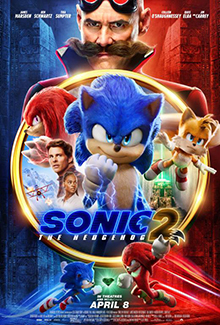
Sonic the Hedgehog 2 (*)
Sonic the Hedgehog 2 film poster.jpg

I've heard only good things about the first, but since I haven't seen it, I don't intend on seeing the second yet.


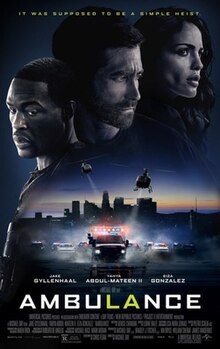
Ambulance (**)
A poster featuring the faces of two men and one woman. Underneath them is an ambulance being pursued by the police. The title, "Ambulance", is also present with the letters "LA" in a different color, noting that the story takes place in Los Angeles.

The directing and performances look good, but this is a story that doesn't seem to have many surprises.  It feels like an extended version of police procedural TV show


April 15

Fantastic Beasts: The Secrets of Dumbledore (***)
Fantastic Beasts, The Secrets of Dumbledore teaser poster.png

It think this series has a structural problem by creating a 5-movie series instead of a trilogy.  It was only at the end of the 2nd film that the main story seems to progress.  I am curious as to where it is going and especially because I love the character of Kowalski that I will probably see it in the theater.


April 22

The Northman (*)
The Northman.png

I saw some people who were very excited about this film.  It does seem to have a bold visual style, but it looks so bleak and dreary that I have little interest.


Thoughts?