
 |
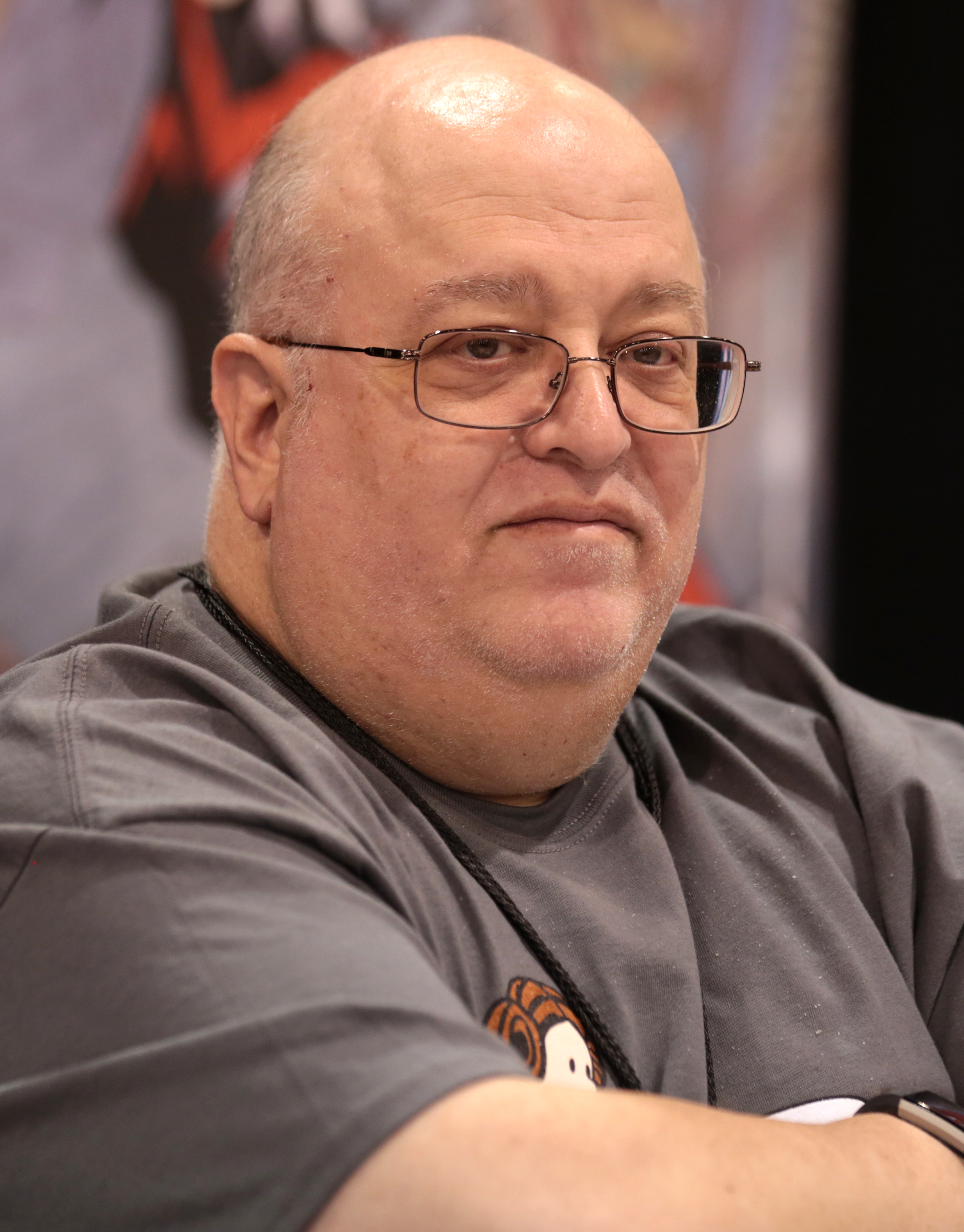
| Photo by Gauge Skidmore |
I've been writing for most of my life. I don't know that I am very good, but sometimes I look back on my early work and at least I am better than I was.
But one of my other observations is that in my early writing I am clearly trying to imitate the writers I admired. I can clearly see my Frank Miller phase and then my Alan Moore phase. But in my own writing, I can see the biggest influence on my early writing was clear:
Peter David.
Something to remember about comic books in the 1990's was that the artist was king. Todd MacFarlane, Jim Lee, Erik Larson, Alan Silvestri, Jim Valentino, Whilce Portacio, and others were making tons of money for Marvel. Eventually they took their talents to form their own creator-owned company: Image Comics. The title of the company was not an accident as it emphasized the art.
But Peter David was the writer that made me realize that art means nothing without a good story. On top of this, bad art was tolerable if the story was great.
 |
This was clear to me when David took over X-Factor. The original X-Factor team was one of my favorite comics at the time. It was a team made up of the original X-Man: Cyclops, Marvel Girl, Angel, Beast, and Iceman. But when they rejoined the X-Men, instead of cancelling X-Factor, they decided to make a new team made up of characters that seemed to be underused by the main franchise: Havok, Polaris, Wolfsbane, the Multiple Man, Guido Carosella, and Quicksliver. Honestly, I thought that this was a terrible idea. On top of that, the artist they hired for the book was Larry Stroman. Now taste is subjective, but I did not care for his overly-stylized, cartoonish art. I'm like Homer Simpson: I like my pictures to like like the things they look like. Everything about this book had the earmarks of something terrible.
But I maintain that Peter David's X-Factor may be one of the best Marvel series ever.
By taking underused characters, David was able to really explore them as characters without a lot of oversight. He could take chances with them and let them grow and evolve.
Part of David's power as a writer was his versatility. He could write action, drama, romance, and comedy seamlessly. Before the MCU had their cinematic Marvel style of writing, David perfected it. He could grip you with tension, break that tension with a giant laugh, and then break your heart all within the space of a few panels.
I still quote some of his jokes when people applaud me for something, I use the words of Madrox the Multiple Man: "Please, no applause. Just throw cash."
He was able to do this because he understood character.
One of the greatest single issues of a comic book I've ever read is X-Factor #87. After the events if Executioner's Song, each of the team members has to sit down and talk with a therapist. There is almost no action in this issue. It involves each individual member of the team staring right at the reader and baring their soul. In just a few short pieces of dialogue he was able to completely break down the essence of everyone on the team. Most people remember how he was able to explain why Quicksilver was a such a jerk in the comics. But for me, I remember Guido "Strong Guy" Carosella. I have never forgotten how he said with a giant smile on his face, "But to this day I'm in constant agony. Constant."
Just this year, I finally go a Wolfsbane action figure so now I have a complete set of this X-Factor team on my shelf. I'm looking at them right now as I type these words, reminding me of all of the great stories that David wrote.
 |
But David is probably most famous for his work on The Incredible Hulk. His run on that book as never been topped. He brought in such strength to the character that David helped keep him relevant in the decades that followed. He not only gave us the classic "Joe Fixit" character but the "Professor Hulk" that was eventually adopted by the MCU. Of course David's "Professor Hulk" was a much more interesting character. Rather than just being Banner's brain in a Hulk body, David's creation was a true amalgamation of Banner, the Grey Hulk, and the Green Hulk. He was brilliant and rageful and crafty. It was a difficult character to get exactly right, but he did it.
His Incredible Hulk had some truly shocking moments of murder and mayhem. I think he created the ultimate Hulk villain in the Maestro during his miniseries Future Imperfect.
David dabbled a little DC by creating Young Justice, a book that was ahead of its time in how silly and fun it was. He also explored the supernatural and religion in his underrated Supergirl series. He is also the one who gave a radical new take on Aquaman, giving him the hook hand and beard. This was one of my favorite eras for Aquaman and is reflected in his time in Grant Morrison's JLA.
He is also famous for creating Miguel O'Hara: Spider-Man 2099. This book, like all of his books, was filled with thrills, drama, and humor.
David also wrote the only Star Trek novel I ever read: Q-Squared. This was a fantastic story that I still remember and would have made an amazing 2-part episode to the series, tying together Trelane from the original series and Q from the Next Generation.
As the years went on, his writing got darker. In the second volume of X-Factor, Jamie Madrox has a son with Siryn. What happens in that issue is so heartbreaking that I can barely write about it without getting emotional. As he wrapped up the stories of these characters, not everyone ended up with a happy ending. A few years ago, his Ben Reilly: The Scarlett Spider was one of the most nihilistic things I had ever read from him.
Perhaps he was in a dark place because his health was failing. This man who had brought so much joy to readers and who had made Marvel so much money with his treasury of stories was going bankrupt due to medical bills. In 2012, he suffered a stroke and his condition slowly deteriorated. In the subsequent years he had strokes, heart attacks, and kidney failure. He passed away on May 24th, 2025 at the age of 68. He had 4 daughters: one with his ex-wife and one with his widow.
I don't know how much comfort this would be to him or his family. but Peter David's life touched mine. He helped shape my own voice. So in a way, he lives on when I write anything. And I will continue to share his stories so that they can know the joy I know:
The joy of knowing Peter David.

No comments:
Post a Comment