ReasonForOurHope

Monday, July 1, 2024

New Evangelizers Post: Jesus and the Rich Man Part 3


I have a new article up at NewEvangelizers.com.  

Peter then states that, “We have given up everything and followed you.” (Mk 10: 28) In Matthew’s Gospel, this statement is followed up with, “What shall we have, therefore?”(Mt 19:21) This question appears to be implied from this statement of Peter’s in both Mark and Luke. This shows that the disciples still did not understand the spiritual foundations of Christ’s teaching. Culturally, this would have been very difficult for them. As mentioned earlier, wealth was considered a blessing from God. In addition, notions of the Messianic Age that were popular at this time held that there would be increased worldly prosperity for His followers, not poverty and privation.

Jesus responds by addressing those who have “given up house or brothers or sisters or mother or father or children or lands for my sake and for the sake of the Gospel…” (Mk 10:29). As mentioned earlier, the disciples would have had to leave their houses and property to follow Jesus. In Mark’s Gospel, we know at least that Peter is married from the account of the cure of his mother-in-law (Mk 1:29-31). Jesus also addresses the loss of earthly familial relationships. This is parallel to the scene earlier in Mark’s Gospel where Jesus’ family think He is out of His mind and try to take Him. Jesus’ response is, “Whoever does the will of God is my brother, and sister, and mother.” (Mk 3:35) In this passage, Jesus is showing that even if His own earthly family rejects Him, He will have a new, much larger family in the spirit. This saying, which Jesus applied to Himself, is now applied to the rest of the disciples who have also “given up” their family relations for the sake of spiritual ones. They will receive “a hundred times more now in this present age…and eternal life in the age to come.” (Mk 10:30) Jesus is not just speaking about an apocalyptic time (the age to come), but of the time of a person’s earthly life in the Church (the present age). The word here for “age” could be translated in this term of time or it could be translated in terms of space (“world to come”).

When speaking of what the disciples will gain, it is of note that he says they will gain “houses and brothers and sisters and mothers and children and lands…” (Mk 10:30) But omitted from this recompense are “fathers,” even though they are mentioned as those that have been sacrificed for the sake of the Gospel. In the above passage from Mark 3:35 regarding Jesus and His family, He also does not mention a “father” in those who do the will of God. One explanation for this is that this lack of a father represents an anti-patriarchal view of how the Christian community should be organized. In the ancient world, the father acted as the head overseer of the household. Without a father, it could imply that the community was supposed to be completely egalitarian within its structure, where no disciple had some kind of patriarchal authority over another. In the stories of “The Greatest in the Kingdom” (Mk 9:33-37) and “The Ambition of James and John” (Mk10: 35-45), we can see Jesus addressing controversies regarding titles of rank in leadership. The absence of the “father” reference in the community would be harmonious with Christ’s point that leadership is a leadership of service.

In the final lines of the passage, we once again have a reference to “eternal life.” We can see that Mark begins with the rich man’s question, “Good Teacher, what must I do to inherit eternal life?” And now Mark is ending with a direct answer to that question. It also serves as a final contrast to the disciples who answer the call and of the one rich man who does not. Jesus’ final statement in this passage is, “But many that are first will be last, and the last will be first.” (Mk 10:31) This last statement is a warning to the disciples to whom He is addressing this message. Just because you are among the first to be called or the closest to Him, this “does not necessarily give them preeminence, nor any exclusive right to the blessings promised by him.” It also once again subverts the common view of the relationship between wealth and beatitude.

From a pastoral perspective, I would concentrate on three aspects of the story. The first would be that of impediments to the call. I would share with a congregation that all of us are called to follow Jesus, but we need to reflect on what is holding us back. In the case of the rich man, it was his possessions. As someone who loves material things (I am a collector of toys and comics), I understand this struggle. Am I able to prioritize God and others before my own material possessions? As the story points out, the giving of the possessions is necessary for the spiritual perfection of the man. But for many of us, material wealth may not be that obstacle. But if anything is preventing us from following Christ, we should consider if we will be like Peter and the disciples or like the rich man.

You can read the whole article here.


Saturday, June 29, 2024

Film Flash: Horizon - An American Saga - Chapter One


15 words or less film review (full review to follow soon)


Not 1 movie, but half of 4 movies about the importance of virtuous, strong men.


Friday, June 28, 2024

Film Review: The Bikeriders


Sexuality/Nudity Mature

Violence Mature

Vulgarity Mature

Anti-Catholic Philosophy Mature

I have never understood motorcycle culture.  It is just something outside of my interst or experience.  So automatically, there is a barrier to me engaging in a movie like The Bikeriders.  

But the movie failed to show me why I should be interested.

The Bikeriders is the story of a motorcycle club in the 1960's.  It is told primarily from the point of view of Kathy (Jodie Comer) a young divorcee who falls in love with biker rebel Benny (Austin Butler), who is the coolest guy in the Vandals Motorcycle Club, led by Johnny (Tom Hardy).  The club is made up of various misfits of society that find a manly community in each other.  But as the club grows, they begin to devolve into criminality while the original members begin to question their place in the changing world.

The main reason for this movie's failure is that it could not convey to me why anyone would want to be a part of the Vandals.  The initial appeal seems to be the appeal of riding.  There is one small scene where Benny leads the police on a chase and revels in the open road.  But this moment is fleeting and it does not translate to the other members.  Instead, it all seems like a waste of time.

Another appeal that could have been shown is the sense of importance.  One of the narrative devices is that the characters are being interviewed by photographer Danny (Michael Faist).  As a restult, we have the members of the club tell us why they want to be members of the club.  But this has little impact on the emotional connection we have for the club.  What writer/director Jeff Nichols needed to do was to show us these men in their normal lives and in doing so show how they feel isolated, unappreciated, and weak.  And then when we see them in the club, they have fellowship, esteem, and strength.  If we saw that, we would know why the club was so important.  But because of this failure, the entire endevor feels like a waste of time.

The constant problem is the Nichols ignores the principle "show, don't tell."  Johnny wants to be just like Benny.  How do we know this?  Because we have a scene where Johnny decides to behave in a way that mirrors something he saw Benny do?  No.  Because Kathy says, "Johnny wanted to be just like Benny."  The movie is filled with these moments where it tells you what the characters are thinking or feeling instead of just showing us.

The story of these bikers is an exploration of their search for masculinity.  That's why it so baffling that the main way we see the story is through Kathy's eyes.  Perhaps the idea is that she is experiencing this macho culture from the outside.  But she always on the outside.  If the story was told from the point of view of someone joining the club, that would be more intersting.  It also doesn't help that Comer narrates the story with the tone of a busybody church lady spreading the latest gossip about the new parishoners.  

One of the central conflicts is Johnny's desire to have Benny take over the club, but Benny resisting any kind of responsibility.  Again, the drama is lost because the stakes do not seem valueable.  During these dialogues, all I could here was Johnny Cash singing, "You can have it all... my empire of dirt."

The only thing that keeps this from being a total disaster are Butler and Hardy.  Butler gives a traditional dangerous rebel.  He is (as they sang in Grease 2) a cool rider.  He smolders with sufficient intensity and charisma that you can understand why women want to be with him and men want to be him.  Hardy makes some incredibly unusual choices in voice and facial expression with Johnny, but somehow it works.  His tough-guy exterior is his armor.  And you can see him slowly lose control of his little kingdom as he begins to drown in the madness of the world.

This is a remidner that humanity is community.  Part of human nature is that we need to be connected to each other.  We will either find a fulfilling community or a toxic one.  But we can never be truly alone.  And that company will shape who we become.

I just wish the movie was up to the task of telling that story.


File:Star rating 1 of 5.png
 

Thursday, June 27, 2024

Trailer Time: Here


I find this movie very intriguing.  This movie will either be very good or terrible.

First of all, I'm fascinated by the construction of entire film from a single angle.  To my memory, this has never been done in modern movies.  I'm worried that this will be too much of a gimick movie and that will try to coast on that one trait.  1917 ran that risk, but they used their single-take format so effectively that it made the movie a unique film experience.

I am also fascinated by the fact that we have a Forrest Gump reunion with Robert Zemeckis, Tom Hanks, and Robin Wright.  Hopefully this isn't stunt casting and we are going to get some strong performances.

They showed this trailer on the Today Show and afterwards, the female hosts were sobbing.  So to test it, I showed it to my wife who was also sobbing by the end.  

I think I get it.  We spend so much of our life in our homes, particularly in certain spaces.  I can think of all the home movies my father took in our home, in our family room during brithdays, holidays, and all other occasions.  There is something special about having that small, special place of your own where you can be yourself and you can truly feel home.

Thoughts?

Sunday, June 23, 2024

Sunday Best: Top Movie Scores (#10-#1)

 Last week I posted not only my criteria for choosing top movie scores, but also the bottom half of my top 20 choices.  You can read about those and here.

Without further ado, here are the Top Ten Movie Scores of All Time


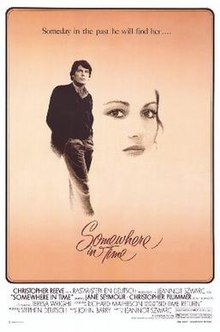
10.  Somewhere in Time - John Barry


The most romantic movie ever made needed a strong emotional theme.  While classic compositions from Rachmaninoff accecuate the sound, Barry's timeless (no pun intended) score cuts to the heart with all of its tragedy and triumph.  It still boggles me that no one has tried to make a musical out of the building blocks that Barry left.

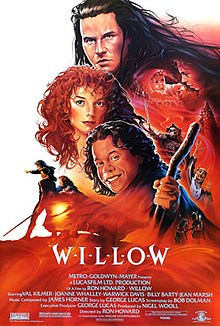
9. Willow - James Horner

For years I thought this was a John Williams score, which is a compliment to Horner.  It is every bit as epic and memorable as any Williams score.  "Willow in the World" is filled with awe-and child-like magic, the festival theme is full of life and fun, the villains themes are dark and forboding.  But "Madmartigan" is a song that raises my spirits and fills me with the call to high adventure.

8. The Mission - Ennio Morricone

f

There are some pieces of music that break your heart every time you hear them.  The music from The Mission is one those things.  Morricone is best known for his work on the Spaghetti Westerns.  But I believe this is his masterpiece.  The music conveys not only the violence and forboding of this tragic story, but it is filled the beauty that this world has to offer.  There is a line where the bishops says, "With an orchestra, the Jesuits could have subdued the whole continent."  When you listen to "Garbiel's Oboe" you believe that this could be true.  That song raises your soul to the heights of heaven only to feel it is just out of reach of this world.  When the heavenly and hellish songs collide in the end, the darker tones push out the brighter ones.  But Morricone's genius is that it is only the heavenly songs that linger in your memory.

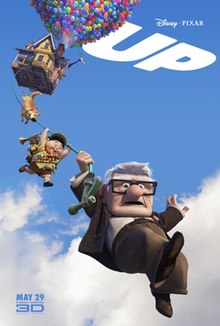
7.  Up - Michael Giachino

A house is in the air, lifted by balloons. Dug, a dog, Russell, a boy and Carl Fredricksen, an old man, hang beneath on a garden hose. "UP" is written in the top right corner. The release date "May 29" is displayed on the bottom left corner.

One of the great things about this score is the versatile use of the main theme.  With a few simple notes, Giacchino can convey fun, nostalgia, romance, adventure, and utter, utter heartbreak.  It is quite incredible how he can make every song sound different while using the same sequence of notes.  That take a real mastery, espeically considering how powerfully you feel contradicatory emotions depending on how those notes are arranged.

6. Superman - John Williams

Few scores are as iconic as this one.  Williams forever merged character who existed for forty years with a song that will forever be associated with him.  It has all the triumph, power, and virtue that you associate with Superman.  The musical theme for Krypton has all the grandeur of that great society.  "The March of the Villains" is a fun throwback of buffoonish bad guys.  The love theme glides on air like the two main characters.  And the theme before he turns back the world is so empty and heartbreaking.  A truly great score.

5.  Star Wars Episode VI: Return of the Jedi - John Williams

. This poster shows a montage of characters from the movie. In the background, Darth Vader stands tall and dark in front of a reconstructed Death Star; before him stands Luke Skywalker wielding a lightsaber, Han Solo aiming a blaster, and Princess Leia wearing a slave outfit. To the right are an Ewok and Lando Calrissian, while miscellaneous villains fill out the left.

What makes this Star Wars score rise so high in the ranks are the "Return of the Jedi" theme where Luke rescues Han.  That piece of music embodies all  of the great and timeless adventure of the Saga.  The score also encorporates so many of the previous themes like "Imperial March" and "Yoda's Theme."  "The Emperor's Theme" has a ghostly forebodance to it that is haunting.  But there are two pieces that rise above the others.  The first is the final confrontation between Luke and Vader.  It builds to such an emotional climax that you can feel the entire story riding on this moment.  The use of the men's chorus gives it an almost religious significance, like the ultimate battle between good and evil.  The second is "Yub-Nub."  Rarely is there a more joyful song to end a story.

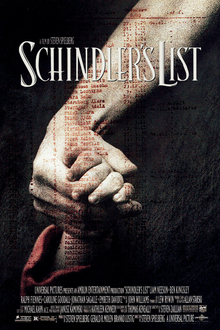
4.  Schindler's List  - John Williams

This is so unlike most of John Williams' work.  He has to work on more subtle emotions through most of the score.  But when he pulls at the heartstrings, it rips you in two.  You can feel the spirit of the Jewish people pervade this score, their centuries of struggle and the calamity they are enduring.  His main theme has such highs and lows that it touches the depths of the human heart.  Through its horrible saddness, there is light: just enough life to give us hope in the world.

3.  Braveheart - James Horner

Horner gave us a score that captures the grandeur of this movie.  His use of the bagpipes is so versatile that I am literally shocked how he pulled it off.  He makes them fun and thrilling, but also hauntingly beautiful.  But he doesn't rely on that instrument as a crutch.  He pulls out a beautiful orchestration.  In the final scenes, the gentle and uplifting music contradicts the horror on display.  And yet it works so well down to the very last note that closes out the movie with a perfect marriage of sound and image.

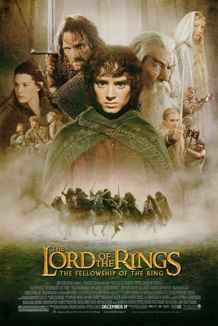
2. The Lord of the Rings: The Fellowship of the Ring - Howard Shore

Shore established the sounds of Middle-Earth with this movie.  I remember before the movie came out I heard "Concerning Hobbits."  From that one song alone, I was transported.  The Shire felt like a real place in a way that no other fantasy world did.  And that is what Shore did with the entire score.  He made Tolkien's world feel like a lost history with a real cultural treasure.  His Fellowship theme is one of the greatest adventure compositions ever.  "To the Bridge of Khazad-dum" might be one of the greatest chase sequence songs ever written, all the way down to its heartbreaking end.  But "The Breaking of the Fellowship," carries all of the movie's big themes and strong emotions to its powerful conclusion.

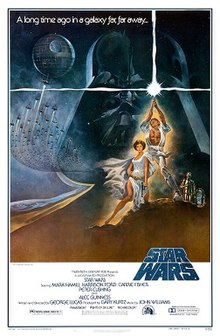
1. Star Wars Episode IV: A New Hope  - John Williams

Film poster showing Luke Skywalker holding a lightsaber in the air, Princess Leia kneeling beside him, and R2-D2 and C-3PO behind them. A figure of the head of Darth Vader and the Death Star with several starfighters heading towards it are shown in the background. Atop the image is the tagline "A long time ago in a galaxy far, far away ..." On the bottom right is the film's logo, and the credits and the production details below that.

There is no topping this score.  It is soaked into every part of the movie and into every part of popular culture.  The main theme alone deserves endless credit.  But Williams also gave us Wagnerian works like "Princess Leia's Theme" along with fun earworms like "Mos Eisley Cantina."  Every piece of music is in this score is utterly transportive.  Whenever I hear it, I am reminded of the words from Field of Dreams, "The memories will be so thick, people will have to wipe them from their faces."  I am not ashamed to say that when I am driving, if I hear the final Death Star battle sequence, I grip the wheel a little tighter and I can feel myself racing down the trench until Han Solo has my back and I take that final shot.  This might be the perfect score.


HONARABLE MENTIONS

Back to the future

A Beautiful Mind

Aliens

The Last of the Mohicans (1993)

Pirates of the Caribbean: The Curst of the Black Pearl

Krul

Dragon: The Bruce Lee Story

Star Wars Episode V: The Empire Strikes Back

Star Wars Episode II: Attack of the Clones


Thoughts?

Saturday, June 22, 2024

Film Review: Inside/Out 2


Sexuality/Nudity Acceptable

Violence Acceptable

Vulgarity Acceptable

Anti-Catholic Philosophy Acceptable

Allegory is notoriously hard to do well.  It either comes of as too simplistic or too on-the-nose to be effective.  It is especially difficult when dealing with complex things found in a coming-of-age story.  But against all odds, Inside/Out 2 has cracked the code.  Not only is it a wonderful allegory of adolescence, it is the best PIXAR movie since Toy Story 3 (and yes, that includes the original Inside/Out)

The movie picks up a few years after the original.  Riley (Kensington Taliman) is getting ready for high school.  Her interior emotions of Joy (Amy Poehler), Sadness (Phyllis Smith), Anger (Lewis Black), Fear, (Tony Hale), and Disgust (Liza Lapira) have been guiding her emotional growth.  Inside, we find that the memories she holds onto as core memories begin to form her basic beliefs, forming a sense of identity.  Riley heads off to a hockey camp with her 2 best friends, but she finds out they are going to a different high school.  This sets off an emotional crisis where she has to choose between her old friends and impressing the older, cooler girl Valentina (Lilimar).  Inside, puberty is causing Riley to have new emtions including Anxiety (Mya Hawke), Envy (Ayo Edebiri), Ennui (Adele Exarchopolous), and Embarrassment (Paul Walter Hauser).  The original emotions are having trouble navigating Riley's new adolescent life and so the other emotions begin to take over.  Anxiety eventually banishes her old emotions and buries them deep down.  Anxiety begins to layer in new core memories, changing Riley's belief core.  This starts the quest for the original emotions to find Riley's original, innocent beliefs before her new beliefs are corrupted forever.

First of all, the movie is stunning to watch.  Director Kelsey Mann was smart to not try a complete redesign of the original, but instead added more layers to Riley's inner world.  The new character designs are also great.  Anxiety's wide eyes and wirey frame convey her emotional state very strongly, as does Embarassment, who towers over everyone else, but tries to hide in his hoodie.  The characters have a strong attribution by appearance, so that you understand their core essence just be looking at them.  

But in order for the allegory to work, it has to come from a place of deep truth.  And that is where the movie really shines.  Riley's painful social navigation is all too universal in its feel.  Social dynamics of high school are horible to navigate and perfectly relatable.  One of the great things is that from an adult on the outside, I can see how little pressure the older girls are putting on Riley to fit in.  But from inside, the pressure is incredible and perfectly understandable.

As Anxiety begins to take over, the allegory works even better.  There is a wonderful scene where we are in Riley's imagination centers and Anxiety is ordering the imagination to draw up every worst-case scenario.  I also have to say I think that this movie has (what might be) the best visual representation of what a panic attack is like both from the inside and the outside.

There moments of real pathos and depth, even from the allegorical characters.  There is a heartbreaking moment where Joy contemplates her role in Riley's life going forward and says, "Maybe this is what happens when you grow up.  You feel less joy."  That line was so potent and powerful, it reminded me of The Breakfast Club: "When you grow up, your heart dies."  So often we let the worries and anxieties of adulthood rob of us of that childlike joy.  I think this is what Jesus meant when he said that you must have the faith of child, because it is a joyful faith.  I think, perhaps, only the saints retain the joy of childhood.

I also love how our memories form our beliefs.  I've been teaching adolescents for decades now.  One of the things I've found is that they are always in search of who they are.  It is a time when they don't know who they really are, but they are getting so many messages from people telling them who they ought to be.  At first, I was a little dubious of the movie's concept of belief formation.  Riley's original belief comes down to "I'm a good person."  This is something I thought was too caught up in a self-esteem ideology.  But the movie was smarter than I gave it credit for.  The simplicity of the belief is refelctive of her innocence, which is now being changed and tested.

It was also a brilliant move on the part of writers Meg LeFauve and Dave Holstein to make the characters almost exclusively female.  First of all, one of the sad realities of psychological development is that when girls reach adolescents, they become higher in negative emotion.  This is perfectly reflected in Riley's interior life.  The second is that it completely side steps the romantic psycho-sexual development of puberty.  I think this would have been too big of an issue to tackle appropriately.  Turning Red tried to handle it and it was a colossal failure.  Instead, the film makers give us an honest and insightful look into the emotional life of the pubescent female without having to lose any of the innocence required to tell the story appropriately.  As a result, this movie is something the entire family can enjoy.

Human beings are messy and complex.  And our emotions are neither good nor bad, though they can lead us in negative directions.  This movie shows how everyting, even Anxiety, has a place in our lives in its proper place.  This is a lesson that is not conveyed by preaching, but by letting us experience the inner journey in Riley, which is also really the inner journey in all of us.

Star rating 4 of 5.png

Friday, June 21, 2024

Film Flash: The Bikeriders


undefined


15 words or less film review (full review to follow soon)


A story not worth telling that is told from the least interesting perspective.


File:Star rating 1 of 5.png