
15 words or less film review (full review to follow soon)
Two great Thor stories from the comics buried under Taika Waititi's overbearing humor.
 |

15 words or less film review (full review to follow soon)
|
St. Thomas Aquinas is the most important Catholic philosopher. His work was so important that during the Council of Trent, his Summa Theologiae was placed on the altar along with the Bible as the guiding documents for the philosophy of Catholicism.
To understand much of St. Thomas' ideas, you have to understand the ancient Greek philosopher Aristotle. In Aristotle, St. Thomas found a philosophical grounding to the rational component of Christian thought. One of the things I admire about St. Thomas is that he does not reference Aristotle as some kind of appeal to authority. Instead, he sees that Aristotle argues St. Thomas' own positions effectively and so employs those arguments in his writing. Joseph Pieper made clear that St. Thomas never quoted Aristotle simply to impress his readers with Aristotle's name. He would quote Aristotle, when he thought Aristotle made a good argument.
Particularly, St. Thomas adopted much of Aristotle's metaphysics. Metaphysics is that area of philosophy that deals with the question of what exists. While this may sound like something that is high-falutin and unimportant to every day life, nothing could be further from the truth. Your metaphysics will radically affect how you live.
For example, does God exist? That is a metaphysical question. If you see that He does, you will live a very different life than if you believe that He does not. It is the difference between a life that is guided and governed by a good, loving, and rational Supreme Being or living in a random, purposeless, and indifferent universe. As you can see, metaphysics matters.
This includes the questions about what this material world actually is. Plato, Aristotle's teacher, believed that this material world was unimportant. It was almost like what Buddhists believe that the material world is an illusion. The goal, for the Platonist, is to rise above material things and contemplate the only real things that exist: immaterial Forms. Why did Plato come to this conclusion?
There are many reasons. But essentially, he saw that material things always change. This is true. There is nothing in this material world that stays the same. Even the chair I am sitting in now is slowly disintegrating so that in ten million years it will be dust. Because of this, Plato said that you could never know anything about a material thing, because it is constantly changing, it is never the same thing. However, you can know things that don't change. The laws of triangularity, for example, never change (e.g. the interior angles of a triangle will always equal 180 degrees). He concluded that you could only know things like this that do not change. And because you could know them, they had to be real. In fact, they had to be the only real things.
Aristotle disagreed with Plato. He did not think that the material world was unimportant. Aristotle said that all material substances are a composite of form and matter. All the material things in this world are composed of matter that have been shaped into some kind of form. Together, the form and matter give us a substance.
With this in mind, Aristotle could say that would could know material things, because when we talk about my chair, we are talking about the form of the chair being expressed in this particular material. Even as the material changes and even breaks down a bit, it is still a chair because the form gives it a unity. It is not a random heap of changing material components. The form makes it clear that this substance is a chair.
To be clear, Aristotle understood that the distinction between form and matter is a conceptual distinction. It is a distinction that Aristotle makes so that we can understand how the form and the matter work together. But, for the most part, they do not exist separately. There is no matter that exists except in some kind of form. The form of the chair does not exist in some idealized state, even when the chair completely disintegrates.
If that is confusing, think about words. You can see a clear distinction between the material of a word (either printed out or stated out loud) and its meaning. However, when you see or hear a word, the material component is always with the immaterial meaning. It is an odd fact of the mind that once you know how to read, you cannot NOT read words when you see them. The words you are reading now are not random pixelated matter. Nor are they immaterial ideas. They are material pixels and immaterial meanings together.
Okay, if you've stayed with me thus far, I thank you for your patience. Why are we taking such a long digression into Aristotelian metaphysics?
Because Aristotle shows me a flaw in a common abortion slogan.
Too often I hear poor arguments that try to justify abortion. One of them is something to the effect of "The life of a woman is more valuable than a clump of cells."
The implication is that you have on the one hand a fully formed human person with rights and innate value and on the other hand you have an undifferentiated material heap.
The key is this word "clump." A "clump" implies something that is random in nature that really has no unity or specific form. Think about when you have used this term in your life. Maybe you made a clump of dirt, or garbage, or dirty clothes. For the clothes, they may have some things in common in that they are all clothes, but they do not have a unity. They are some t-shirts, a couple pairs of socks, along with your favorite hoodie. But all of those are different substances with their own form that simply happen to be in proximity to each other. But the clump is not really its own substance, its own being.
A clump of cells implies that there is no unity. You have random things that are their own substance that are placed in proximity to each other.
But this is incorrect.
Recently I cam across a statement by a biologist who worked on embryos. This person wrote "I used to work in a cell culture lab where we maintained actual clumps of cells. A clump of cells is a disorganized, un-unified, non-developing mass of cells. They are growing in size, but not developing. The main difference between a clump of cells and an embryo is that the embryo is a whole human organism with goal oriented growth and development. Clumps of cells don't do that."
The point is that a true "clump" of cells may grow. But they don't develop in a unity. To the naked eye, an embryo may look like a clump, just as to the naked eye an cloud may look like an elephant. But in this case, the looks are deceiving. The embryo will grow in a directed unity. This is because the "clump" is not its own substance because it has no form to give it unity. The embryo is its own substance because it has a form that gives it unity.
It is as incorrect to call the embryo a "clump" of cells as it would be to call me a "clump" of cells. To be clear, a fully grown human and a human embryo are in different stages of development. But we both have the same essential form of humanity that gives our substance a unity as we change. We all experience this. You have changed so much over the years, particularly in your material appearance. But through it all you are still you. That is because your form gives you a unity that makes you you through all your changes.
And you have had this form since the moment of conception.
So next time someone talks about aborting a clump of cells, keep in mind that when they say this they are also aborting the wisdom of Aristotle.

We now live in a post Roe v. Wade America.
Praise God!
In this current legal situation, abortion is not automatically illegal across the country. Instead, each state now gets to determine its own abortion laws. Some states like Ohio and Wisconsin are passing very restrictive abortion laws. Others, like New York and California will keep abortion legal in almost all cases.
Once the decision passed, I began to notice a number of people on social media, including Catholics, post things to the effect of “If you are living in my state and need to go across state lines to have an abortion, I will drive you!” I imagine that most of these are statements of ideological solidarity than actual offers of transportation. But it made me think that we made need a brief refresher for Catholics regarding the penalty for abortion.
Part of the confusion occurs because there are so many Catholics in this country who identify as “Pro-Choice.” John Paul II made clear in that “Among all the crimes which can be committed against life, procured abortion has characteristics making it particularly serious and deplorable. The Second Vatican Council defines abortion, together with infanticide, as an ‘unspeakable crime.'” (Evangelium Vitae, 58).
Elective abortion is completely contrary to the Gospel. As with the modern issue of “gay marriage,” Jesus never addresses abortion directly. But as John Paul II writes, “The texts of Sacred Scripture never address the question of deliberate abortion and so do not directly and specifically condemn it. But they show such great respect for the human being in the mother’s womb that they require as a logical consequence that God’s commandment ‘You shall not kill’ be extended to the unborn child as well.” (EV, 61)
Based on the the principles of the Gospel, it must logically follow that abortion is wrong. To put into a simple syllogism.
The intentional killing of innocent human life is murder.
Abortion is the intentional killing of an innocent human life.
Therefore, abortion is murder.
This sin is so grave that it carries with it a grave penalty:
“A person who procures a completed abortion incurs a latae sententiae excommunication.” (Code of Canon Law, 1398)
An excommunication is “the principal and severest censure, is a medicinal, spiritual penalty that deprives the guilty Christian of all participation in the common blessings of ecclesiastical society.” (Catholic Encyclopedia). In most cases, a formal excommunication from the Catholic Church involves a declaration from a bishop or the pope. A “latae sententiae” excommunication is one that is automatic. By virtue of the act itself, a person is excommunicated.
This means that the person is no longer able to have access to the grace of the sacraments. The sacraments are still valid, but they are obtained illicitly. For example, if an excommunicated Catholic receives a Catholic marriage, the sacrament is still recognized as valid, but the graces are not given to the excommunicated person. It is like someone who is in mortal sin receiving the Eucharist, where the Divine graces are not conferred.
No Catholic may, in good conscience, give any kind of material aid to an abortion. This is what the Catechism of the Catholic Church calls “formal cooperation.” (2272). This includes the woman who has the abortion done to them and doctor who performs the abortion.
But this also includes those who give other material aid. Imagine if someone comes to you and asks for money for an abortion or (as mentioned in the above social media posts) asks for a ride to another state for the purpose of getting an abortion. If you agree, and the abortion is completed, then you would be automatically excommunicated from the Catholic Church.
The gravity of the penalty is there to emphasize the gravity of the sin. Too many people today think that abortion is an issue of bodily autonomy or women’s rights. This obscures the fact that an innocent person is killed because he or she is inconvenient.
This is evil.
The excommunication helps communicate that abortion is evil.
(most of the text below is a repost from last year)


He has refused his Assent to Laws, the most wholesome and necessary for the public good.
He has forbidden his Governors to pass Laws of immediate and pressing importance, unless suspended in their operation till his Assent should be obtained; and when so suspended, he has utterly neglected to attend to them.
He has refused to pass other Laws for the accommodation of large districts of people, unless those people would relinquish the right of Representation in the Legislature, a right inestimable to them and formidable to tyrants only.
He has called together legislative bodies at places unusual, uncomfortable, and distant from the depository of their public Records, for the sole purpose of fatiguing them into compliance with his measures.
He has dissolved Representative Houses repeatedly, for opposing with manly firmness his invasions on the rights of the people.
He has refused for a long time, after such dissolutions, to cause others to be elected; whereby the Legislative powers, incapable of Annihilation, have returned to the People at large for their exercise; the State remaining in the mean time exposed to all the dangers of invasion from without, and convulsions within.
He has endeavoured to prevent the population of these States; for that purpose obstructing the Laws for Naturalization of Foreigners; refusing to pass others to encourage their migrations hither, and raising the conditions of new Appropriations of Lands.
He has obstructed the Administration of Justice, by refusing his Assent to Laws for establishing Judiciary powers.
He has made Judges dependent on his Will alone, for the tenure of their offices, and the amount and payment of their salaries.
He has erected a multitude of New Offices, and sent hither swarms of Officers to harrass our people, and eat out their substance.
He has kept among us, in times of peace, Standing Armies without the Consent of our legislatures.
He has affected to render the Military independent of and superior to the Civil power.
He has combined with others to subject us to a jurisdiction foreign to our constitution, and unacknowledged by our laws; giving his Assent to their Acts of pretended Legislation:
For Quartering large bodies of armed troops among us:
For protecting them, by a mock Trial, from punishment for any Murders which they should commit on the Inhabitants of these States:
For cutting off our Trade with all parts of the world:
For imposing Taxes on us without our Consent:
For depriving us in many cases, of the benefits of Trial by Jury:
For transporting us beyond Seas to be tried for pretended offences
For abolishing the free System of English Laws in a neighbouring Province, establishing therein an Arbitrary government, and enlarging its Boundaries so as to render it at once an example and fit instrument for introducing the same absolute rule into these Colonies:
For taking away our Charters, abolishing our most valuable Laws, and altering fundamentally the Forms of our Governments:
For suspending our own Legislatures, and declaring themselves invested with power to legislate for us in all cases whatsoever.
He has abdicated Government here, by declaring us out of his Protection and waging War against us.
He has plundered our seas, ravaged our Coasts, burnt our towns, and destroyed the lives of our people.
He is at this time transporting large Armies of foreign Mercenaries to compleat the works of death, desolation and tyranny, already begun with circumstances of Cruelty & perfidy scarcely paralleled in the most barbarous ages, and totally unworthy the Head of a civilized nation.
He has constrained our fellow Citizens taken Captive on the high Seas to bear Arms against their Country, to become the executioners of their friends and Brethren, or to fall themselves by their Hands.
He has excited domestic insurrections amongst us, and has endeavoured to bring on the inhabitants of our frontiers, the merciless Indian Savages, whose known rule of warfare, is an undistinguished destruction of all ages, sexes and conditions.
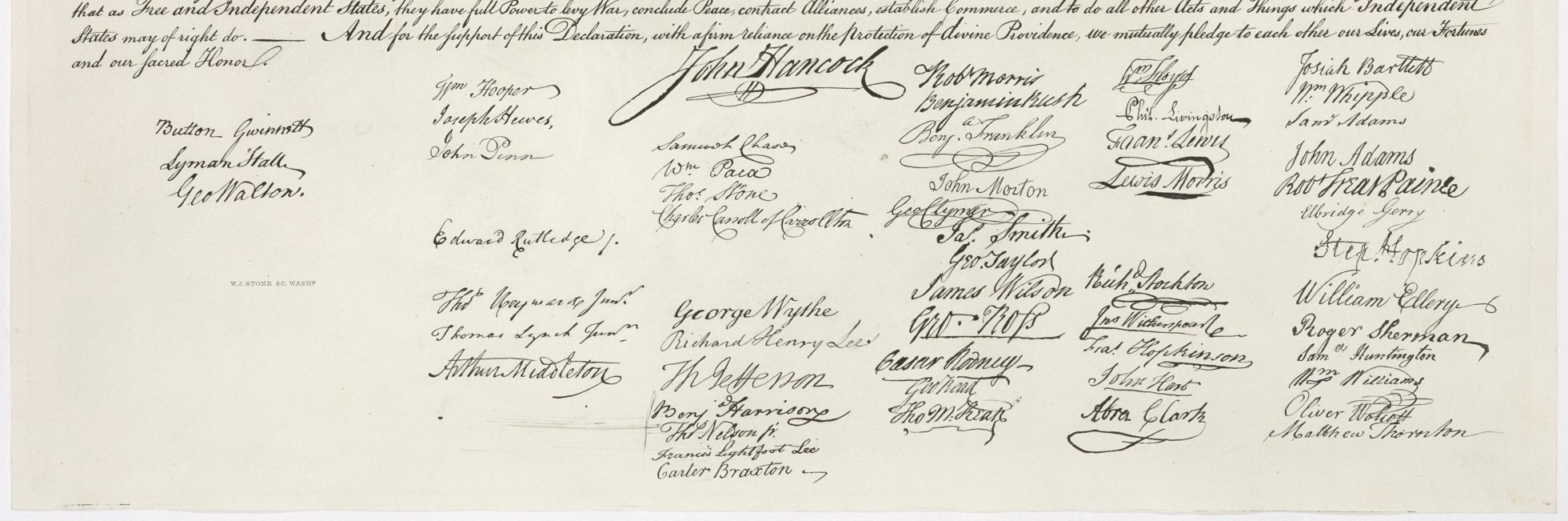

(repost and update.)



 |






This is post is very dear to my heart. It is also one of the most read posts on this blog. This makes me happy because it means more people got to hear Jakob's story and experience a small part of what made him so special.
I hope you will revisit his story again:
Sexuality/Nudity Mature
Violence Acceptable
Vulgarity Mature
Anti-Catholic Philosophy Mature
Have you ever watched one of those TV specials that begins with a rapid and sweeping musical montage to give you a taste of the artist's life?
Now, imagine that montage going on for two-and-a-half hours and you now have the experience of what it was like watching Elvis.
Baz Luhrmann has always been a director who has valued style over substance. It worked very well in Moulin Rouge! and moderately well in Gatsby. It was awful in Romeo + Juliet.
Sadly, Luhrmann's directing style fails to make a good Elvis movie.
Most biopics have inherent challenges to telling a coherent narrative. When writing about the entire life of a person, how do you encapsulate it in a satisfying three-act structure? Movies like Lincoln side-step this problem by a selecting a snippet within that historical figure's life that could be molded to a satisfying story.
With Elvis, Luhrmann makes the same mistake that Spielberg did with The Post: he takes an incredibly interesting story and he tells it from the least interesting perspective.
The movie is narrated by Col. Tom Parker (Tom Hanks), the corrupt promoter for Elvis Preseley (Austin Butler). It follows Parker's discovery of Elvis at one of his early concerts where his unique dancing style awakened the libidos of all the women in the crowd. Parker attaches to Presley like a parasite and builds him up so that he could feed on him throughout his entire career until the king is bled dry.
The best thing about this movie is Butler's performance. It is probably the best interpretation of an historical figure I have seen since Daniel Day-Lewis' turn as Abraham Lincoln. First of all, Butler inhabits the look, movement, cadence, singing, dancing, charisma, and presence of Elvis Presley. He infuses him with that strange combination of danger and innocence that Elvis was able to project. But that is only half of the battle. If he had ended with a simple impersonation, then he there would be nothing to write home about. But Butler makes Elvis a fully realized character. He is constantly haunted by a loneliness that is hard to describe. Butler shows us his utter vulnerability and heart while at the same time not shying away from his vices. This is most important in his musical performances where he gives us the intensity that is needed to match the King. His closer to the 1968 Christmas special had me rivetted.
The problem is that the movie never gives him the room to let the character shine. To borrow a metaphor from The Cosby Show, Butler's performance is like an expensive steak presented on a the inside of a garbage can lid.
Luhrmann is dazzling and dizzying in his style, but it is often overwhelming. He has no confidence in letting the actors or the music carry the movie. I didn't notice it until my wife pointed it out, but they almost never let us sit and hear an entire song of Elvis'. Too often they chop it up or cut away to something else. Scenes are truncated and move on at lightning speed. If you've ever seen the pensieve seen in Harry Potter and the Deathly Hallows Part 2, the movie moves with that level of rapidity. It feels more like an impressionist painting: Luhrmann wants to present small images that leave the sense of Elvis's life without telling you an actual story. He wants to connect Elvis' music with the primal call of sexuality with the transcendent ecstasy spirituality while at the same time connecting him to large social events like the assassinations of MLK and RFK as well as segregation and racial politics. But so much of it feels forced and shallow that it never really digs in deeply to this character.
This is a real disservice to the other actors and characters. I didn't mention most of them in the summary because I often don't remember them. There were often moments where someone would have a serious and dramatic conversation with Elvis and I would turn to my wife and ask "Are we supposed to know what this person is?" In fact,
And I have to say, this may be a career worst performance for Hanks. I understand that he was recovering from COVID and that Luhrmann insisted that he use a ridiculous accent that Parker did not actually have. In addition to this, Hanks wore a fat suit instead of fluctuating his actual weight (which has caused him serious health issues). Unfortunately, Hanks' Parker feels as artificial has his CGI characters in The Polar Express. And as I wrote, it is such a narrative mistake to make Parker the focus of the movie. In fact, most of the closing epilogue text is about Parker and not Presley, which feels like a complete disservice to Elvis himself.
Does the movie give any insight into Elvis?
That's a mixed bag. I find myself singing his songs around the house. As someone who has never been a gigantic Elvis fan, this tells me that it made an impression. I get a sense of the trajectory of his career and the movie does a good job of showing the toll this took on his body, mind, and soul. There is a sharp focus on the effect Elvis had on young women. At a time when human sexuality was verboten in public discourse, Elvis presents an awakening of sensual desires that are scary and mysterious to the teenager girls of the day. This would be more interesting if Luhrmann did not reduce Elvis to a sex object in the eyes of his audience. Even those who are his male fans are clearly experiencing primarily attraction. We don't get a strong sense of the fun or coolness of Elvis' songs.
But the movie portrays Elvis as an innocent victim of Parker. It feels like Elvis has so little responsibility for his poor choices. On some level, the movie is a Christian After School Special. Elvis' mother (Helen Thompson) warns Elvis about the dangers to his soul by living this life. And even early on the road, Elvis falls into fornication and drugs. And he then makes a Faustian deal with his own devil in Col. Parker. He gains the whole world and loses himself.
Elvis' own vices and excesses are strangely excused. At one point his wife Pricilla (Olivia DeJonge) tells him that she is leaving him. When he asks if its about the women on the road, she says she doesn't care about these infidelities. She clearly is uncomfortable watching him kissing dozens of fans on the lips, but she dismisses his dalliances as if it is nothing. In fact, she complains that he is no longer intimate with her. I don't know... if my spouse was sleeping around, I'd be worried what diseases they could be bringing into the marital bed.
Elvis feels like a bold experiment. But the nature of experiments is that many of them are doomed to failure. And that is the case here.
While this may make you appreciate Elvis the musician, it will not make you enjoy Elvis the movie.

