ReasonForOurHope

Sunday, March 14, 2021

New Evangelizers Post: Sacramental Matters


I have a new article up at NewEvangelizers.com.  

Recently I had a student ask the perennially controversial question “Why can’t women be ordained priests?” Even though this has been declared as a closed question by Pope St. John Paul II, it still recurs over and over. There are many ways to answer when this question arises, but the discussion led to something very important that we overlook about the sacraments and the Catholic faith in general:

Matter.

One of the big mistakes that keeps getting made throughout the centuries is the dismissal of matter in our relationship with God. The ancient heresy of Gnosticism, along with many others like it, held the view that spirit is from God, but the material world is evil. To be sure, there is some basis in Scripture for this view. Jesus says, “That which is born of flesh is flesh. That which is born of spirit is spirit.” (John 3:6) And in another place He says, “The spirit is willing, but the flesh is weak.” (Matt 26:41).

Our own experience of concupiscent desires bears witness to this. How often have we wanted to attend to spiritual things like the soul and God but we became distracted by some kind of attraction to a bodily pleasure like food or sex or rest and the like. When this happens, we tend to think of our body and the material world as a distraction from the higher world of spirit. Even the great philosopher Plato viewed the body as simply the prison of the soul.

However, we have to always remember that God created the material world along with the spiritual world. For this reason, matter, in and of itself, is good and not evil. And it is important to remember that human beings are material as well as spiritual beings. We are not angels imprisoned in material bodies, waiting to be liberated. St. Thomas Aquinas makes clear that the human person is the union of the body and the soul together. This is why death is so terrible, because human beings are torn apart at our core. To be a soul without a body is to not be fully human.

With this in mind, we can begin to see why our relationship with God must always involve body as well as soul. In all of our other relationships, the body is essential. Your parents are not only parents because of the love they bear in the hearts, but also from the biological generation that has occurred. That is why so many adopted children, even though they are filled with love for their adoptive parents, still have a deep desire to know where they come from biologically.

When it comes to our spiritual life, it is not a good idea to completely ignore the body. Doing this ignores our essential humanity. CS Lewis once wrote, “There is no good trying to be more spiritual than God. God never meant man to be a purely spiritual creature. That is why He uses material things like bread and wine to put the new life into us. We may think this rather crude and unspiritual. God does not: He invented eating. He likes matter. He invented it.”

On the show The Big Bang Theory, when the characters Sheldon and Amy first meet, he mentions how his mother makes him go to church once a year. Amy responds “I am open to the concept of a deity, but I’m baffled by one who takes attendance.” It is a funny line, but it also shows a lack of understanding the bodily nature of spirituality. We are not called simply to pray with our minds and souls, but with our bodies. We must physically attend the mass when we are able because our bodily presence reflects our spiritual presence.

This takes us to the sacraments themselves. Notice that Our Lord gave us seven sacraments with very specific material components. He did not set us up to continue moving away from the physical. Instead, in Him, the material is elevated by the power of the spiritual. All of this is to make one very important point:

The matter matters.

If the specific matter of the sacrament did not matter, then all that would be necessary would be the intention of the heart. But that is not the case. In order to have a valid baptism you need two material expressions: liquid and words (I am excluding here the very special exceptions of baptism by desire and by blood). In order to baptize, you must have the person be touched by water and the words “I baptize you in the Name of the Father, and of the Son, and of the Holy Spirit.” A few years ago, there was a church in my diocese that tried being very progressive and replaced the baptismal formula with “I baptize you in the Name of the Creator, the Redeemer, and the Sanctifier.” When our bishop found out about this, he instructed that all of those baptized in this way be contacted and informed that their baptisms were not valid. Why not?

Because the matter matters.

Returning to my discussion with my students, I asked them if I could perform a valid baptism with sand instead of water. They said now. I then asked if a priest could consecrate pizza and bear on the altar in bread and wine. They giggled, but they said of course not. The reason why is because Christ chose very specific material forms for the sacrament and the Church has always understood that the material component is essential for the efficacy of the sacrament.

This brings us to the Holy Orders. Christ chose men to be priests and only men. The Church has always understood that it has no power to ordain women, just as it has no power to consecrate pizza and bear.

Because the matter matters.


You can read the whole article here.


Sunday Best: STEVEN SPIELBERG MOVIES RANKED - #8 - RAIDERS OF THE LOST ARK


As we start getting to the absolute best movies by Steven Spielberg it is going to be difficult to come up with something about them that has not already been written.  These movies are iconic, influential, and hold a special place in the hearts of audiences.

And this is especially true of Raiders of the Lost Ark.

As with a lot of great works of art, it is difficult to encapsulate what makes this film so special and why it stands out among the hundreds of other movies of its kind.  Adventure movies are a dime-a-dozen.  But Spielberg has elevated this genre piece into something timeless.  Raiders has a timeless quality to its direction.  It could have been made in any decade in any era and it would be a big hit.

Most people focus on the exciting adventure on screen and rightly so.  But I want to begin by talking about how beautiful this movie is.  This movie is filled with the influence David Lean's Lawrence of Arabia had on Spielberg.  If you get a chance to see that film, compare how Spielberg mimics so much of Lean's style.  They both use incredibly dramatic lighting, especially to highlight the eyes.  The sun and the desert are filmed in such a grand tangible scale that you can almost feel the sandy wind in your face.  And he knows how to frame a character in silhouette.  For a lot of movies, when you reminisce about them, the visual memories tend be general in its details.  But when you think of scenes from Raiders of the Lost Ark, the images are very specific and burned into the memory.  You can see them clearly in your mind's eye.  This is because Spielberg is able to craft a visual that makes a lasting impression.

Look at how our hero is introduced.  The first few shots have him shrouded in mystery.  He is a presence that is followed and feared.  And when he is revealed, we see his grizzled and determined face that is the essence of a heroic introduction.  Indiana Jones is a name that conjures not just an image, but a feeling.  The name is synonymous with epic adventure because of this film.

There are a lot of elements that come together to make this character so iconic.  He is clearly a man of action, but he is also a thinker who has to outwit the traps set before him.  He is almost a Superman/Clark Kent type of character who is a world-travelling adventurer but also a mild-mannered professor.  On top of this, Indiana Jones loses a lot.  In Raiders, Indy's first treasure is stolen from him, never to be recovered, by Belloq.  He is thwarted nearly as much as he is victorious and this makes us root for him even more.  And of course there is Harrison Ford who gives a performance that made him a permanent movie star.

All of this is done under the direction of Spielberg.  You can see his amazing ability to tell the story visually.  Look at the scene in the map room.  Essentially, Indy finds a hole in the ground, puts his staff into it, and lets sunlight shine through it.  I know I am oversimplifying, but that is the scene.  And yet, every step of the way, Spielberg draws you in.  He doesn't explain what Indy is doing or how he chooses the correct position, but we believe that everything he does and are fascinated by his thought process.  All the while, Spielberg builds the tension until it all explodes with the revelation of the Well of the Souls.

Spielberg makes us, especially men, feel like Indiana Jones.  We want to believe that beneath mild-mannered exterior, we are smart and dangerous.  We want to believe that even though we are beaten up and humiliated and often fail that we can have the indefatigable spirit to keep going until we win.  

John Williams' score gets a lot of credit for creating the spirit of adventure in the film, and rightly so.  But it is important to remember that Spielberg expertly employed the music in all the right places and in the right ways to maximize its emotional effect.

We also see in Raiders Spielberg's ability to improvise on film to fantastic effect.  There is the famous story of Ford feeling ill and unable to film a complexly choreographed fight scene between a villain with a sword.  So instead, we have that amazing moment where Indy dispatches him with a single bullet.

But even all of this may be a bit over-intellectualizing the matter.  Raiders of the Lost Ark is a great deal of fun to watch.  One of the reasons Spielberg is so loved is that his movies make us feel something.  In these movies he gives us some wonderful thrill throughout.

Besides Indy, Spielberg fills the movie with such well-rounded characters like Marion Ravenwood.  She is every bit Indy's equal in spirit and smarts but it never feels forced when she is the damsel in distress.  Salla provides a nice contrast to Indy.  Where the main hero is hard and cynical, Salla is softer and man of faith while at the same time losing none of his masculinity.  And Belloq is a fascinating villain who actually ends up getting the best of Indy at nearly every turn while working through his moral compromise of working with the Nazis.  And even the shallow characters are incredibly interesting.  Watch how the sadistic Toht comes across with such menace, but once he is in danger he screams like a little girl, revealing his spirit of cowardice.

Thematically I can't help but be impressed by the bold choice made in the end: Indy does not save the day.  In the end, God is the one who must vanquish the great evil.  It is such an odd and refreshing choice to let God be God.  Spielberg fills that scary and violent finale with a real sense of fear of the Lord.  Marcus and Salla talk about the Ark in terms that frightened me as a child.  One of the points I try to get across to my students when I teach them the Old Testament is that that which is holy is also dangerous.  It isn't dangerous because it is bad, but because all powerful things are dangerous.  The Ark is filmed with awe and fear not because it is evil but because the power of God must be approached by mortals with great caution.

Some people may wonder why with a movie this fantastic how it could be ranked #8.  This is in no way a criticism of this movie.  Most directors will never in their lifetimes make a single movie as good as Raiders of the Lost Ark.  But this speaks to why Steven Spielberg is the greatest director of all time as he has seven more films that are even better than this.

Raiders of the Lost Ark is a movie about things in the world that are magical.  But the movie itself is what is truly magic.

Friday, March 12, 2021

TV Review: WandaVision


There have been other television shows set in the Marvel Cinematic Universe like Agents of SHIELD or Daredevil, but WandaVision is different.  Using Disney+ as their platform, Marvel is taking their movie star characters and placing them in series such as this as well as the upcoming Falcon and Winter Soldier and Loki.  

This is a bold step.  While television is a held in more regard than it was decades ago, there is still a stigma of moving from movies to TV.  There is a risk of diluting or damaging the brand and the characters by making them for television.

Luckily, this is not the case with WandaVision.

In fact, this series allows for supporting characters in the larger films to finally have the focus.

The show also takes an incredibly risky step in throwing you into the deep end of the show's concept without explaining anything for at least three episodes.

The show begins with Wanda Maximoff (Elizabeth Olson) and her newlywed husband, the android Vision (Paul Bettany) entering Westview to begin their lives.  However, everything and everyone (including our main characters) appears to be something out of a 1950's sitcom like The Dick Van Dyke Show.  While there is a bit of strangeness at the end of the first episode, almost everything plays out like a normal sitcom of the era.  The next two episodes proceed the same way in the genre of the sixties (like Bewitched) and the seventies (like The Brady Bunch).

During this time, they encounter wacky neigbors like Agnes (Kathryn Hahn) and Geraldine (Teyonah Parris).  Wanda even gives birth.  But all the while, there are only hints at something more sinister underneath all of this charm.  Along with this, many unanswered questions begin to lurk in the minds of the characters.  After all, Vision was killed in Avengers: Infinity War, but he appears to be back with no explanation.

Luckily, answers start coming in episode 4.  I will not spoil them here, but the show does a good job of slowly unraveling the mystery behind the events.

If you are a fan of the MCU and its movie characters then you will enjoy this show.  The sitcom format is disorienting at first.  But I am a person loves the various eras of TV, having been raised on I Love Lucy, MASH, The Andy Griffith Show, and the like.  It was incredibly fun to watch the cast and crew play around with the tropes of the era in a fun way that didn't feel too much like they were talking down to the audience.  It also worked well when juxtaposing the moments when the larger threat would begin to emerge.  The interruption of the idyllic world we were watching became all the more disturbing.

The production values are excellent.  This doesn't feel like a cheap "Made-For-TV" version of the MCU.  It feels like it fits right in as a sequel of sorts to Endgame.  There are also a number of character crossovers from other films like Thor, Captain Marvel, and Ant-Man for the die hard MCU fans.

One of the things I liked was that the show was an exploration of grief.  Thinking about Wanda's life, she had it very hard.  She lost her parents as a child, lost her brother a few years later, and then lost the love of her life only a few years after that.  There is a big hole in her life made by the emptiness of those losses.  The show explores what that can do to a person and what lengths that person might go to in order to make things right.  I like that the show is ambiguous about how we should feel about our character's choices.  It's like when someone you care about does something that you know they shouldn't: we feel an internal conflict of attraction and revulsion at the same time.  Whether or not the character's choices make them redeemable will be up to the viewer.  But the show gives us such lovely and ponderous lines like this: "What is grief if not love persisting?"

The performances are wonderful.  The show stands or falls on Olsen's power as an actor.  She has always been someone who has shown skill beyond many of her peers and she is able to effortlessly slide into various personalities and genres with the greatest of ease and with the element to truth in her performance.  Bettany does some of his best acting as the Vision character I have seen.  It is helpful to watch him slowly come to terms with the awful truth lurking beneath the surface of his own existence.  The real breakout for me is Parris, who is set up for some big things down the road in the MCU.  Hahn does a good tern as well, playing up all the elements that the scenes require for her character.

Like The Mandalorian, this show was released an episode a week.  This gave rise to many fan theories and speculations.  While the show does have a lot of twists and turns, it never goes too far into unexpected territory.  Some of the people who start friendly and devolve into antagonists are ones you can easily spot.  I remember one character was introduced and within seconds I turned to my wife and said, "He's going to be the bad guy."  And like a classic Marvel movie, things lead to an epic super-powered battle.

And I have to say this show is as experimental as I would like the MCU to get.  Now that we are past Endgame, I can see Marvel pushing the envelope a bit more in a lot of ways.  They have been getting a lot of pressure from critics and fans to break out of the same-old-same-old and do something different.  

However, if Marvel is not careful, they could destroy the most successful movie franchise brand in history.  That is what happened with Star Wars.  Love it or hate it, The Last Jedi broke the saga.  They rolled the dice on doing something unexpected and it blew up in their faces.  Marvel took another big risk with WandaVision, not only in terms of its sitcom format but also in the moral ambiguity of the character choices.  You can only bend a character so far without breaking beyond repair.  That is how many people about what happened to Luke Skywalker in the Disney sequels and that can happen with the MCU heroes as well.  WandaVision pushes the characters to the edge and maybe over it.  I don't want to see them go much further.

I can see lots of potential going forward for Marvel projects to get more overtly political or preachy or experimental to the point where they will break the franchise.  It is a difficult tightrope to balance because audiences crave something new and unexpected, but if you frustrate their expectations too much they will turn on you quickly.  So do you destroy your audience good will by going to far or do you fade into obscurity by not adapting with the times?  And are those the only two choices?

One of the reasons that the MCU is a special place is because it doesn't work to alienate its own audience but has the broadest appeal.  WandaVision pushes that appeal a lot, but it doesn't push anyone away.

I know that there is more planned for some of the characters in WandaVision in both movies and television projects.  And based on what I have seen, I want to see more.

Thursday, March 11, 2021

Film Review: Coming 2 America


Sexuality/Nudity Mature
Violence Acceptable
Vulgarity Mature
Anti-Catholic Philosophy No Mature

For the first few minutes, Coming 2 America seems to live up the promise of its predecessor with lots of laughs and nostalgic fun.  But then it makes the same mistake that the Star Wars sequels made:

It put the interesting characters in the back seat and focused on the new, less interesting ones.

Coming 2 America takes place 31 years after the events of the original Coming to America.  Prince Akeem (Eddie Murphy) has been living an idyllic royal life with his American wife Lisa (Shari Headley) and their three daughters Meeka (KiKi Layne), Omma (Bella Murphy), and Tinashe (Akiley Love).  However, all is not well in Zamunda because of the constant threat of General Izzi (a fantastic Wesley Snipes) leader of the violent country next door, Nexdoria.  Akeem's ailing father, King Jaffe (James Earl Jones) points out that the law of Zamunda that only a male heir can take the throne.  The king warns his son that because of this, Akeem will be most likely assassinated soon after the king's rapidly approaching death.  But Akeem is told that he actually has an illegitimate son back in Queens.  Lavelle Junson (Jermaine Fowler) is a 30-year-old hustler who is trying to do something more with his life.  Akeem decides to bring Lavelle to Zamunda and have him take his rightful place as crown prince.

The first act is a great deal of fun.  The addition of General Izzi makes for a nice sense of tension and conflict that was missing from the first.  The humor is absolutely absurd in the best possible way.  King Jaffe has them throw a funeral for him before he dies and they eulogize him with lines like "With the passing of the great king, the world changed forever.  When he died, no one ever smiled again.  Vacations were canceled.  Holidays ignored.  People didn't even have sex anymore."  All the while there are plenty of pop culture throwbacks to the late 1980's.

But all of that fun and good will begin to evaporate after this point.  

First of all, the performances are nowhere near as good as they were in the first.  Murphy's Akeem in Coming to America was always regal and dignified.  He had a presence to him (even when he was being incredibly silly) that had poise and respectability.  His Akeem in Coming 2 America is basically one of his late-career family comedy characters but with a Zamundan accent.  Layne's Meeka is supposed to be a regal and commanding presence, but all of the daughters never come off as more than caricatures of royalty.  Leslie Jones plays Lavelle's mother and even though she was the funniest part of the 2016 Ghostbusters she is awful in this.  If the daughters are one-dimensional, then Jones' character lacks any dimension.  Tracy Morgan plays her brother and even though he is also one-note, he knows how to maximize the laughs.  Hall doesn't have much to do, even in his impressions.  John Amos has a small but memorable turn as Akeem's father-in-law.  Besides him the only people who really stand out are Headly, who plays the part of an American queen perfectly, and Snipes, who uses every ounce of his charisma to play his Izzi so over the top that you really cannot take your eyes off of him.

Speaking of charisma, the movie shifts focus from Akeem to Lavelle fairly early on and this is an incredibly unwise decision.  Fowler does a fair job, but he doesn't hold a candle to Murphy.  In the same way that Disney thought we wanted to spend more time with Rey than Luke, Coming 2 America thinks that it can pass the torch from Akeem to Lavelle.  But clearly in both cases, this is a mistake.  Honestly, Lavelle's story is predictable and boring.  His romance with royal hairdresser Mirembe (Nomzamo Mbatha) carries with it no sweet surprises.  

The movie has an odd lecturing tone to it.  The original one also had the theme that times must and always do change, but the sequel beats you over the head with it.  From the first instance, it is clear that Meeka is being set up as the true heir to the throne.  She is effortlessly the best fighter and the smartest person in the room in every scene.  The film also feels like it constantly has to make commentary on each scene so that we in the audience don't miss the message.  At one point Mirembe points out that Reverand Brown is a sexist preacher.  Anyone who saw the first movie could see that Brown was a sexist, but the movie insists that it TELL you how to interpret the characters rather than let their bad behavior speak for itself.  This keeps happening throughout the film to the point where it sometimes feels like you have to sit back and settle in for a sermon than a piece of entertainment.  What seems odd to me is that a movie that is insistent on the power and presence of women does not let Princess Lisa speak in the ENTIRE FIRST ACT.  

I was concerned about the concept of the film from the start because Akeem having an illegitimate son would retcon him into a completely different person than we saw in the original.  The movie side-steps this with an explanation that maintains his morality, but it is rather silly.  Akeem himself seems like a shadow of his former regal self.  In fact, he seemed more kingly in the first movie.  The movie made me think of something I heard recently about those who are clamoring for more progress; those who make progressive change are soon looked at as obstacles to the next generations reforms.  And that is what we see in Akeem.  Whereas the first movie saw him as progressive, this movie sees him as a relic that must be dispensed with.

This is a movie that I wish was better.  It has all the potential in it to be good and the first act lives up to it.  But when the movie chooses to have Akeem leave center-stage and replace him with a group of uncharismatic, uninteresting lecturers, the movie loses all of its charm.

Sunday, March 7, 2021

Sunday Best: Top 10 Eddie Murphy Movies

File:Eddie Murphy by David Shankbone.jpg
photo by David Shankbone


In honor of Coming 2 America being released this weekend, I thought we would look back at the career of Eddie Murphy.

At one time, Murphy was one of the biggest box office draws in the world.  He is an accomplished comedian, actor, action star, and singer.  His early films captured his often raunchy and raw (pun intended) humor.  Over the years pivoted to family-friendly films, but as of late has been returning to his earlier style.  I can say that his appearance on Saturday Night Live a year ago was one of the funniest episodes of the program in years.

I understand if there are some who find his vulgar humor to be too much to enjoy.  I respect that judgment, but I find that unlike a lot of comedianse who use vulgarity, Murphy's jokes actually have insight and wit about them.  

Also a little known fact about Murphy is that he is actually a baptized Catholic.

There are a number of his films that I have not seen that I've heard should be on this list, like 48 Hours or Dreamgirls.  But of the films of his that I have seen, here are my Top 10


10.  Dolemite is My Name

Dolemite is My Name poster.jpg

This movie reminded me of Ed Wood, where a man who lacks talent and skill wins over the audience with sheer enthusiasm.  There is a bit too much vulgarity and nudity for this to rank higher on the list.


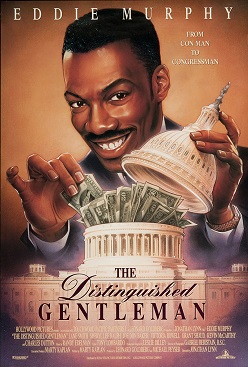
9.  The Distinguished Gentleman

Distinguished gentleman.jpg

(from my list of Top 10 Political Movies) This a fun and light-hearted comedy about a con man who worms his way into the US House of Representatives and tries to live high on the hog the way life-long bureaucrats do.  Murphy is charming and funny in this, though the script doesn't play to his strengths as much at it should.  Rather veering into total cynicism, this film gives a glimpse at how our system can work with some good people in it.


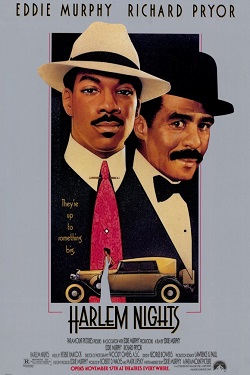
8. Harlem Nights

Harlem-nights-poster-1.jpg

Murphy directed this period piece that is a bit too long and too dark.  But it has a fantastic cast and some hilarious bits.  My favorite is a stupid gag where three gangsters are shooting at Murphy's character with dozens of rounds of tommy gun bullets, with one one of them punctuating each volley with a tiny pistol shot.  It's something that doesn't sounds like it will work on paper, but still has me cracking up.


7.  Shrek

Shrek.jpg

I try not to use the world iconic too often, but Murphy's Donkey is iconic.  As generations go by, this might actually be his most lasting legacy as children to this day still love Shrek, but most of all, they love Donkey.  While the direction and animation of the character play a big role, it's Murphy's strong comedic voice that give the character the personality that people have fallen in love with for decades.


6.  Eddie Murphy: Raw

Eddiemurphyrawposter.jpg


To be sure, there is a lot of foul language and descriptions of immoral behavior in this stand up special.  But his impression of Bill Cosby and Richard Pryor are burned into my memory.  Those bits are not only incredibly funny, but get to the heart of Murphy's comedic style: vulgarity alone cannot make good comedy.  A lot of comedians try to shock their audiences with profanity.  Murphy does, but he is smart enough to know that there has to be some actual insight in the joke or it will have nothing behind it.  It would be nothing but empty edginess.


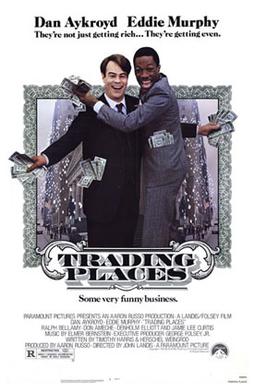
5.  Trading Places

Here, Murphy works his comedic magic with Dany Akkroyd.  Murphy could have easily played his Billy Ray Valentine as a caricature, but you can actually see his transformation from a man getting by on street smarts to someone who starts to get swallowed up by the lifestyle of the rich elite.  


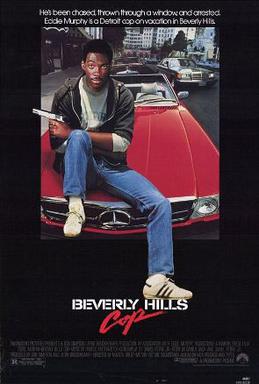
4.  Beverly Hills Cop

Beverly Hills Cop.jpg

This is the movie that solidified Murphy's presence as a movie star.  In a role that was originally supposed to go to Sylvester Stallone, Murphy made the movie his own.  The film is a fantastic showcase for Murphy as an action star, while showing he can pull off comedy and drama with equal skill.  The scene where he bluffs his way into a rich hotel still holds up as hysterical.  This fish-out-of-water murder mystery works so well for many reasons.  One of them is that it allows the cops of Beverly Hills to be actually characters.  Captain Bogomil could have been a simple empty antagonist, but instead the script allows for a bit more complexity for Murphy's Axl Foley to navigate.  It gives the movie a feeling of being smarter than your average action/comedy.


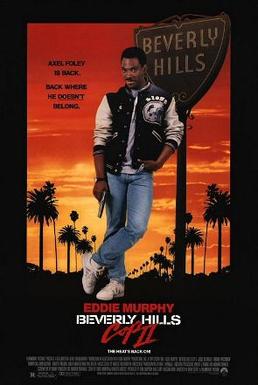
3.  Beverly Hills Cop II

Beverly Hills Cop II.jpg

This was the highest grossing film of 1987, a year that saw the release of such films as Predator, The Untouchables, Platoon, Lethal Weapon, Dragnet, Robocop, Crocodile Dundii, Three Men and a Baby, Fatal Attraction, Dirty Dancing, The Lost Boys, Spaceballs, Star Trek IV: The Voyage Home, The Running Man, Plane, Trains, and Automobiles, The Princess Bride,  and Three Amigos.  

Beverly Hills Cop II beat them all at the box office.  And it is one of the few sequels that is better than the first.  A big improvement is in the action direction.  Tony Scott, director Top Gun and Crimson Tide, makes the action slick and exciting.  The movie works because the chemistry and history of the characters adds to the dynamic and makes the scenes fly.  And Murphy was still at the height of his game.  The scene where he steals a house is something that you can really only imagine Murphy pulling off.


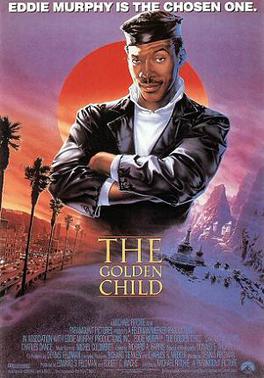
2.  The Golden Child

Golden child movie.jpg

This movie is often overlooked and was not well received, but it is still one of my favorite Murphy films.  Here, Murphy is chosen to save a mystical boy whose fate will determine the fate of the world.  This is the kind of story where the incongruity between the protagonist and the plot could make or break it, and Murphy does an amazing job.  The tone of the movie keeps shifting from comedy to action to horror to fantasy and Murphy is able to adapt to everything the script needs.  I love watching him face off against the mighty Charles Dance as both men approach the scenes completely differently and yet that difference is where the entertainment lies.  


1. Coming To America

ComingtoAmerica1988MoviePoster.jpg

Murphy does something so bold here: he plays the straight man.  His Prince Akeem has some humorous moments, but Murphy plays him with dignity and manners.  The genius of the piece is that Murphy and Aresino Hall also play the comic relief.  Murphy is able to have his cake and eat it too by playing both the charming, romantic, dramatic lead and being the silly, foul-mouthed funny characters.  Look at the scene where Akeem gets his princly braid cut.  Murphy plays against himself to pitch perfect humor that the punch line still has me reeling.  And that isn't to say that he oversteps in his roles.  The entire cast is fantastic.  The movie is filled with great performances by Hall, James Earl Jones, Paul Bates, Madge Sinclair, Frankie Faison, John Amos, Eric La Salle, Allison Dean, and Shari Headley.  Every scene works and every scene is funny.  That is why it is his best movie.


Film Flash: Coming 2 America


15 words or less film review (full review to follow soon)


Hysterical 1st act dies in the 2nd and 3rd act with boring subplots and lectures.


Thursday, March 4, 2021

A Constant Source of Perpetual Rage


I have been thinking a lot about Cancel Culture.  

In pop culture, people who speak their minds about things that go against certain ways of thinking are torn down and exiled from their communities.  This is not limited to only those who are widely known.  I have seen chilling things posted on social media where someone's actions cause someone to get so upset that they blast the offending person's information out on social media saying, "Let's make this person famous."  The point is to make the offender infamous for their perceived offense and draw all the wrath that the internet can bear down on them.

One of the things I've also noticed is that it doesn't matter how recent or how long ago the offense was.  An actor on a show I watch was fired for something he posted online nearly a decade ago.  

And to be clear, I am not saying that some behavior isn't abhorrent and deserving of social stigma.  But I am so curious as to the form that it has been taking recently.  Why is Cancel Culture able to be as effective as it is?

I have to credit a good friend (though I'm not sure that he would want me to mention his name here) for pointing out that in the digital age, conversation has become permanent.  This is an unhealthy and unnatural state of affairs.  Think about all of the strange and perhaps socially unacceptable things you have said in conversations over the years.  

When I was young boy, one of my family members and I made a tape recording of jokes.  We set up a joke and then we recorded a line from a movie to be the punchline.  I can't repeat any of them here because not only were these jokes horribly vulgar, but many of them were blasphemous, using Our Lord as the source of the jokes.  I look back on what I did with regret and revulsion.  I am no longer that child who treated the love of God so carelessly.  However, I would be mortified if any copies of this tape still existed (and perhaps they do).  

My point is that while I was growing up, this was a rare occurrence where a night of goofing off got recorded for posterity.  

Today, everyone is etching their conversations permanently into digital stone.

Once something goes up on the internet it is there forever.  Even if it is deleted, there is no getting it back.  This includes posts on Facebook, Twitter, Instagram, Snap Chat, TikTok, and all manner of social media.  I've been blogging for almost nine years, but even at the outset I understood that anything I put up here could one day be brought to the attention of the people who employ me or to my students and their parents.  With this in mind I was always cognizant to never put anything up here that I wouldn't say in public to anyone.

But we tend to be less careful on social media.  Our spur-of-the-moment reactions do not get a chance to fade away, but instead are archived forever.

And here is where the perpetual rage occurs.  

If I have a conversation with someone in private and they say something that angers me, I may be enraged for a little while.  But as time goes on, often the fiery response in my heart begins to cool down.  Time lets the heat of the words fade, as they should.

But if their hurtful words are written down, then every time I read them, it can re-ignite the flame.

I once filmed a movie where an actress had to cry in a scene.  To prepare, she had the book The Fault in Our Stars bookmarked to a particularly sad passage.  Right before we yelled "action," she picked up the book and read.  Once she did, the words conjured in her such powerful emotions that she was able to cry on camera.

The same thing happens now with social media rage.

I may have done something hurtful or stupid many years ago.  But if those words or actions can be read or seen again and again at the click of button, then those postings have the potential to cause perpetual rage.

On the show This Is Us, a character said to his adopted brother, "The worst thing that ever happened to me was the day mom and dad brought you home."  I remember watching this and feeling how deeply and utterly hurtful this was.  Currently on the show, the brothers are slowly reconciling.  But could imagine if instead of this being said in a private conversation, these words were blasted on social media or sent in a text message?  Those permanent words would be a constant reminder of the hurt and re-reading them would bring back all of those wounds.

Add to this the anonymous nature of social media which encourages bad behavior and also the fact that digital mobs are easier to whip up because they are not bound together by geography and you get something like Cancel Culture.

Something to keep in mind as well is that no matter how forward-thinking you are, social norms are going to pass you by.  I believe I once read GK Chesterton says something about this, though for the life of me I cannot remember where.  Chesterton talked about a man who thought he was more progressively moral because he did not eat animals.  He thought of himself as above those who were bigoted towards animal rights.  Chesterton pointed out that if morality progressed in this fashion, then one day this vegetarian would be condemned for his bigotry against plants by killing them for food.

The point is that even as societal norms change, what is social acceptable in one era may not be in another.  Normally, this would be fine as we move beyond old faults.  But in the digital age, things that were acceptable in one generation are brought up to this generation for condemnation.  And as I said, even though these things happened in a completely different context, modern mobs experience the offense as if it just happened.  You can see this in the way Cancel Culture is currently going after Dr. Seuss or the way it always goes after Mark Twain.

Cancel Culture is antithetical to the idea of forgiveness.  

When we forgive, the offense is blotted out from us.  We often use the phrase "forgive and forget."  Obviously we cannot erase our memories of the hurt.  But when the memory of the hurt returns to us we must re-forgive over and over until the hurt is gone.  Social media makes this difficult to do, because the permeance of the offense makes the wound feel like it is constantly being re-opened so it can never heal.  Even if a person offers an apology, the internet knows no time.  The offense and the apology can be experienced simultaneously and only the one that creates the stronger emotional response will win out.

That is the antidote to Cancel Culture: forgiveness.

Are we capable of this?  Can we look past our own perpetual rage and forgive those who offend us?  Or are we do addicted to the moral high we get from being constantly offended?

When I think about this, I am reminded of the words of Christ, "If you do not forgive men's sins, neither will your Heavenly Father forgive you." (Matthew 6:15)

Perhaps the Cancel Culture mobs will keep coming for those that offend them.  But honestly, I feel a great sense of pity for those who are part of those mobs.  It's like the words of the sage Mr. Miyagi:

"For person with no forgiveness in heart, living even worse punishment than death."