ReasonForOurHope

Sunday, June 9, 2019

Sunday Best: X-Men Films Ranked (2019)

With the releases of what many are saying is the worst movie in the X-Men franchise, I thought it would appropriate to go back and rank the X-Men movies for worst to best.  I have not seen the new one, but something tells me that it will rank towards the bottom. 

I made an original list 5 years ago when there were only 7 X-Men movies.  Now those ranks have swollen to 12.  And this seems to close the loop on the Fox series of films, though we are waiting on New Mutants and if there will be another Deadpool. 

Be warned, I am in the minority of opinion on some of these.

11.  X-Men: Apocalypse
The only thought going through my head as I watched this was, "What is the point?"  The First Class cast always feels like the understudy team to the originals and they never quite broke through.  Everything about this film seemed pointless and messy.  On top of that you had the strangely blasphemous marketing campaign and this puts this movie at the bottom.

10.  X-Men Origins: Wolverine
There is a good deal of fun to be had in this movie.  Some of the action set pieces are great and I could watch Hugh Jackman doing his Wolverine thing all day.  But it probably has the worst special effects of any of the movies.  It also completely ruins the character of Deadpool not to mention making Wolverine's past needlessly convoluted.  The story is also a bit of a drag.

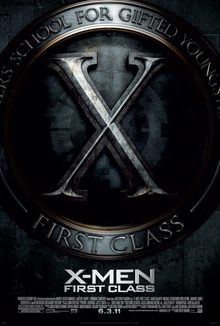
9.   X-Men: First Class

Many think that this is one of the best in the franchise.  I beg to differ.  It is fun to get a very fresh take on the younger version of these characters.  But it comes down to my complete and utter annoyance with Charles Xavier in this movie.  He is an idealist who never had to enter the real world.  Magneto is a holocaust survivor who constantly gets lectured by a rich, ivory tower egghead.  This is also the movie that has the least amount of Wolverine in it because of that, a lot of the charm and energy are missing as well.


8.  X-Men
The first of the series got a lot right.  It took the characters seriously and it hired a fantastic cast.  Can you picture anyone else playing Wolverine but Jackman?  But if you look at it in the context of the rest of the series, it is a bit dull.  There are very few really good action set pieces to carry it through.  It also has the worst line of the entire series.


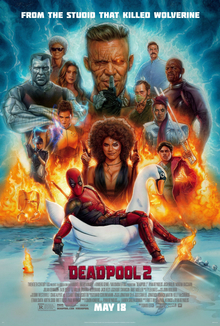
7.  Deadpool 2
If the original is a phenomenon, then most sequels fail to live up to the original.  The same is true of this follow up to the out-of-nowhere hit that was Deadpool.  But there is enough funny humor and action spectacle to make sure you get your money's worth while watching.  Also, the Black Tom Cassidy joke might be the funniest thing I have ever heard in a super-hero film.

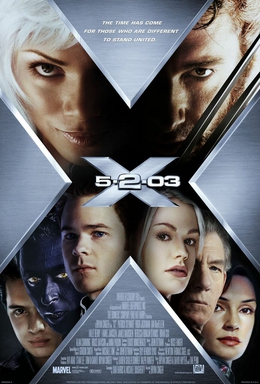
6.   X2: X-Men United

What was great about this movie is that it built off of the first and added more characters and more layers.  Instead of it being simply good vs. evil mutants, it added the human element into it.  It did a great job of showing Wolverine as the reluctant guardian and Magneto as a sympathetic monster, but a monster nonetheless.  Again, the place where this has its deficits was in ramping up the excitement to epic levels.

5.   X-Men: The Last Stand
I am one of the few defenders of this movie.  I know that it has its flaws, but there are some great attributes to this movie that place it above the first two:
-the Joss Whedon inspired cure storyline adds fantastic levels of complexity to all sides of the X-universe.
-the killing off of X-Men, while sometimes handled poorly, raises the stakes in this movie in ways that were''t present in the others.
-Ellen Page as Kitty Pryde was perfect.  Her scenes, especially against the Juggernaut were some of the best in the entire series.
-Some people couldn't buy into the emotional side, but I was completely in tune with what was happening.  I thought it was such a touching and dramatic moment when Jean asked if Logan would die for all of the people there and he replies defiantly and helplessly, "No.  For you!"
-I thought the action set pieces were much better than in the the first 2 Bryan Singer films.

4.   The Wolverine
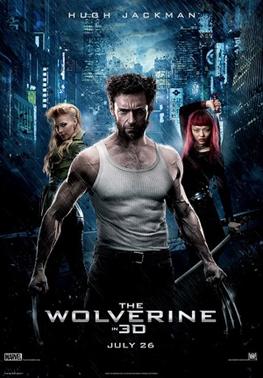
This, of any of the X-movies, captures the real heart and soul of Wolverine.  He is a beast who wants to be a hero.  It has some of the best action sequences of the entire series, not because of the special effects, but because they finally let Wolverine be Wolverine.  This movie embraces both the killer and the stalwart found in him.  The movie doesn't try to be anything other than a straightforward action adventure and it delivers that better than nearly all the rest of the X-Men movies.

3. Deadpool
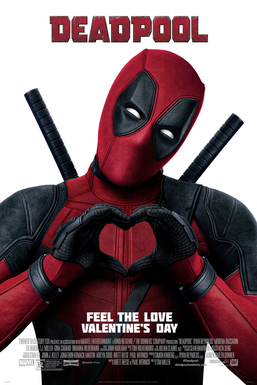
On paper, this movie shouldn't work.  It was the 8th film in a franchise that already appeared to be winding down.  It was R-rated, which usually restricts audiences.  The character wasn't well known in the general public.  And it was partially a parody of the franchise in which it was a part.  And yet, the audaciousness of this movie broke through the haze of the average super-hero film and it became a cultural touchstone (at least for adolescent boys).  But beyond that, it works as action and comedy and Ryan Reynolds actually turns in an excellent dramatic and comedic performance that has cemented his stardom. 

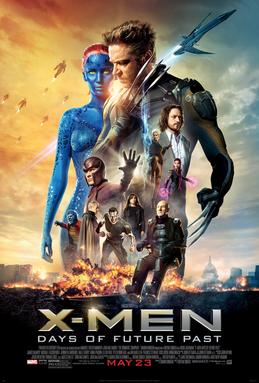
2.  X-Men: Days of Future Past

I will give my full review later.  But this movie was well written, acted, paced, and themed.  It did an excellent job of bridging the original X-movies with the First Class cast.  Its major deficit is, again, Singer's inability to infuse a constant sense of action throughout.  But that is more than compensated for by a very entertaining spectacle.

1.  Logan
(from my film review of Logan)

There isn't another super hero movie like Logan.

This movie is sober, contemplative, visceral, and heartbreaking in a way I haven't seen in this genre before....

The most important thing to understand about this movie going into it is that it is actually less of a superhero film and more of a classic Western.  Logan is the hard-travelling hero who has lived too long and seen too much killing....

The violence in this movie is more graphic and emotional than any other X-Men film.  As someone who grew up with the comics, this is was how I always imagined Logan cutting loose.  And while it at first as the same vicarious thrill as watching Deadpool or John Wick, after a while the graphicness of the violence gets to you, which I think is part of Mangold's point.  We've reveled in Wolverine's ability to cut his enemies to shreds over the last 17 years.  Now we get to feel what that does to a person's soul.  And yet the action sequences are still enough keep you on the edge of your seat.

One of things I loved most about the film was its depiction of simple, ordinary love.  There is a moment in the movie where our three main characters spend the night with a farmer family.  Mangold fills the scenes around the dinner table with such humor and warmth that part of you wants to leave all of the violence and just settle in.  This family is depicted as faith-filled, hard-working, and trying to get by in life with larger forces arrayed against them...

[It is on this point that I want to spend a little more time.  One of the things that elevates this movie is the focus on the quiet love mentioned above.  The scenes with Logan and Charles are so touching especially upon repeat viewing  because the only thing bonding these men together is the love they have for each other.  And when all is said and done, Logan comes to learn that the only happiness in this world that can be found is through love.  That message does not come off as cheesy or overly sweet.  Instead it is the hard-fought truth underneath all the darkness.]

Logan is powerful and emotional film that has stayed with me in my mind and my heart long after watching it.  When so many movies disappear from our consciousness like smoke, the solid and strong Logan is something to treasure.


Thursday, June 6, 2019

New Evangelizers Post: Can A Catholic Ever Choose Abortion?


I have a new article up at NewEvangelizers.com.  
Right now in our Culture War, we have several pieces of legislation passing in different states that are the extremes of the abortion question. Some, like New York, have made abortion available until the moment of birth. Others, like my home state of Ohio, have made it illegal once the baby has a heartbeat.

The reason why we have come to this flashpoint is because of the Supreme Court. We are currently closer than ever to a place where Roe v. Wade, the court case that made abortion legal, can be overturned. A big misnomer among the public is that if Roe is overturned then abortion becomes illegal. This, however, is not the case. If the case is overturned, then the question of abortion returns to where it was before: the states. With the looming possibility of Roe being overturned, states are pushing hard to get their own legislation clearly on the books.

This has also served to reinvigorate the debate on the two sides. And by debate, I mostly mean shouting slogans at each other. This issue carries with it such righteous passion from both opponents that dialogue becomes difficult. It must remembered that most people who call themselves “Pro-Choice” see themselves as part of the vanguard protecting essential rights for women against an oppressive government. We on the Pro-Life side see ourselves as the ones standing up for the most innocent and defenseless lives among us: the unborn. We are both rooted in deep conviction.

Can there be a middle ground? Can a Catholic ever be “Pro-Choice?” Can a Catholic ever choose abortion?

The short answer is no.

If you start with the principle that you are a human person from the moment of conception, endowed with all of your human rights, then abortion cannot be a morally or legally acceptable option.

You can read the whole article here.

Sunday, June 2, 2019

Sunday Best: Top Ten Movie Weddings

Weddings are often the culminations of storylines, and rightly so.

The wedding is the final step in the long journey of courtship and it is a new beginning to a (hopefully) happier, better life.

While researching the best movie weddings, I was surprised at how many famous "weddings" aren't weddings at all.  For example, The Godfather begins after the wedding itself while they are at the ceremony.

I was also surprised at how short most of the wedding scenes are.  Some are only a few seconds long and often without dialogue.  So it had to asked: "What qualifies as a movie wedding?"

The following criteria are necessary to make the list:

-The movie must have a scene at the wedding itself.
-The reception alone or seeing the bride and groom leaving for the honeymoon does not count.
-We must see at least part of the ceremony at the wedding site.
-To make the list, the wedding has to have a strong emotional, visual, or thematic resonance.


So without further ado, here are the Top Ten Movie Weddings:
(I will provide when available links to to scenes)


10.  Kermit and Miss Piggy, The Muppets Take Manhattan


While this is one of the lesser outings for the Muppets, the ending is a wonderful ending this Muppets' trilogy.  The context of putting on a Broadway musical builds up to the event with light, happy music.  But then when the real minister shows up, groom Kermit turns to bride Piggy and says, "I thought Gonzo was supposed to play the minister."  To which Piggy mischievously laughs.  As strange as it sounds, this moment had actual dramatic tension.  Would Kermit go through with the wedding.  This was also the culmination of this romantic storyline between these two characters for the last several years.  The result is a nice, touching finale.


9.  Colwyn and Lyssa, Krull

I know I may catch a lot of flack for putting this sci-fi/fantasy wedding on this list, but it is actually quite beatiful and even my 5-year-old self could understand something powerful was happening.  The ceremony at the castle was a wonderful blend of medieval Romanticism and futurism.  But the wedding only is completed at the end of the movie.  The two characters realize that they can face down the demons of the world if they bond their lives together in a life-long commitment in love.  It was such a wonderful metaphor about what marriage is supposed to be.

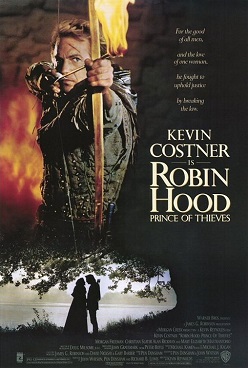
8.  Robin and Marian, Robin Hood: Prince of Thieves

This is memorable not only because of the beautiful production design in Sherwood Forest with the colorful Autumn leaves falling in a blend of natural harmony.  In the theater, the surprise cameo at the end was like the icing on the cake to an incredibly thrilling movie-going experience and hit the last few moments of the film with an exclamation point!

7.  Eric and Ariel, The Little Mermaid

The few seconds spent on this wedding are beautiful.  We have very simply and quickly the resolution to all the character relationship, including Sebastian and the cook.  We also have that final, touching goodbye between father and daughter and the classic image of the ship sailing off into the sunset under the colors of the rainbow.  Beautiful.

6.  Bryan and Annie, The Father of the Bride (1991)

The entire movie had been building up this one event, to great comic effect.  But the movie also knew how to use that humor to set up the audience for real emotional catharsis.  And while the scene is told completely from the father's perspective, you can feel the pride, joy, and heartbreak of seeing your daughter begin her new life with her new man.

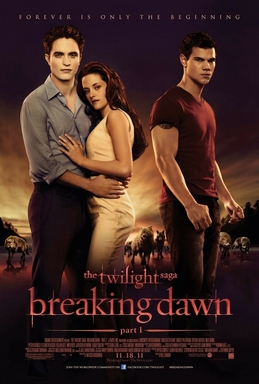
5.  Bella and Edward, Twilight: Breaking Dawn Part I

As much as people like to make fun of these movies, at heart it is a story about longing and loving.  The desire between Bella and Edward is intense, but because they waited to consummate their love, the wedding takes on all of the emotional significance that it can: excitement, fear, elation, relief, sadness.  The visuals of the scene are beautiful and I've always loved Edward's speech to Bells: "No amount of time with you will ever be enough.  But let's start with forever."

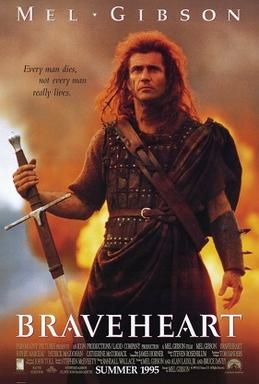
4.  William and Murron, Braveheart
Braveheart imp.jpg
Not only is this moment the linchpin of the entire movie, giving us its emotional touchstones visualized in the exchange of wedding cloths, but the filming of it is incredibly beautiful.  James Horner's amazing score covers this secret night ceremony.  The isolation of the two characters with the priest make a kind of oasis against the violence of the world around them, one that sadly will not last long.  But in that moment you can feel the bonding of two lives and how this love will be the cause of all that is to come.

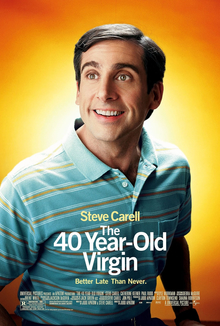
3.  Andy and Trish, The 40-Year-Old Virgin

I remember going into this movie waiting for the bomb to drop: when was this virgin character going to give in and lose that virginity before marriage.  I had enjoyed much of the movie, but as we were getting to the ending, I was steeling myself for disappointment.  But then Andy tells Trish, "I used to think there was something wrong with me... but now I know that I was waiting for you."  And then it transitions to their wedding.  Not only was I elated that they had waited, but the joyful music and the vivid colors matched that elation all the way through to the closing credits.

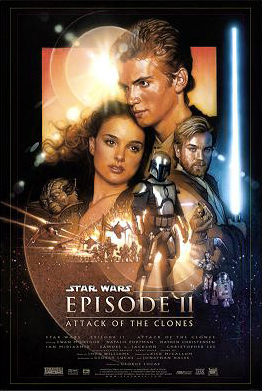
2.  Anakin and Padme, Star Wars Episode II: Attack of the Clones

This moment is only one minute and four seconds long.  But George Lucas created a moment so romantic and beautiful that the entire scene is burned into my mind.  John Williams romantic score overwhelms as the two characters stand as the setting sun emblazons the entire sky.  The moment captures the love and the tragedy of the moment.  They can feel in their bones that this lovely moment is also their doom.  But this wedding captures that all-too-human truth that romance has no reason.  CS Lewis said that if you told people who were truly in love that it would destroy them, they would say, "Let our hearts break, so long as they break together."  And that is what you can see so clearly communicated in this scene.

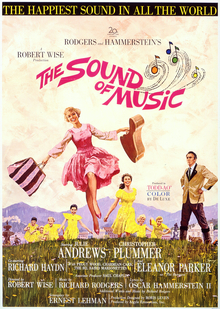
1.  Captain Von Trapp and Maria, The Sound of Music

I don't think any other movie wedding will be able to match this moment.  The pageantry, the romance, the music, the costumes, the camera angles, the pacing... all of it perfect.  Above all, the moment is completely imbued with the presence of God.  The religious imagery is not just set decoration here, it is woven into the moment in a way that makes it essential.  This is a love-story written by God and he is the most important guest present.


Honorable Mentions:

-The Wedding Singer
-Spaceballs
-Forrest Gump
-Coming to America
-Love Actually
-Shadowlands
-Wedding Crashers

-Flash Gordon

Saturday, June 1, 2019

Film Flash: Godzilla - King of the Monsters


15 words or less film review (full review to follow soon)

For general American audiences: Best Godzilla yet. (Not sure how lifelong Godzilla fans will feel)


Friday, May 31, 2019

CatholicSkywalker Blog 7th Anniversary

(5/31/19: Feast of the Visitation)

It's hard to believe that it has been 7 years since a started this little blog.  And I'm still here.  

And more importantly, you, faithful reader, are still here.

For this I thank you.

It is clear that my writing output has been slowing.  I still carry within in the zeal to share my thoughts and insights with all of you.  But the older I get, the more life responsibility creeps into to my free time.  Partially this is sloth on my part, as writing does take time and concentration.  I am going to re-commit to insuring that the quality of the content here has never been higher.

Here is a list of all of the content I hope to get out before the end of summer:


-Film Reviews for movies that have already come out: The Public, The Longshot, John Wick: Chapter 3 - Parrabelum

-Film Reviews for movies this summer: Godzilla: King of the Monsters, Spider-Man: Far From Home, The Lion King, Aladdin, Toy Story 4, Yesterday, Once Upon a Time in Hollywod.

-Continue the Catholic Skywalker Dialogues that I have let languish for over the last few years.

-Cover the upcoming Fall TV shows.

-A return to weekly essays including: Half Great/Half Terrible Movies, Almost Terrible Movies That Are Great, The Manliest Movie of the 1990's, The Most Morally Subversive Movie of the 1980's, Greatness vs. Goodness.  Love the Art/Hate the Artist, The Frustration of Indefinable Words, Who I'd Be.

-Finish the series of reflections I began on Doctor Who and Interstellar

-Create new Sunday Best list to carry through the remaining half of the year.

-A deep analysis of the flaws and merits of The Last Jedi.


Perhaps that is overly ambitious, but I will raise the bar high.  I also try to keep the content fresh and interesting for you, dear reader.  


I know it is a small thing, but I receive an immense amount of satisfaction in this medium.  I am especially delighted when one of you finds any of my ramblings enjoyable to read.  

You are all constantly in my prayers.  Please keep me in yours.  

And please let me know of any suggestions you have for this blog or any topics you would to see tackled: serious, silly, or anything in between.


And so once again, thank you for hanging on with me these last few years.  I will work even harder to make the next five years the best that this blog as been.

Finally, my custom on this day, I have reprinted my first essay ever on this blog.   It will be reprinted below.  But I also wanted to re-share an early satirical essay that I wrote.  I was sick and tired of Bible scholars twisting themselves into academic knots trying to deconstruct the Scriptures.  Particularly, I was fed up with these self-professed experts telling us that Paul did not write Paul's letters or that John was not an eyewitness to the events of the Gospel, even though he clearly writes that he is.  So imagined a future a thousand years from now when the writing of the Harry Potter stories had been obscured by time and legend and all that remained are a set of the seven books.  Using the same tools that modern Bible scholars use, I had our fictional author, Meleka Dodgers, set out to prove that the Harry Potter series had five different authors.  

You can read that satirical essay here. 


Enjoy!

-Catholic Skywalker


God is a Joke


As a kid, I loved riddles. Still do. I can remember being a pluckish 9-year-old, bored out of my mind at my cousin’s wedding. I was too young to simply enjoy the celebration of friends and family, but I was too old to just sit in a corner pretending the tiny plastic swords from the bar were
miniature lightsabers. I sat at a table of adults and teens sharing riddles. I remember it vividly because I realized that I could figure out most of the answers. While other adults were puzzling with furrowed brows, I paced up and down the banquet hall in my little suit and tie, trying to think while blocking out the lyrics to “Dancing Queen.”

Riddle: “A man ties a dog to a 10 foot rope. The dog’s water dish is 20 feet away. How does the dog get the water?”
Answer: (see bottom of essay)

Riddle: “In 1980, Sarah was 15 years old. In 1985, Sarah was 10 years old. How can this be?”
Answer: (see bottom of essay)

If you’re anything like me, you took a few moments with the above riddles. You stopped reading and thought it through. You looked at the data over and over again. You hesitated to skip down to the answer, because you wanted to see if you could reason it out for yourself. Did you get it right? Did you get the mental cramp from twisting your mind around a dozen possible answers? And did you get the thrill of vindication at the end of your cerebral gymnastics, when you looked at the answer and saw that you were right?

And did you feel smart?

That is the purpose of a riddle. It acts as mental exercise. Riddles are different than trivia because to be good at them you don’t have to be like Hans Gruber and reap the benefits of a classical education. Even a 9-year-old, bored at a wedding can jump into the fray. And we tend to intuitively regard the master of riddles above the master of trivia. The riddle master may not have as much content in his mind, but he has insight. He looks at the problem with his laser-critical eye and is able discover the truth.

The riddle strengthens the riddle master. Riddles force you to think laterally. You need to alter your normal way of thinking because something does not fit. The data has to be examined from another angle. Only then can the answer present itself. And the reward for your strain is the simple knowledge that you are right. You have figured it out. You are smart.

At least this was how 9-year-old me felt. I looked at the clues, made the deductions, and discovered the truth. In my mind I was a pint-sized Sherlock Holmes. And I fell in love with riddles.

But riddles aren’t jokes.

And herein lays, I believe, the fundamental point of frustration that so many of us run into when pursuing the question of God. We treat God like a riddle. We look at the problem with our laser-critical eye; we examine it from every possible angle. How old is God? Is He all good? If so, why is there evil? What is His nature? His will? Philosophers since ancient Greek times have wrestled with these questions. Here were riddles worthy of Oedipus and the Sphinx. And let us not forget the fundamental question: Does God even exist? What are the clues we can use to unlock the answer to this riddle? So many of us believe that if we just put the pieces together the answer will reveal itself and the riddle will be solved.

But God is not a riddle. Yes, there is an answer to this question, the deepest of all our questions. But it is not the kind of answer we are looking for. We will never solve the riddle of God for one very simple reason:

God is a joke.


Before we go any further, let’s contrast the riddle and the joke.

Question: “What’s E.T. short for?”
Answer: (see bottom of the essay)

Question: “What’s the definition of ‘procrastination?’”
Answer: (see bottom of the essay)


Now, unlike the riddles at the beginning of this essay, I’m sure you didn’t wait and puzzle out the answer to these questions. You went right to the bottom to see the answer. Of course we don’t call the end of a joke “the answer.” We call it the “punch line.” This phrase, which probably has its origin in early 20th Century American slang, is a vivid contrast to the “answer” we find in a riddle. “Answer” carries with it a sense of discovery. A page has been turned; a door has been unlocked. “Punchline” comes at you sideways when you weren’t even looking. The rug has been pulled out from under you. Like the magician, the comedian has dazzled you with a surprise.

But the single most glaring distinction between riddles and jokes is the element of joy. By “joy” I mean mere delight and mirth. I would use the word “pleasure,” but I want to talk about that which lightens the heart and bursts through our egos to cause, quite against our wills sometimes, that singularly human activity of laughter. (In contrast, the marital act, which I’m sure most would call “pleasurable,” would probably suffer if one of the partners engaging in it spontaneously broke into giggles).


Now we come to the “question” of God. And this I think is where most everyone has come upon the fundamental mistake. As I stated earlier, the “question” of God is not a riddle. It is a joke.

This is not to say that God is illogical. Far from it. The best jokes are the ones that have a very clear logical thought process. If they did not, we could not follow the comedian from set-up to punch line.

Joke: A mailman comes to the front gate of a fenced in house only to be greeted by a vicious barking dog on the other side. The mailman looked up at the man sitting on the front porch and asked, "Is your dog going to bite me?" The man on the porch said "No." The mailman went to unlock the gate, but the dog did not back down. Again he asked the man on the porch "Is your dog going to bite me?" Again, the man on the porch said "No." So the mailman entered the gate and the dog immediately jumped on him and attacked him. The mailman shouted, "YOU LIED! YOU SAID YOUR DOG WOULDN'T BITE ME!" The man on the porch shouted back, "That's not MY dog."

The joke is very logical. It follows a very clear line of thinking. And so does the question of God. When it comes to God, we do not need to abandon our reason in order to enter into the joke. In fact, it is more logical to approach God as the Great Joke rather than the Great Riddle. You can figure out a riddle. But you shouldn’t figure out a joke.

If there is delight to be found in the riddle, as my younger self found, it is from the pride received at feeling so clever. I pieced together the clues to understand the answer. But this CANNOT be done with God. All of the great saints understood this, especially St. Thomas Aquinas, who made clear that human reason would always fall short of understanding God because God is, above all, mystery. He is too big to fit into our little brains.

One of my favorite stories about the nature of mystery involves the other great medieval mind: St. Augustine of Hippo. The legend goes like this: Augustine had been in enveloped in great frustration because he could not understand the dogma of Trinity. How could there be 1 God and 3 Persons? It literally pained his mind. One day Augustine was walking down a beach and saw a little boy running to the ocean. Filling a cup with water, the boy dumped it into a hole that he had dug. After watching for a bit, Augustine asked the child what he was doing. The child said “I am going to put the whole ocean into this hole.” Augustine replied “But child, it is impossible for you to put the whole ocean into this hole. The ocean is too big, and the hole too small.” The child looked at him and said, “And so it is impossible for you to understand the Trinity,” and he disappeared. (Rim shot)

After that, Augustine understood: Trinity is a joke, and not a riddle. But rather than this causing him to abandon reason, he was now better equipped to talk about the Trinity in a more rational way. Augustine at last understood that Trinity was not something to be could be fully understood. The Trinity is something to enjoy.

Have you ever simply enjoyed the Trinity? Have you let yourself be caught up in the Love Story of God the same way we get caught up in the love story of Sam and Diane, Pacey and Joey, Jack and Rose, Ross and Rachel, etc. etc. We should. It is the greatest love story of all time and beyond.

Love stories are very much like jokes. You have the set-up followed by the unexpected punch line. And every time love is discovered between 2 lovers, it is always a surprise. There’s always something new about it, as if it has been discovered for the very first time. Happily married couples wonder whether anyone in the world could possibly be as happy or if only they have unlocked this magical secret of the universe. Romantic love goes beyond the logical realm of the riddle and finds its home in the joyous delight of the joke.

Romantic love, at its best, should be a reflection of the Divine love. And this too is better reflected in joke than riddle. Because with love, as with the joke, you have to give over a little of yourself. When 2 people share riddles, they engage in mental jousting. They are Bilbo and Gollum, dueling not with swords or fists but wits. Riddles are designed to create distinctions, i.e. I am smarter than you. Jokes are not designed to focus conflict AT the other, but to draw you closer TO the other. How often when we try to make friends do we crack jokes? Probably more so than riddles. If our jokes make someone laugh and vice-versa, it means that our minds have entered into a common frame where we can meet, not compete.

The dueling nature of riddles cannot be overemphasized. Here, the riddle master and the riddle solver are both active. But with jokes, the comedian is active while the audience is passive. Here is another reason why we tend to approach God like a riddle. In our hubris, we think that we can understand Him, and by understanding, conquer Him. Of course, most of us don’t admit to this, but often we want to learn about something to gain power over it. We read computer manuals so that we can figure out how to get our WI-FI to find the Xbox. We read about cars so that we can maintain it ourselves and not have to take it in to Leon at the Jiffylube. If we understand God, understand how He works, then we can best “manage” God and fit Him more efficiently in our lives. At least I believe that is the secret Promethean motive behind keeping God at a distance by treating Him as a riddle.

But with God, as with the comedian, there must be on our part self surrender. When we hear a joke, we listen as we are taken down a long, seemingly aimless road until we turn the corner and find a mini-surprise party waiting for us. The joy of a joke is not figuring out the ending, as in a riddle, but in being led to the ending. In fact, if we figure out the punchline to a joke before we are led there, our delight is diminished.

This can be easily seen in the life of Christ. Often, the Pharisees would pester him and test him and try to figure out who He is. In fact some got so frustrated that they came right out and ask, “Can’t you just tell us plainly who you are?” They thought the Messianic prophecies were riddles to be deciphered. But when Jesus came to them, he was not at all what they expected. He came at them sideways. He could not simply tell them who He was because that would have been like giving away the punchline before the set up. He had to lead them from the beginning: his conception in Nazareth (Can anything good come from Nazareth?). Then he brought them to Bethlehem, where He is born in a barn, like something out of an 80's sitcom.

In His public life, Jesus winkingly toys with the Syrophonecian woman (even the dogs get scraps), winds up his disciples (Why don’t you give them something to eat yourselves), and enters Jerusalem majestically on His Messianic ass (i.e. His donkey). But all that is still only the set-up for the ultimate joke: the Paschal Mystery. How confounded everyone was at the scandalous Passion! How the called out to Him “Come down from the cross and we will believe!” As if that would produce the logical evidence to command their assent! Almost no one could figure Him out, even the thief on his left. But the thief on his right got it. Rather than taunting or teasing Jesus, the good thief says, “Remember me when you come into Your Kingdom.” He got the joke. Why him and so few others? The good thief doesn’t just suffer alongside Jesus. He suffers with Jesus. He travels on that way to dusty death metaphorically holding His hand. He did not fully understand Christ, but He fully experienced Him. And by experiencing Him, he came to know Him.

He got the joke.

Now, if the story ended at Calvary, then we would have to say that the Gospel was a bad joke. But the punchline does not end in pain.  It ends in joy; it ends in Resurrection.

The people wanted a Messiah to free them, and so He has.  But He did it in a way that no one expected. He came at them sideways.  And now they are free not just from political oppression but from the oppression of sin and death. In our life, we want a God who loves us. And He does, but He does it in an unlooked for way: He died for us. We want to be happy in the here and now. He brings happiness in the now and forever. We Christians should always believe in happy endings. Our story is the happy ending. We let the Great Comedian lead us down the long winding road of our lives so that when it comes to the great punchline, our hearts will be filled with mirth and our spirits with laughter as He says to us, “Welcome home by good and faithful servant.”

And if He doesn’t say that, try telling Him the one about the man who named his dog "Stay." Then shimmy up and over the pearly gates while He’s laughing.


ANSWER RIDDLE 1: The other end of the rope is not tied to anything
ANSWER RIDDLE 2: The two years in question refer to B.C. not A.D.

ANSWER JOKE 1: “He has little legs.”
ANSWER JOKE 2: “I’ll tell you tomorrow.”


Wednesday, May 29, 2019

Wednesday Comics: A Week of DC Hell and DC Heaven

Image result for heroes in crisis 9
The final issue of Heroes in Crisis came out today.

I wrote in a previous post that the issue that came out before was the worst comic book I have ever read in my entire life.  The final issue of the mini-series did nothing to improve this.

Almost nothing happens in this issue except Booster Gold, Harley Quinn, Batgirl, Blue Beetle, Poison Ivy, and two Wally Wests talking and hugging.  All of this is interspersed with more of those talking head shots of heroes spilling their guts directly to the reader.  The issue has writer Tom King trying to bring his story to an emotional conclusion.

The only thing that is conclusively proven is that Tom King does not understand super hero comics. 

It is abundantly clear that when he sees these iconic characters, he sees them as a heap of psychological problems.  He does not see the whole person, just their issues.  He thinks because he can find some mild or severe psychological problem in a character then he has discovered the core defining characteristic of their personality.  King does not understand that we are more than our traumas.  Batman's life has been shaped by his trauma, but he is more than his pain.  Heroes in Crisis took Wally West, stripped away all that was relevant to his personality and his heroism and defined him by his loss. 

What was really disgusting was Booster Gold telling Wally that he would work with him to help smooth over his crimes when he says, "Bros before Heroes."

That is the antithesis of heroism.  It says that dealing with emotional trauma trumps what is morally right.  This is an ethically insane thing to believe and it is particularly noxious because it foists it on someone who is supposed to be a hero.  Heroes are the ones who go above and beyond.  Heroes are the ones who take on the burdens that no one should ask of them, but no one else can.  That is the Wally West we all know.  Anyone who has read Geoff Johns' "Blitz" storyline would find the Wally West in Heroes in Crisis unrecognizable.  And the transformation is not earned, not by a long shot.  I have heard rumors that King was mandated to do this to Wally by DC Editorial.  It makes no difference.  He should have said no.

The entire affair is capped off by Harley Quinn kneeing Wally in the crotch for... reasons?  Seeing that scene felt like the entire mini-series summed up in one panel. 

On top of all of its problems with theme and plot, it is a horribly written comic.  King does not seem to understand that comics are a visual medium.  Page after page is flooded with dialogue that almost pushes out the images, not that it matters much since all of them are mostly just standing around an open field for 20 pages. 

I am convinced people will look back on this mini-series as a complete debacle up there with Marvel turning Speedball into a masochistic character called Penance.  Heroes in Crisis is the bottom of the barrel.

It is DC Hell.

Image result for doomsday clock 10
However, this week also brought us Doomsday Clock # 10.

My biggest worry about this book is that I do not know how Geoff Johns is going to pay off all of his narrative debts in the two remaining issues.

Having said that, this issue walked us through Dr. Manhattan's entrance into the DCU proper.  Johns plays around a lot with time in this narrative and does not spoon-feed you the implications of all that is happening.  He makes you work for it, but in a way that is rewarding rather than frustrating.

One of the most admirable things about Johns' writing is that he is constantly breaking open the conceptions we have of the DCU and he opens up all new vistas.  In the DC Multiverse, the main action of most of the comic books takes place in what we would call "Earth-1."  Traditionally, this has been viewed as just one Earth in a series of infinite Earths from infinite parallel universes in the multiverse.  But Johns sees something deeper and he delves into why this Earth is so special.  In the process he shows us why Dr. Manhattan was drawn to this Earth from the Watchmen  universe and Johns shows us how this Earth is consistent with all of the retcons over the years.

Notice I said he "shows" rather than "explains."  Johns doesn't so much explain as he lets the events unfold and he lets you experience Dr. Manhattan's story.  This is in sharp contrast with Heroes in Crisis which has such a convoluted narrative that it tries to over-explain its ending.  With Doomsday Clock, Johns lays out the narrative and we can now feel why everything in this whole story must come down to Dr. Manhattan and Superman. 

Gary Frank's art is as gorgeous as ever.  I have already re-read the issue just staring at his work, letting the personalities and the moods come forward in bold and in subtle ways.  I was so moved to see a scene from another Johns/Frank collaboration: Superman - Secret Origins.  Only this time, we see the scene where Clark learns about his alien origins from the perspective of a spying Dr. Manhattan.  I have never seen anything like this where it feels like an alternate take from the original comic is transplanted into a new one.  And it isn't limited to this one mini-series.  Frank transposes scenes from other classics like John Byrne's Man of Steel that feels completely consistent with that comic's aesthetic while still being clearly Gary Frank's style.  It is quite remarkable.

The title of this chapter is "Action."  But really it is more of a set-up to the action that has to take place over the course of the next two issues.  Like Heroes in Crisis, there is a lot deconstruction of the super hero.  But Johns is not tearing down.  He stripping away all the artifice to build up again.  The coming confrontation feels like it may be the most emotionally epic thing we have read in years.

The pieces are set.  Now the endgame must begin.

And I guarantee that at no time from now until the end will Superman look at Batman and say "Bros before Heroes."

If have not been reading Doomsday Clock, go out and pick up the rest of the series and catch up before it all ends.  This has the potential to be the best thing Geoff Johns and Gary Frank have ever done.

This is DC Heaven.

Monday, May 27, 2019

Memorial Day 2019


Today is the day that we honor those who fought and died for our country.  I doubt that I can add any deep, universal insight into the meaning of this day that has not already been given by those more eloquent.

I do have some friends who are cautious about the elevated status we give those in the armed forces.  They worry about the glorification of war or that it trains citizens to put too much trust in their government agents.  There are some arguments to be had there.  To be sure, while war may make soldiers into martyrs, it does not always turn soldiers into saints.

But in this moment I will not speak for them.  I will speak for myself and why this day is especially reverent for me.

Some answered the call to fight for our nation.
I did not.

Some left spouses and children to enter into violent conflict for their country.
I did not.

Some lost their innocence, their friends, or their health in the crucible of war.
I did not.

Some gave every last measure of devotion down to their lives for our country's freedom.
I did not.

I write this not as some kind of admission of guilt.  Being a soldier is not my calling.

But some did answer the call.  Some paid a price higher than I have had to pay.  I am in this present moment enjoying the fruits of their sacrifice.

Winning and preserving freedom is a bloody business.  I do not want to be in a blissful bubble where I treat my freedom too casually, not remembering that it was purchased at a price of blood.

Today as we rest from our labors, let us remember the fallen martyrs of our freedom.

Let us pray for them and for our country.