ReasonForOurHope

Sunday, June 12, 2016

Sunday Best: TV Dramas of All Time #2 - Breaking Bad

5 SEASONS
(2008-2013)


The greatest advantage that television has over film is the ability to effectively tell the long form story.   How often have we seen one of our favorite books truncated by the constraints of cinema?  But on TV, if you are given enough time, you can slowly twist the screw in an excruciatingly satisfying way.

And that is the great accomplishment of Breaking Bad.

I was very late in coming to the show.  The promotions did nothing to interest me: the dad from Malcolm in the Middle with a gun and in his tighty-whitey's.  I couldn't make heads or tails of what the show was about.  And even though it had been heaped with criticism, I am often suspicious of the critics that embrace wanton perversity and nihilism.  But there were a number of people I knew and trusted who were effusive in their praise.  So I began with an open mind.

And I went on the best single character arc ever in the history of television.

Breaking Bad works so amazingly because it understands Aristotle's maxim "plot is character expressed in action."  The plot is about the character.  For those unfamiliar, Walter White (Bryan Cranston) is a mousey chemistry teacher who is pushed around by life.  When he discovers he has terminal lung cancer, he decides to start cooking crystal meth with a former student and drug dealer Jesse Pinkman (Aaron Paul).  What follows is a step-by-step descent into the gates of hell.

The plot of the show appears seedy and vulgar, which it is.  But show creator Vince Gilligan used this dark underbelly to explore deep and universal themes of morality and human nature.  The show does a fantastic job of displaying Aristotle's and Thomas Aquinas' virtue ethics, which holds that our moral actions shape our moral character.  Walter tries to create a separation between the evil deeds he performs and the good motive of taking care of his family.  But he cannot do this.  Virtue ethics teaches us that you ARE your choices.  And when you make evil choices, your soul withers.

It also shows us the stupidity of purely pragmatic philosophy.  Walter focuses only the pragmatic end of giving his family money instead of the deeper end of giving them the true treasure of time and love.  That is because he sees nothing transcendent in his atheistic world-view, nothing of value other than the practical.  As a result he only brings on them danger and ruin.  That is because the central stupidity of pragmatism is that it claims to know and unknown future.  How can I know what the best result will be if I do not know all of the possible outcomes?

The show is also a fantastic exploration of lost manhood.  I've written on this blog before about how society has slowly been eroding real, solid masculinity from the culture.  The problem with doing that is that masculinity is a natural inclination.  If you remove it from a society, people will gravitate towards empty and hollow versions of it (as we see in the horrid 50 Shades of Grey phenomenon).   Breaking Bad is essentially a Western in setting and violence, but we are not following the white hat, but (literally) the black hat.  And in that culture, Walter feels like the ultimate prissy tenderfoot.  He feels weak and emasculated.  So he radically overcompensates.  He does what he does because he has been starved of true masculine life and is now reduced to machismo.  What the show does so well is that it shows Walter both terrifyingly violent and hollowly impotent AT THE SAME TIME.  I don't know how they did it except for the stellar writing and acting.

Speaking of acting, people seem to be hyperbolic in their praise of Cranston.  It is not hyperbole.  He gives what, to my mind, is the greatest television performance ever.  Everything he does, whether silly, smart, horrific, or wholesome is absolutely believable.  Cranston does not shy away from showing us Walter's absolute evil while at the same time giving us just enough humanity to make us keep watching.  He is riveting and his performance should be studied by anyone who wants to seriously pursue acting on film.  The supporting cast also grew and met with amazing success in their craft.  At first Aaron Paul's Jesse seemed like a one-dimensional punk.  But Paul did an amazing thing by showing the slowly growing conscience in Jesse's soul while Walter's was dying.  Anna Gunn as Walter's wife Skyler also was able to project the strength and intelligence that was necessary to follow and confront Walter along the way.  I have a special respect for Dean Norris who played Walt's brother-in-law Hank the DEA agent.  For the first season or so he was mainly the overly obnoxious comic relief.  But slowly he became the hero and embodiment of manhood.  While Walter always connived and squirmed his way out of each situation, Hank slowly learned to become a man and accept responsibility for all of his actions.  

The directing is also some of the best in television.  So few shows decide to take a decisively cinematic approach to filming for television.  This may be due to constraints of time and budget.  But Breaking Bad felt like watching an incredibly long and engaging movie series.  It's not surprising that this show gave us bold directors like Rian Johnson who is directing Star Wars Episode VIII.  But the show knows how to use the visuals in bold and rich ways.  To this day, I show the parking lot scene from season 3 as a model of how to build a scene.

TV THRESHOLD
"Cancer Man"
(1x04)
This is the episode that slowed things down a bit from the insanity of the first 3 episodes and it was about confronting the horrible reality of the disease Walter was fighting.  And what makes this episode more engaging than the crazy violence from before is that you begin to understand that this is not a show about drug dealing; this is a show about the choices that shape the human soul.  Both Walter and Jesse take a step back from the drug trade to evaluate who they are as people.  And you can see the choice building up in them and the looming tragedy coming.

JUMP THE SHARK
N/A

WORST EPISODE
"Gray Matter"
(1x05)
This is not a bad episode in any way, but it keeps things a little too slow.  It builds off of the previous episode, but it especially makes Skylar come off in a very cloying, unflattering way that lingers for the enter rest of the series.

BEST EPISODE
"Felina"
(5x16)  
Breaking Bad has a fantastically satisfying series finale.  It ties up all of the loose threads of the show and gives you closure on the events.  While everything might not be happy, the series give you a chance to say goodbye.  The whole time you watch, you wonder of Walt will embrace the complete darkness in his soul or will he be able to pull out some kind of redemption in the end.  Whether he does or not, you are compelled to find out how his story comes to a close.  And it is the capstone to the amazing Cranston performance.  He is able to do so much with the slightest look, gesture, and inflection of voice that you leave the series in awe of him.

OVERALL

Breaking Bad is an experience to be had.  And it is one that works completely with a beginning, a middle, and an end.  He holds a mirror up to nature and shows us our darker side and what happens to us if we make the wrong choices and take the quick and easy path.  I don't think I shall see its like again.

Saturday, June 11, 2016

You Make Me Feel So Young

I don't feel like a grown up.

The move Liberal Arts has a great line where a retired college professor says "I feel like I'm 19.  That's the big secret: no one feels like an adult."

Though I cannot speak for everyone else, there is still so much of me that feels like a kid.  This isn't good or bad.  It just is.  Yesterday I was 17-years-old, graduating high school meeting my future wife and life was just beginning.  Now I'm 38 and I've had more than twice as much life as I did when I was 17, but it somehow feels like more and less at the same time.  The biggest part of the "less" is that time keeps speeding up.  When you are young, time drags and drags.  But now time is like an accelerating roller coaster, with no signs of slowing until the end.  And while I often feel "old," I don't feel "grown up."  

Partly, I don't know what feeling grown up means.  Someone who has never been in love has to rely on their imagination in order to conceive that feeling.  Similarly I need to rely on my own conception of what feeling grown up means, because I don't know how it actually feels.  I have the memory of my parents and my friends parents and they seemed so much more mature and grown up than the face that I see in the mirror.  Is that because, as Yoda said, they just looked so old to young eyes?  

That may be part of it.  But I have a few other ideas.  Some of these may be general ones to which you can relate.  Others are more personal to me.

1.  Children of the Baby Boomers
The Greatest Generation had their childhoods cut short by the Great Depression and then WWII.  Both of those events required everyone in our culture to grow up faster.  Economic survival required more and more adult responsibilities to be thrust on children.  And then the horrors of war shake away so much of our lives that we viewed as childish.  And while their children, the Baby Boomers, did not live through such times (though they dealt with other social and economic strife), the Greatest Generation imparted to them a strong image of what it meant to grow up: to put aside childish things. 

 Even when this model was rejected, it was still present and understood as something to rebel against.  But the generation after the Baby Boom did not have this model as strongly present to their experience.  Instead of seemingly unshakeable pillars of responsibility, we saw in the Baby Boomers fellow pilgrims lost in the cosmos.  Of course this is not true of all, but the severity that the Greatest Generation projected was not present in the Baby Boomers and thus the next generation did not form that hard and fast need to "grow up."

2.  Embrace of Nostalgia
Growing up seemed in part to put aside childish things.  There appeared to be this transition that we all felt, where we stopped getting toys at Christmastime and birthdays and instead got sweaters and gift certificates.  I cannot remember my parents playing toys or video games, reading comic books, or geeking out about pop culture, even among their friends.  They would talk about the news or politics or stuff I thought was boring.  

But something happened over the last few decades where the social presure to separate yourself from you childhood obsessions went away.  In fact, that impulse to re-live your childhood was something that people capitalized on.  Before if you wanted to find a pair of Howdy Doodie cowboy boots, you'd have to search high and low.  Now all you have to do is click over to ebay.  

And when our generation had the disposable income to spend on things we wanted, many of us kept embracing our childhood loves.  I see more adults at comic shops than kids.  Many action figures today are marketed towards grown up collectors.  Even look at traditional children's heroes like Batman and Superman and how the last movie was not aimed at young children but at the older ones who loved them as children.  

This carried over into an embrace of the popular culture as a whole.  Movies, TV, and games hold a place in our lives that I don't think they did for generations past.  

But this continuity with childhood can make a real or apparent arrested development.  If we still behave in some ways as children, is it any wonder we still don't feel totally grown up.

3.  Life Expectancy
One of the great things about modern technology is the increase of medical advances that help people live longer.  On my father's 53rd birthday he said he never thought he'd make it to 50, because that was the life expectancy in his country.  

My heart has broken for my friends who have lost their parents.  Right now I am blessed to have both of them with me and two of my grandparents.  Though I fail at it often, I try to show them how much I appreciate that they are in my life.  But I also think this contributes to why I don't feel as grown up as I do.  I pray that I am not being insensitive on this point.  But let me illustrate.

When I was a kid, about 7 or 8, I used to have massive panic attacks that I told no one about.  I didn't know what they were called at the time, I just used to be hit by an overwhelming sense of existential dread and terror.  But for some reason, the only thing that would calm me down was seeing my dad.  I'm not sure why, since we didn't have the closest relationship at the time.  Yet just seeing him made me feel like everything was going to be okay.

I have been lucky enough to know not only my grandparents but two of my great grandparents.  And all of these generation titans that have come before me seem so much more grown up than I will ever be and they are still present in my life.  That is how past generations makes me feel young.  Which brings me to the next generation.


4.  Absence of Children
As of now, my wife and I do not have kids.  We have prayed for them and we are in the adoption process.  But we are living a life that many of our friends and family are not.  And when I see the overwhelming responsibility of parenthood, the day-in and day-out routine upon more routine, the constant need to be the one responsible and in charge... I can see how I lack that mature force in my life.  I am still free to go out to the movies on a whim.  I don't have to keep to the same schedule every night if I don't want to.  I can leave the house without taking two hours to get the kids ready and make sure we have everything for every possible emergency and eventuality that will occur because kids constantly getting into trouble!  As much as I want to be a man for others, there is still much of my life that is still for myself.  When we have kids, I will have to put away my childish self-centeredness.

Now that is a negative reason for not feeling grown up.  But I think there is also a positive one:

5.  Wonder
One of the most potent impressions I have from my childhood was a deep and abiding sense of wonder.  The playground I went to as a child in Boston was the whole world where the Earth touched the sky.  The underneath of a toy rocking hours was the General Lee and I was one of the Dukes of Hazzard.  My stuffed animals were my friends, my sleeping bag was a rocket ship, and movies were big-screen magic.

In the life I have now, I am still filled with wonder.  I wake up amazed that God has given me another day.  I am so thankful to be walking around in a house of my own.  I get giddy when I see new set of DC Superheroes at Toys R Us.  Sometimes I find myself just staring at the stars, getting lost in awe.

And I find the same is true with my married life.  When I come home, my wife literally cheers when I walk through the door and I do the same.  I cannot believe that she stays with me and I am partly filled with shock when she comes home to me.  I am filled with wonder that the most wonderful woman in the world still wants to be with me.  Though my wife and I have no children, I look at these past 15 years as the world's longest honeymoon.  And though for most of us the honeymoon is the time where we begin life as man and wife, we behave more like children at play in the fields of the Lord.  And my wife and I are still "playing house" after all of these years.


I don't if I will ever feel grown up.  But I don't feel too badly about it.  

After all, a very wise Man once said, "“Amen, I say to you, unless you turn and become like children, you will not enter the kingdom of heaven."  Matthew 18:3

Wednesday, June 8, 2016

Film Review: The Nice Guys


Sexuality/Nudity Objectionable
Violence Acceptable
Vulgarity Objectionable
Anti-Catholic Philosophy Mature

On the commentary track to The 40-Year-Old Virgin, director Judd Apatow says the problem with doing a movie joke about pornography is that the joke itself can too easily become pornography.

That is the essential problem of director Shane Black's The Nice Guys.

The story takes place in 1977 Hollywood.  The movie begins as a young boy sneaks in to his parents room at night to steal his father's pornography magazine to view.  As he does, an out of control crashes through the house.  The boy discovers the driver laying on the ground outside dying, a very voluptuous naked woman.  As she dies he covers up her nakedness.  I was hoping that this opening scene would indicate how the rest of the movie was going to move from titillation towards dignity.  But that never happens.

This death sets off a series of events that puts together two unlikely heroes.  The first is Jackson Healy (Russell Crowe), a world-weary muscle for hire.  If you need someone roughed up, Jackson will do it.  His works forces him to encounter Holland March (Ryan Gosling), a mediocre private investigator who seems more interested in getting drunk and milking naive old ladies than finding the truth.  Circumstances force them to work together to find Amelia (Margaret Qualley), a missing teen who knows too many secrets.  Along for the ride is the smarter-for-her-age Holly (Angourie Rice), Holland's 13-year-old latch key daughter.  Together, their journey will take them to the seedy, sensual, and violent underbelly of 70's LA.

The most positive thing I can is that Crowe and Gosling are great and they are great together.  Their chemistry is charming and natural.  Neither one outshines the other but the play off of their natural comedic instincts and rhythms.  Crowe's rye deadpan makes for some big laughs and Gosling goes full Lou Costello at times, but he never falls into caricature.  Rice is also particularly good, holding her own against these two movie stars.  She conveys both intelligence and innocence in good proportion, which is essential to the character.

The story also has a fairly intriguing mystery that drips and drabs clues as the story progresses in a very satisfying way.  I would even go so far as to say that there is an excellent detective/crime story in The Nice Guys.  But it is buried beneath too much filth.

Rightly or wrongly, I have a high tolerance for vulgarity.  I love aforementioned 40-Year-Old Virgin and Ted.  But while they also saturated in mature content, they have two things going for them.  The first is that they have an overall positive theme about growing up and moving into a more mature view of life and romantic love.  The second is that the sexual content (while often talked about) is actually rarely shown.  The Nice Guys has neither of these elements.

The movie doesn't necessarily have a bad theme, but like most noir-like movies, the morality is a bit ambiguous.  Our heroes are fighting for some kind of justice, but they themselves are often morally compromised.  The second problem is that there was too much nudity.  There are significant portions of the film where I could not watch because of this, particularly in a scene where the main characters head to a party hosted by porn producer.  Shane Black may have wanted to make a comment about the sleaziness of this world, but that message (if it is there) is corrupted by the content.

The other main problem is the presence of young Holly throughout most of the film.  Her presence is meant to be a call to idealism and innocence for our cynical heroes.  And while she sometimes serves this function well, it requires her to be a part of this horrid underworld.  Having a young girl bear witness to these awful things feels perverse.  I'm thinking particularly of a scene where she is at the party mentioned above and she is sitting there watching a porn movie with the actress who starred in it.  Rather than this creating a redemptive desire for innocence in the porn actress, it felt instead like a corruptive fall from innocence for Holly.  This objection I have to the movie may be my own idiosyncratic tastes, but I don't think I'm alone in how disquieting it is to bring a young girl into that world.

And it is a shame that this darker elements are present, because Black has a real knack not only for witty, satiric, and insightful dialogue, but also for filming action and comedy in a way in which neither is short changed.  With some tweaks and self-censorship, the film would be so much better.

But the film is what it is.  And while the guys in the film might be nice, the movie is not very good.

1 and 1/2 out of 5 stars.

Monday, June 6, 2016

New Evangelizers Post: The Lord’s Prayer Part 7 – We Are Not As Strong As We Think We Are

I have a new article up at NewEvangelizers.com.  

“And lead us not into temptation…”

 This may seem like a strange request of Our Father in Heaven.  After all, He is not the tempter.  Satan is the one who tempts us to damnation.  So why do we ask Him to not lead us into temptation.
 I think a clarification is necessary here.  Liturgically, we use the phrase “lead us not into temptation.”  But if you go to your Bible and if it has as a good translation, like the New American Bible, it will say instead “do not subject us to the final test.”  (Matt 6:13)

 What is this final test? 

 In all likelihood, the Jewish people of the time expected a series of cataclysms that would befall humanity at the same time as the coming of the Messiah.  This appears to be a prayer to be spared such catastrophes.  But there is also another way to look at it in keeping with the liturgical translation.
 None of us can fully escape temptation in this world.  No matter what vice we harbor, there are instigations and opportunities at every turn to give in to these elements of our darker nature.  We are sometimes beset on all sides.

 You understand that strange phenomenon on Friday’s in Lent when it seems like everyone else is enjoying steak and ribs but you.  Or perhaps you struggle with your anger and that co-worker who annoys you cleared their throat for the hundredth time, even though you asked them not to.  Or maybe you struggle with chastity even when you go to Church, the summer outfits of the parishioner’s draw your eye and spark unwholesome thoughts.

 If you are someone who cannot relate to the above, then this article is not for you.  I am a weak, sinful man speaking to other weak and sinful people. 

 And when we ask God to “Lead us not into temptation” or to “not subject us to the test,” we are also asking God to spare us from temptation. 

 To be clear, temptation itself is not a sin.  Christ Himself was tempted in the desert before He began preaching.  We may have unnatural appetites to excess of good things like food and pleasure or appetites to bad things like envy and lust.  But the appetite itself is not a sin.  You may feel a strong urge towards something you know you should not do.  Feeling the urge does not make you sinful, even though Satan whispers in your ear that you are no good because you desire these things.  I believe this is the case for those who struggle with pornography.  Engaging with pornography is a sin.  But when the person struggles against it, even in the struggle they feel dirty and shameful as if they were engaged in the sin already.

 Those appetites for sinful things are not the sins themselves.  However, that does not mean that they are tolerable or good in the soul.  Every effort should be made to remove those appetites.  If I struggle with an appetite for gossip, I must cease the sin of gossip.  But I must also through inward prayer and mental exercise work to remove the desire for gossip.  For many of us, this is the spiritual work of a lifetime and may only be complete in the cleansing fires of Purgatory.

 But those bad appetites in the soul can be removed.  How do we do it?

You can read the entire article here.

Sunday, June 5, 2016

Sunday Best: Top 10 Summer Vacation Movies

Now that school year has officially ended, it's time to kick back and enjoy the sweet bliss of cinema.

And what better way to kick off summer than by watching movies about this wonderful season.

So here are the top 10 movies about summer vacation.

10.  Camp Nowhere
CampNowherePoster.jpg
This is a silly little kid's movie about preteens who spend the summer on their own in a fictional camp.  But somehow the innocent Little Rascals-type hijinks works.  It probably does not age well, but it works for younger kids.

9.  What About Bob?
What About Bob film.jpg
Bill Murray does a great job at being both annoying and charming at the same time while spinning his particular brand of magic on a fun family summer vacation.  I especially love the youngest son who finds himself locked up in his own existentially bleak thoughts because summer is a time of endless hours to think.  But then he learns to break free a little and just enjoy life.  That is what summer can afford.

8.  Space Camp
Space camp - 1986 Poster.png
A movie that has an insane premise, it still works as a bit of imaginative fantasy for kids thinking about the adventure of moving from child's play to being an astronaut.  I wanted to go to Space Camp so badly after seeing this movie.  And it reminds us that summer is a time when we can explore our passions in an intense way without the distraction of school.

7.  Jaws
Movie poster shows a woman in the ocean swimming to the right. Below her is a large shark, and only its head and open mouth with teeth can be seen. Within the image is the film's title and above it in a surrounding black background is the phrase "The most terrifying motion picture from the terrifying No. 1 best seller." The bottom of the image details the starring actors and lists credits and the MPAA rating.
This movie is objectively better than any other movie on this list.  But as movie "about" summer, the season is more tangential to the story.  Still, Spielberg does a superb job of capturing the controlled chaos of traveling to vacation hotspots.

6.  National Lampoon's Vacation
Vacation1983.jpg
A little too vulgar, but anyone who has gone on a family road trip can immediately tap into the universally wonderful and horrible experience of family vacations.  In fact, somehow the movie captures the truth that the more horrible the events, the better the vacation is in retrospect.  To this day, the things we talk about most in my family regarding our vacations are the horror stories and we love them.

5.  The Way, Way Back
The Way, Way Back Poster.jpg
This tale of alienation and discovery is quiet but touching, even in its silly moments and it really uses the summer atmosphere to explore the themes of freedom and growth.

4.  The Great Outdoors
The Great Outdoors (film) Poster.jpg
One of the biggest things that happen in summer is spending time with relatives we hardly get to see.  This movie shows all the wonderful awkwardness of families under the stress of trying to have fun.  And who could forget the Old 96'er?


3.  Stand By Me
Stand By Me 1986 American Theatrical Release Poster.jpg
This shows the darker side of summer, but also embodies that time when we explore more of the world around us and reflect on the changes that are coming while spending more and more time outside in freedom.

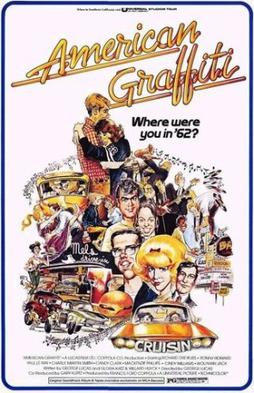
2.  American Graffiti
American graffiti ver1.jpg
The sad truth about summer is that it ends.  And this movie shows us what happens to us when that window closes and new chapters of life begin.  Unless you enter the education profession, you only have a limited amount of summer vacations in your life and this movie is about what happens as one of your last summers ticks away from you.  Do you move forward or backwards?  And is either choice right or wrong?

1.  One Crazy Summer
One crazy summer.jpg

The movie is pure silliness, but it embodies the nature of summer vacation better than any movie out there: adventure, romance, family, competition, travel, and of course, cute and fuzzy bunnies.  The movie feels so incredibly true because it is so incredibly silly.  And summer is the silliest of times.  And you can't not love a movie where someone almost dies of fart inhalation.  Twice.


Thursday, June 2, 2016

Trailer Time: The Space Between Us


I can't help but feel like this is a cross between The Fault in Our Stars and The Martian.  I apologize if other websites have also made this comparison, because I cannot imagine I am the only one.

Having said that... it kind of works.

There is something innocent and beautiful in this tragic love story that doesn't appear to have any real villains but fate.

And there seems to be a Chestertonian sense of wonder throughout this film.  The main character of this movie looks at our world that we take for granted and is inspired by awe.  I am particularly drawn to the scene with the rain.  I avoid rain when I can: it is cold and unpleasant.  But then I imagine what it must be like to never experience that sensation of standing in the summer rain...

I don't know.  It just gets me.

Thoughts?

Tuesday, May 31, 2016

4 Years of Blogging

(5/31/16: Feast of the Visitation)

It's had to believe that it has been 4 years since a started this little blog.  And I'm still here.  

And more importantly, you, faithful reader, are still here.

For this I thank you.

This past year has been especially challenging to keep up with the regular blogging between going back for my master's degree, family health problems, and lots of projects at work, I found I was not able to give this blog as much attention in times past.  But you stuck by me, dear reader, and I cannot tell you how much I appreciate that.

I will endeavor to be better at keeping up to date.  I am now getting a small break this summer, but that window will close rapidly.

I hope to get up more reviews (I still have not yet posted my full Deadpool review) and to take up again the CatholicSkywalker Dialogues.  I hope also to finish out my series of reflections on Interstellar and Doctor Who.  

I know it is a small thing, but I receive an immense amount of satisfaction in this medium.  I am especially delighted when one of you finds any of my ramblings enjoyable to read.  

You are all constantly in my prayers.  Please keep me in yours.  

And please let me know of any suggestions you have for this blog or any topics you would to see tackled: serious, silly, or anything in between.

So once again, I leave you with final thank you.  

And for a blast from the past, here is my first essay posted on my first every blog post:

God is a Joke


As a kid, I loved riddles. Still do. I can remember being a pluckish 9-year-old, bored out of my mind at my cousin’s wedding. I was too young to simply enjoy the celebration of friends and family, but I was too old to just sit in a corner pretending the tiny plastic swords from the bar were
miniature lightsabers. I sat at a table of adults and teens sharing riddles. I remember it vividly because I realized that I could figure out most of the answers. While other adults were puzzling with furrowed brows, I paced up and down the banquet hall in my little suit and tie, trying to think while blocking out the lyrics to “Dancing Queen.”

Riddle: “A man ties a dog to a 10 foot rope. The dog’s water dish is 20 feet away. How does the dog get the water?”
Answer: (see bottom of essay)

Riddle: “In 1980, Sarah was 15 years old. In 1985, Sarah was 10 years old. How can this be?”
Answer: (see bottom of essay)

If you’re anything like me, you took a few moments with the above riddles. You stopped reading and thought it through. You looked at the data over and over again. You hesitated to skip down to the answer, because you wanted to see if you could reason it out for yourself. Did you get it right? Did you get the mental cramp from twisting your mind around a dozen possible answers? And did you get the thrill of vindication at the end of your cerebral gymnastics, when you looked at the answer and saw that you were right?

And did you feel smart?

That is the purpose of a riddle. It acts as mental exercise. Riddles are different than trivia because to be good at them you don’t have to be like Hans Gruber and reap the benefits of a classical education. Even a 9-year-old, bored at a wedding can jump into the fray. And we tend to intuitively regard the master of riddles above the master of trivia. The riddle master may not have as much content in his mind, but he has insight. He looks at the problem with his laser-critical eye and is able discover the truth.

The riddle strengthens the riddle master. Riddles force you to think laterally. You need to alter your normal way of thinking because something does not fit. The data has to be examined from another angle. Only then can the answer present itself. And the reward for your strain is the simple knowledge that you are right. You have figured it out. You are smart.

At least this was how 9-year-old me felt. I looked at the clues, made the deductions, and discovered the truth. In my mind I was a pint-sized Sherlock Holmes. And I fell in love with riddles.

But riddles aren’t jokes.

And herein lays, I believe, the fundamental point of frustration that so many of us run into when pursuing the question of God. We treat God like a riddle. We look at the problem with our laser-critical eye; we examine it from every possible angle. How old is God? Is He all good? If so, why is there evil? What is His nature? His will? Philosophers since ancient Greek times have wrestled with these questions. Here were riddles worthy of Oedipus and the Sphinx. And let us not forget the fundamental question: Does God even exist? What are the clues we can use to unlock the answer to this riddle? So many of us believe that if we just put the pieces together the answer will reveal itself and the riddle will be solved.

But God is not a riddle. Yes, there is an answer to this question, the deepest of all our questions. But it is not the kind of answer we are looking for. We will never solve the riddle of God for one very simple reason:

God is a joke.


Before we go any further, let’s contrast the riddle and the joke.

Question: “What’s E.T. short for?”
Answer: (see bottom of the essay)

Question: “What’s the definition of ‘procrastination?’”
Answer: (see bottom of the essay)


Now, unlike the riddles at the beginning of this essay, I’m sure you didn’t wait and puzzle out the answer to these questions. You went right to the bottom to see the answer. Of course we don’t call the end of a joke “the answer.” We call it the “punch line.” This phrase, which probably has its origin in early 20th Century American slang, is a vivid contrast to the “answer” we find in a riddle. “Answer” carries with it a sense of discovery. A page has been turned; a door has been unlocked. “Punchline” comes at you sideways when you weren’t even looking. The rug has been pulled out from under you. Like the magician, the comedian has dazzled you with a surprise.

But the single most glaring distinction between riddles and jokes is the element of joy. By “joy” I mean mere delight and mirth. I would use the word “pleasure,” but I want to talk about that which lightens the heart and bursts through our egos to cause, quite against our wills sometimes, that singularly human activity of laughter. (In contrast, the marital act, which I’m sure most would call “pleasurable,” would probably suffer if one of the partners engaging in it spontaneously broke into giggles).


Now we come to the “question” of God. And this I think is where most everyone has come upon the fundamental mistake. As I stated earlier, the “question” of God is not a riddle. It is a joke.

This is not to say that God is illogical. Far from it. The best jokes are the ones that have a very clear logical thought process. If they did not, we could not follow the comedian from set-up to punch line.

Joke: A mailman comes to the front gate of a fenced in house only to be greeted by a vicious barking dog on the other side. The mailman looked up at the man sitting on the front porch and asked, "Is your dog going to bite me?" The man on the porch said "No." The mailman went to unlock the gate, but the dog did not back down. Again he asked the man on the porch "Is your dog going to bite me?" Again, the man on the porch said "No." So the mailman entered the gate and the dog immediately jumped on him and attacked him. The mailman shouted, "YOU LIED! YOU SAID YOUR DOG WOULDN'T BITE ME!" The man on the porch shouted back, "That's not MY dog."

The joke is very logical. It follows a very clear line of thinking. And so does the question of God. When it comes to God, we do not need to abandon our reason in order to enter into the joke. In fact, it is more logical to approach God as the Great Joke rather than the Great Riddle. You can figure out a riddle. But you shouldn’t figure out a joke.

If there is delight to be found in the riddle, as my younger self found, it is from the pride received at feeling so clever. I pieced together the clues to understand the answer. But this CANNOT be done with God. All of the great saints understood this, especially St. Thomas Aquinas, who made clear that human reason would always fall short of understanding God because God is, above all, mystery. He is too big to fit into our little brains.

One of my favorite stories about the nature of mystery involves the other great medieval mind: St. Augustine of Hippo. The legend goes like this: Augustine had been in enveloped in great frustration because he could not understand the dogma of Trinity. How could there be 1 God and 3 Persons? It literally pained his mind. One day Augustine was walking down a beach and saw a little boy running to the ocean. Filling a cup with water, the boy dumped it into a hole that he had dug. After watching for a bit, Augustine asked the child what he was doing. The child said “I am going to put the whole ocean into this hole.” Augustine replied “But child, it is impossible for you to put the whole ocean into this hole. The ocean is too big, and the hole too small.” The child looked at him and said, “And so it is impossible for you to understand the Trinity,” and he disappeared. (Rim shot)

After that, Augustine understood: Trinity is a joke, and not a riddle. But rather than this causing him to abandon reason, he was now better equipped to talk about the Trinity in a more rational way. Augustine at last understood that Trinity was not something to be could be fully understood. The Trinity is something to enjoy.

Have you ever simply enjoyed the Trinity? Have you let yourself be caught up in the Love Story of God the same way we get caught up in the love story of Sam and Diane, Pacey and Joey, Jack and Rose, Ross and Rachel, etc. etc. We should. It is the greatest love story of all time and beyond.

Love stories are very much like jokes. You have the set-up followed by the unexpected punch line. And every time love is discovered between 2 lovers, it is always a surprise. There’s always something new about it, as if it has been discovered for the very first time. Happily married couples wonder whether anyone in the world could possibly be as happy or if only they have unlocked this magical secret of the universe. Romantic love goes beyond the logical realm of the riddle and finds its home in the joyous delight of the joke.

Romantic love, at its best, should be a reflection of the Divine love. And this too is better reflected in joke than riddle. Because with love, as with the joke, you have to give over a little of yourself. When 2 people share riddles, they engage in mental jousting. They are Bilbo and Gollum, dueling not with swords or fists but wits. Riddles are designed to create distinctions, i.e. I am smarter than you. Jokes are not designed to focus conflict AT the other, but to draw you closer TO the other. How often when we try to make friends do we crack jokes? Probably more so than riddles. If our jokes make someone laugh and vice-versa, it means that our minds have entered into a common frame where we can meet, not compete.

The dueling nature of riddles cannot be overemphasized. Here, the riddle master and the riddle solver are both active. But with jokes, the comedian is active while the audience is passive. Here is another reason why we tend to approach God like a riddle. In our hubris, we think that we can understand Him, and by understanding, conquer Him. Of course, most of us don’t admit to this, but often we want to learn about something to gain power over it. We read computer manuals so that we can figure out how to get our WI-FI to find the Xbox. We read about cars so that we can maintain it ourselves and not have to take it in to Leon at the Jiffylube. If we understand God, understand how He works, then we can best “manage” God and fit Him more efficiently in our lives. At least I believe that is the secret Promethean motive behind keeping God at a distance by treating Him as a riddle.

But with God, as with the comedian, there must be on our part self surrender. When we hear a joke, we listen as we are taken down a long, seemingly aimless road until we turn the corner and find a mini-surprise party waiting for us. The joy of a joke is not figuring out the ending, as in a riddle, but in being led to the ending. In fact, if we figure out the punchline to a joke before we are led there, our delight is diminished.

This can be easily seen in the life of Christ. Often, the Pharisees would pester him and test him and try to figure out who He is. In fact some got so frustrated that they came right out and ask, “Can’t you just tell us plainly who you are?” They thought the Messianic prophecies were riddles to be deciphered. But when Jesus came to them, he was not at all what they expected. He came at them sideways. He could not simply tell them who He was because that would have been like giving away the punchline before the set up. He had to lead them from the beginning: his conception in Nazareth (Can anything good come from Nazareth?). Then he brought them to Bethlehem, where He is born in a barn, like something out of an 80's sitcom.

In His public life, Jesus winkingly toys with the Syrophonecian woman (even the dogs get scraps), winds up his disciples (Why don’t you give them something to eat yourselves), and enters Jerusalem majestically on His Messianic ass (i.e. His donkey). But all that is still only the set-up for the ultimate joke: the Paschal Mystery. How confounded everyone was at the scandalous Passion! How the called out to Him “Come down from the cross and we will believe!” As if that would produce the logical evidence to command their assent! Almost no one could figure Him out, even the thief on his left. But the thief on his right got it. Rather than taunting or teasing Jesus, the good thief says, “Remember me when you come into Your Kingdom.” He got the joke. Why him and so few others? The good thief doesn’t just suffer alongside Jesus. He suffers with Jesus. He travels on that way to dusty death metaphorically holding His hand. He did not fully understand Christ, but He fully experienced Him. And by experiencing Him, he came to know Him.

He got the joke.

Now, if the story ended at Calvary, then we would have to say that the Gospel was a bad joke. But the punchline does not end in pain.  It ends in joy; it ends in Resurrection.

The people wanted a Messiah to free them, and so He has.  But He did it in a way that no one expected. He came at them sideways.  And now they are free not just from political oppression but from the oppression of sin and death. In our life, we want a God who loves us. And He does, but He does it in an unlooked for way: He died for us. We want to be happy in the here and now. He brings happiness in the now and forever. We Christians should always believe in happy endings. Our story is the happy ending. We let the Great Comedian lead us down the long winding road of our lives so that when it comes to the great punchline, our hearts will be filled with mirth and our spirits with laughter as He says to us, “Welcome home by good and faithful servant.”

And if He doesn’t say that, try telling Him the one about the man who named his dog "Stay." Then shimmy up and over the pearly gates while He’s laughing.


ANSWER RIDDLE 1: The other end of the rope is not tied to anything
ANSWER RIDDLE 2: The two years in question refer to B.C. not A.D.

ANSWER JOKE 1: “He has little legs.”
ANSWER JOKE 2: “I’ll tell you tomorrow.”