ReasonForOurHope

Tuesday, April 30, 2013

John Williams To Score More STAR WARS

photo by TashTish


There is no composer out there like John Williams, in movies or in general.

And JJ Abrams, director of Star Wars Episode VII has said that Williams will compose the score for the new movie.

I was wondering what Abrams would do about the score.  I actually thought he would turn to long time collaborator Michael Giancchino, who worked with him on Lost, Star Trek and Super 8.

But John William's music IS Star Wars.  He turned a great movie into a legend.

I'm having a hard enough time dealing with the idea of a Superman movie without his score.  The fanboy in me is overwhelmed with delight.  I can't wait to hold that new Star Wars CD in my hand.

(yes I still buy CDs)


Sunday, April 28, 2013

Sunday Best: Directors of All Time #2 - Mel Gibson

photo  by Georges Biard


GREAT MOVIES
-The Passion of the Christ
-Braveheart

MEDIOCRE MOVIES
-The Man Without a Face
-Apocalypto

BAD MOVIES
-n/a

(SPOILERS BELOW!)

It is hard to describe the immense talent Mel Gibson has as a director.  We are often distracted by his chaotic personal life.  Or we think of him first as a powerful actor.  But his real potency is in his mastery of the director's craft.

His first foray into directing was a fine movie called The Man Without a Face.  It was a very simple, period-piece drama that is more notable for its writing and acting than its directing.

But then he followed that up with the amazing Braveheart.  A little background: I had just seen the movie Rob Roy, another film about the struggles of the Scottish against the English.  It was epic and it was awful.  I came to Braveheart with very low expectations.   And I find myself unable to adequately explain the impact this movie had.  First of all, Gibson immediately makes you fall in love with the pristine, majestic landscapes of Scotland with his sweeping camera movements accompanied by the achingly beautiful bagpipes.  And that is just within the first 10 seconds.

But the moment I came to realize Gibson's brilliance was after Murron had been captured.  Before this scene, Gibson deftly used light, shadow, slow motion, and music to cast a love spell on you to become completely invested in the romance on screen between his William and Murron.  But then it is harshily interrupted by the brutality of the English.  Not only was the violence of her capture jarring, he played one of the most heartbreaking slight-of-hands I had ever seen.  Murron is tied to a post and she looks out at the horizon.  We get her POV of the hills where she scans for William.  And we know he's coming.  He has to.  We are geared up for the big rescue seen.  But then her throat is unceremoniously slit.

At that point, my jaw hit the floor.  I do not know if other people had the same reaction, but I felt my heart drop out from under me.  Not only had I not seen this coming, but Gibson had created in me a shock from losing all my hope of her rescue to a rage at the injustice of her death.

And then the next scene once again shows his mastery of the timing.  He draws out the tension like a blade until it is unbearable.  And I love the moment that William stares into the eyes of the English solider who approaches.  Gibson forces you to look at the humanity of the soldier.  He is just another man, like William.  He is not faceless.  Gibson makes you look straight at him right before William kills him with a mace.  Not only does he innovate this flourish by removing frames, but he confronts you with the horror of killing, even in the necessity of war.

I could continue to do a scene by scene analysis, but suffice to say that Gibson uses every visual tool he can to tell his story.  And in doing so, he transports the movie's epic themes into your heart.  Watching Braveheart makes your heart feel enlarged with courage and nobility.  It inspires.  Gibson not only re-invented the Hollywood battle scene (so much so that I've heard people often to other movies as having "Braveheart-type battles") but he knew how to use simplicity.  The final shot of the movie, with it's single image and single musical note, act as the final nail to seal the movie into your heart.

He brought this same skill to Apocalypto.  It is not nearly as good as his other films, but he once again showed his ability to tell a story visually.  Not only is it tense, frightening, and exciting, but he knows how to convey deep emotions without words.  There is a character in the movie who constantly fights with his nagging mother-in-law.  Throughout the beginning, they scream their venom at each other.  But then the entire village is captured and taken as slaves.  The mother-in-law is deemed useless and let go.  She then walks free as she and her son-in-law stare at each other.  In that moment you could see how much they regretted all of the animosity they shared as he was led away to certain death.

But Mel Gibson's chief contribution is the fact that he directed the greatest film ever made: The Passion of the Christ.  It is more than a movie.  There are people whose lives have been changed by experiencing The Passion.  And that is an apt way to describe what Gibson accomplished: you don't watch The Passion, you experience it.

Every shot, every angle, every edit is imbued with Gibson's expert touch.  I have never seen a more violent film, but I have never seen one more beautiful.  As a Catholic, I can say that though this movie does not have a lot of Jesus' preaching, it preaches better than most sermons.  How perfectly he conveys the meaning of the Eucharist by intercutting Christ raised on the cross and the words of consecration at the Last Supper as John watches in wonder!  What better way to help us understand Mary's agony than by flashing us back to the child Jesus stumbling!

The movie does not just penetrate the heart; it shatters it completely.

The goal of great art is to lift the veil of heaven so that we can glimpse at Beauty Itself.  There is no other movie that touches concretely that Beauty than Mel Gibson's The Passion of the Christ.

And that is why he has earned his place on this list.

Friday, April 26, 2013

The Dragonheart Effect

Movies are a communal experience.  I know that movie watching is something that happens more and more on an individual basis now that we have quick access to them on all our mobile devices.  But I think that something about the art form will be truly lost if we lose group movie watching.

I know that going to the theater is not only expensive, but a hassle.  After paying for your ticket (extra if you see it in 3D, XD, Imax, Imax 3-D) and taking out a small home equity loan to get a medium popcorn and Junior Mints, you then have to sit in a large dark room full of strangers.  These are people from all different walks of life who were raised goodness knows what kind of manners.

Some people follow the basic etiquette of silence when the voices on the screen are talking.  Others seem to be as clueless as the apemen shouting at the 2001 monolith.  Some kick the back of your seat.  Others never stop fidgeting.  There are, of course, the obnoxious teenagers who are there more to make a spectacle of themselves because they cannot stand that people in a darkened theater are staring only at the giant screen in front of them.  And then there are the talkers.  One of my favorite lines from the show Firefly was from the character Shepherd Book who told someone, "You're going to end up in the special hell reserved for child molesters and people who talk in the theater."

I remember I was once at a packed screening of the movie Changing Lanes starring Ben Affleck and Samuel L. Jackson.  In the middle of the movie, a cell phone rang.  The owner was apparently unaware that he was not sitting privately in his living room, but was surrounded by hundreds of people who paid money to hear the film and not his voice.  He proceeded to have a conversation with his acquaintance (I'm assuming that this person could not possibly have actual friends) at the top of his lungs.  I would be angrier at him.  But he was the most memorable thing about that movie.

My point is that I understand why people don't like to go out and see movies when it is easier, faster, and cheaper to do so on your own.  But watching with other people changes the film going experience. I'm not talking about the film's quality.  That is an semi-objective judgment about the merits of the film in the different aspects of movie making.  But there is the subjective enjoyment of a movie that is greatly impacted by those with whom you see it.

Have you ever argued with someone about a movie being good or bad?  Of course you have.  We all have.  But one of the reasons why it is so difficult to reconcile the two points of view is because often (not always) the two viewers do not have the same viewing experience.

I think that this is especially true of comedies.  I remember I sat down once and watched This is Spinal Tap by myself.  I found it meandering, pointless, and boring.  I could not understand why people liked this movie so much.  Then I happen to watch it again with a group of people.  I braced myself for a boring evening.  But to my surprise, I found myself laughing hysterically at most of the jokes.  The movie began to click.  I am convinced it was not so much a grand insight I had (although I finally realized that this movie was the template for shows like The Office and Parks and Recreation), but that I was in the presence of people who truly enjoyed it.  And that helped me enjoy it too.  This is the same experience I had with the movies Billy Madison and Swingers.

It doesn't always work.  This isn't simply a matter of bending to social pressures.  Sometimes you cannot fathom why those around like the movie you are watching.  My friends once tried to "correct" me of my ranking Caddyshack 2 over the original Caddyshack.  So they decided to hold a viewing of the first film to demonstrate to me how funny it was.

It didn't take.

But even though I still don't care for that movie (I know I am in the vast minority here), I did enjoy it MORE than had before because of the company I kept.

But the best example of this is what I call the "Dragonheart Effect."  Dragonheart was a movie that came out in the mid-'90's that had a talking dragon (Sean Connery) go on adventures with world-weary knight (Dennis Quaid).  When my group of friends made it to the theater, there weren't enough seats for all of us to sit together.  So half of us went to the front and the other to the back.

We all sat through the exact same movie in the exact same theater.  Unlike most teenagers, we did not constantly talk to each other during the movie.  But when we had finished the two groups of us got back together and we found that half of us loved the movie and the other half hated it.  And the division depended on where you sat.

Even without talking, I think something about the environment of people around has a deep impact on your film viewing experience.  Being with other people who enjoy something can enhance your enjoyment.  Being with other people who hate something can sour you on it too.  You can't force someone to like the movies that you like.  This is especially true if you hover over them at constantly check their expression to see if all the scenes are hitting them emotionally the same way they hit you.  But you can make the movie watching experience richer by sharing a movie with a group.

I've seen theater's jump with terror together (Dead Again).  I've heard it fill the air with a constant barrage of laughs (Ted).  I was once in a theater where people actually stood up and cheered (Attack of the Clones).  I've even been in theater's where the audience was stunned into profound silence together (Schindler's List).  There are very few movie-watching experiences as thrilling as being in a room full of people bonded emotionally by nothing more than the magic of the silver screen.

Tuesday, April 23, 2013

Trailer Time - Thor: The Dark World


The Marvel Universe is getting darker and darker.  Iron Man 3 looks dire and Thor: The Dark World is literally taking us deeper into darkness.  And I don't know about you, but I like it.

This teaser doesn't serve up much story, and it shouldn't.  It should give you a feel for the emotions that will pop up during the movie.  I like the subtle things like Sif giving Jane the death glare.  But I also like the not-so-subtle things like Thor on his knees shouting "NOOOOOOO!"

I think it looks good.

Thoughts?

Sunday, April 21, 2013

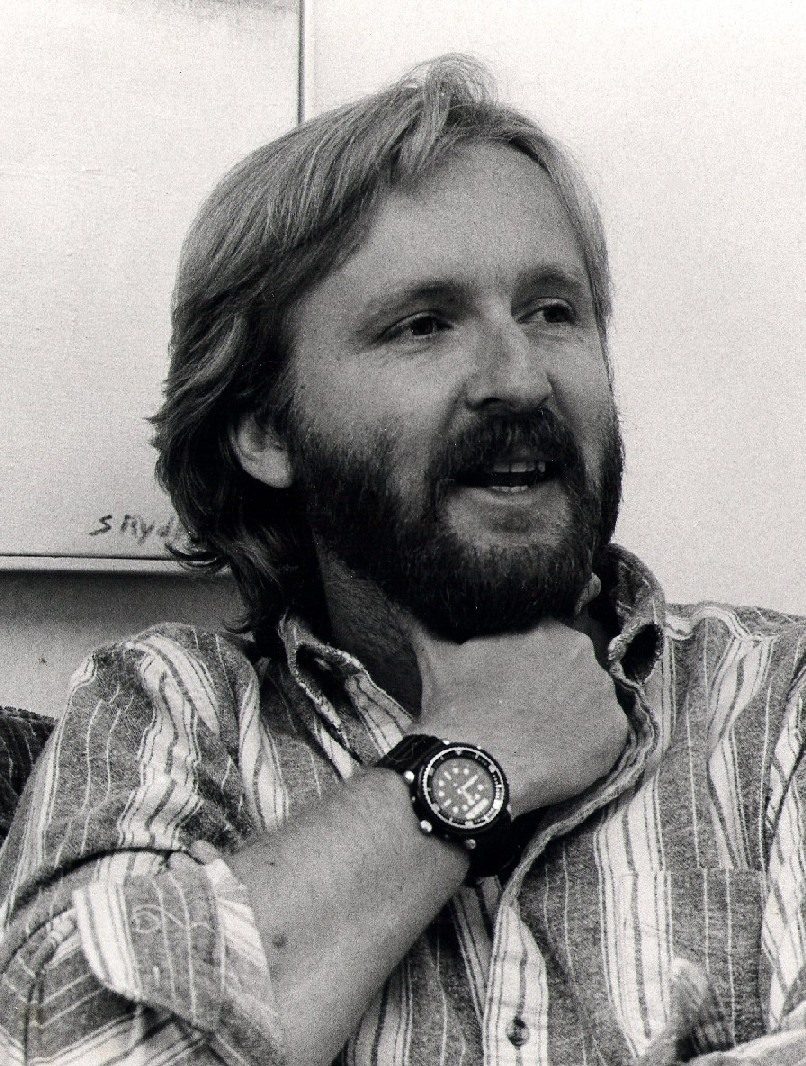
Sunday Best: Directors of All Time #3 - James Cameron

photo by Towpilot


GREAT MOVIES
-Terminator
-Terminator 2: Judgment Day
-Aliens
-The Abyss
-Titanic

DECENT MOVIES
-True Lies
-Avatar

BAD MOVIES
-Pirahanna 2: The Spawning (though he only worked on that for a few days)

For over 10 years, James Cameron's Titanic was the highest grossing movie of all time at over $658 million dollars domestic.  Only one director could unseat James Cameron's record: James Cameron.  That is what he did with his follow up film, Avatar.

James Cameron has not made many movies in his over-3-decades-long career.  But each movie is an event.  One of the things I have always admired about him is that he always seeks to challenge himself and push the boundaries of movie-making.

His breakout movie, of course, was the original Terminator.  This could have easily been brushed on the dustbin of b-movie, sci-fi schlock.  But Cameron understood that you needed to start with a compelling story.  He also understood that the visuals needed to tell you the story.  It is amazing how terrifying Arnold Schwarzenegger was in that role.  He says very little, but Cameron always shoots him with such dramatic lighting and low angles that you feel his hulking presence bearing down on you the entire film.  This contrasts the raw humanity of Sarah and Kyle as they get beat up both physically and emotionally throughout the piece.

He then took a major risk when he made a sequel to one of the most revered science fiction movies of all time: Alien.  People told him that if it was bad, it would end his career.  If it was good, they'd give all the credit to Ridley Scott, the director of the first.  But Cameron had a story to tell.  And dare I say, he had a better story to tell than Scott.  I have always maintained that Aliens is the best action movie I have ever seen.  It is not because of the visual action spectacle alone.  The thing that sets it apart is that you cannot help but attach to all of the surviving characters.  You root for them and feel a real sense of jeopardy in losing them.  Aliens shows that Cameron knows how to make a movie that is both scary, exciting, and dramatically compelling.  Sigourney Weaver got a Best Actress nomination for her performance, something very rare for an action movie but well deserved.  It should also be noted his use of visual catharsis.  The scene with the loader is set up in the beginning, and there is some flaw in the rationale for using that in battle when you have a ship full of weapons.  But there is a unique thrill watching Ripley stand there in her "battle-suit" to go mano-a-mano with the queen.  It is intensely satisfying.

The Abyss was a box office disappointment, but I think it is one of his most underrated films.  The enormous challenge of filming underwater is hard to describe.  But the movie is not only beautiful visually, but it is extremely compelling.  To this day, I cannot watch the sub drowning scene without desperately trying to catch my breath:


People mostly note The Abyss for the step forward it presented in digital film-making, with the water pod


It is not a perfect movie.  It is a bit too long, too preachy, and very dour on the military (which we will see again in Avatar).  But it also creates an exciting sense of wonder and great heroic courage in the character of Bud.

Terminator 2 was another risk, where Cameron decided to make his iconic villain into the hero.  Again, most people will focus on the monumental technical achievement of T2, and rightly so because it is still spectacular to watch.  But he also demonstrates a mastery of the visuals.  He knows when to use slo-mo and not.  He knows when to use a digital effect and when to go practical.  The helicopter chase has within it the most dangerous stunt ever put on film:


But again, Cameron knows that this is all done to serve the story.  It all builds to an ending that I still find emotionally compelling, one that is noble and sad.

And then we have Titanic.

Some people forget that everyone was expecting Titanic to be a massive failure.  It was tens of millions of dollars over budget, it had not major stars, it was a dramatic period piece, most everyone dies so there would be no sequel, and the premiere kept getting pushed back.

But Cameron once again demonstrated that the spectacle was there to serve the emotional ends of the story.  We all knew that the Titanic was an impressive ship, but he showed you with his visuals as you take in the glory of this amazing ship.  He fills you with a sense of wonder, hope, and power as Jack shouts "I'm the king of the world!"  And he slowly turns the knife as that hope sinks below the icy depths.  We all want to believe in a love that is stronger than death.  And Cameron delivers it.  Who can forget one his most compellingly beautiful images:

And that is why it works so well and it was the number one movie at the box office for 15 weeks.  He used every visual skill at his disposal to not just give a feast for the eyes, but he used them as laser-guided arrows to hit you in the heart.  I know that this movie has a lot of hater backlash, but I would encourage anyone to watch it again and note the craft that Cameron uses as a director.

Even in his last movie, Avatar, you can see that skill at work.  Avatar's major flaw is its story.  Unlike his other movies it is difficult to connect to the story.  He imports his preachiness and military dourness from The Abyss.  But no one can deny the wondrous visuals of the film.  It was one of the most amazing 3-D experiences I have ever had.  And despite myself, I was moved by that final shot.

James Cameron never stops trying to stretch himself as a film-maker, and as a result he has given us some truly great movies.  But by him leading the way he has changed the movie making process forever.

Saturday, April 20, 2013

Look, Up in the Sky!

On the evening of June 12th, 1932, a Jewish immigrant named Max was working the late shift at a second hand clothes store in Cleveland, Ohio.  It was the in the middle of the great depression.  Some men, like Max, worked long hours at multiple jobs like the clothing store.  Other men that night decided to make their money by holding up the place.  During the robbery, Max was shot and killed.

His 17-year-old son, Jerry was now left fatherless because of a violent man's bullet.  Jerry could read all about the details of what happened in the Cleveland Plain Dealer the next morning in a news report printed next to an editorial that suggested that maybe it was time for someone outside the law to do something about crime.  But even is something was done immediately, it was too late to save Max.  Jerry's father died because sadly, like all of us, he was not bulletproof.

So Jerry gave to the world a man was.

This past Thursday was April 18th, 2013.  It was the 75th anniversary of when Action Comics #1 was published.  There have been hundreds of comic book titles printed over the years, but this one is special.  This was the first appearance of of Superman.

Superman was created by writer Jerry Siegel and artist Joe Schuster.  Among the pantheon of superhero gods, the Last Son of Krypton is preeminent above them all.  He is the first to break through the bonds and boundaries of simple "funny books" and become a worldwide cultural phenomenon.

Superman captures the eye with his bright costume of bold primary colors.  He captures the imagination with his extraordinary, fantastic array of super powers.  And he captures our hopes.  He is dedicated to fighting the never ending battle for truth, justice, and the American way.

Superman is important.

I don't mean that he is popular, though he certainly is.  I don't mean that his name is ubiquitous across the globe, though it is.  And I don't mean that he is important only in terms of pop culture, though he is.

Superman is important because of what he does: he inspires.

I think that the heroes you have when you are young truly matter.  They are not just passing fancies or youthful diversions.  I believe that when you are young, you latch your mind and your heart onto what you think it means to be a hero.  For some of us, we look at our sports stars and idealize their talent and skill.  Others look to the actors and muscicians we see on our screens and we want to be as popular and pretty.  We buy their products.  We put up their posters.  We try to see them whenever we can.

We do so because our young minds cannot grasp what it is to be an older version of ourselves.  We try, but it the picture is too vague with too many mysterious variables.  But we can see grown ups now.  They are not vague.  They are concrete.  And we can imagine being them as they are.  And that matters.

I remember being a child and seeing what would become my favorite movie: Return of the Jedi.  I had waited years to see the final battle between one of my all time favorite heroes, Luke Skywalker, against the embodiment of all evil, Darth Vader.  After Luke's butt kicking in The Empire Strikes Back, I was hungry to see my hero vanquish the bad guy.  But to my surprise Luke kept resisting the battle.  He kept saying "I will not fight you."  And even though he momentarily clashed lightsabers, in the end he threw away his own weapon and was willing to die to save Vader's soul.

That scene had a profound impact on me because for the first time I think understood that the real hero is not the one who kills the bad guy but turns the bad guy good.  This is something I've carried with me from childhood into the man I am today.  All of us have the power to fight.  Few of us have the courage to save.  I learned that because Luke Skywalker taught me.  He was a role model.

And if you don't have the proper modeling, they may not have that proper foundation.  People complain about graphic violence in movies, TV, and video games.  Often these critics are dismissed as out of touch and unimportant.  But these voices are very correct when the point out that what our minds consume as children nourish the adult we become.  And it isn't the graphicness per se that is the problem.  Its the fact that there is so much needless cruelty on the part of today's heroes and icons.

That is why Superman is important.  People often mistake the appeal of Superman is the power.  As I said before, that is essential to him, but it also misses the point.  There are thousands of super heroes with powers like the Man of Steel.  As the Martian Manhunter once complained while he was lifting up a brick building, "I'm as strong as Superman.  Why does everyone always forget that?"

What sets Superman apart is that embodies the best of the American spirit.  He fights for truth in a world that says lying "as long as it doesn't hurt anybody" is a fine thing.  He fights for justice in a world where young children are killed by monsters with bombs in pressure cookers.  He fights the American way in a world that tries to squeeze us into mediocrity.  On this last point, I think it important to remember how American Superman is.

A few years ago, there were lots of headlines when Superman in the comic books renounced his American citizenship so he could be a citizen of the world.  I hated this.  We have to remember, that nearly every other country was built around ethnic background or geographic happenstance.  America is the only country founded on an idea.  We are built on the idea that if man is capable of extraordinary things if given the freedom to achieve them.  Superman embodies this.  His power is like our freedom.  And he uses that power to make the lives of others better.

When I was a child, I had a very clear picture of Superman.  I must have watched Christopher Reeve fly through the sky hundreds of times.  And I think Reeve understood what he was doing with the character.  He did not play him campy or naive.  He played him with total sincerity and faith in the ideals of what this country has to offer.  I could never imagine Superman cussing or stealing or being cruel to those weaker than him or putting himself before innocent people.  And the more I made Superman my hero, I saw myself in him.  Jerry Siegel did not just create a bulletproof father figure.  He created an iconic ideal to shape the character of children for generations.

If Superman did for others what he did for me, then he truly is important and it is right to celebrate a world with 75 years of Superman in it.  Unlike so much garbage floating around the popular culture, he does not draw our eyes to the gutter.  Nor does he makes us see only the world around us as it.  Superman makes us look at the world as it could be.  He makes us look up.

In the sky.


Wednesday, April 17, 2013

New Star Wars Movie Every Year


News has just broken that Disney plans to make a new Star Wars movie every year.

Apparently, the plan is to do the new trilogy like the old.  But this time, instead of 2 years in between each, it will only be one year.   And then they will have a stand alone movie each year in between.  So it should look something like this:

2015: Star Wars Episode VII
2016: Stand Alone Star Wars Movie
2017: Star Wars Episode VIII
2018: Stand Alone Star Wars Movie
2019: Star Wars Episode IX

After that, the future is unknown.  This is a much more rapid turnover of films.  Obviously this will require more directors than just JJ Abrams.

I don't know if the stand-alones will be related to the new trilogy or if they will be something completely different, like the once rumored 7 Samurai-style Zack Snyder project.

I holding my anticipation until I find out more of the story, but this sounds good!