ReasonForOurHope

Sunday, June 11, 2023

Sunday Best: Top 20 Trilogies of All Time Part 2 (#10-#1)

 This is the second part of my list of the Top 20 Trilogies of all Time.

As I wrote in my last article:

This seems to be the benchmark of movie franchises.  Yes, a successful series can go way beyond three films (I'm looking at you Fast and Furious), but it seems to me that the goal and the hope of a sequalized story is to get to at least a trilogy.

And throughout movie history, there have been dozens of trilogies.  But I thought it would be fun to look at the top 20.  Originally I was only going to do the top 10, but I found that I was leaving way too many stories off of my list.  

How do I decide what is a good trilogy?

First of all, there has to be a level of quality maintained throughout the trilogy.  Even if the first movie is excellent, if the two sequels that follow are terrible then it does not qualify as a great trilogy (eg. The Hangover, The Pirates of the Caribbean).  To be sure, most of the time there is going to be a drop in quality by the third film.

Also, the movies had to be sequentially three parts without skipping.  This gets tricky when doing interconnected universes like the MCU, but if the main series has a trilogy it qualifies.  For example, the above mentioned Fast and Furious franchise could qualify if you held that parts 5, 6, and 7 are a trilogy.  However, looking at the Avengers films, you have a weaker entry in part 2 of the four.  As a result, you could not form a trilogy from this series without including that weaker entry.

In the previous article, I listed #20-#11

#20 The Chronicles of Narnia

#19 Ghostbusters

#18 John Wick

#17 Captain America

#16 Spider-Man Home Trilogy

#15  Guardians of the Galaxy

#14 The Naked Gun

#13 Harry Potter

#12 The Dark Knight Trilogy

#11 Back to the Future


And now the Top Ten

#10 Evil Dead
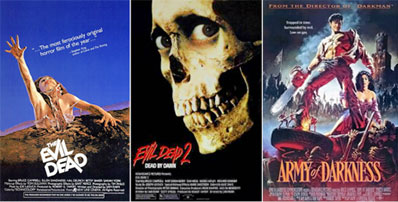
5 reasons why everyone should watch the original Evil Dead trilogy •  Navigator

Evil Dead, Evil Dead 2, Army of Darkness

I have to say that I have lost my taste for horror over the years, but there is something truly special about this trilogy.  The first Evil Dead is disgusting and terrifying.  If all the movies in the series were like this, it would not appear on this list.  But the second film was daring enough to mix horror and comedy in such a unique way as to be like nothing else that had come before it.  The scene where Ash is being chased through the cabin by the camera is both hilarious and horrifying.  But the third film, Army of Darkness, is an exercise in pure comedy that should be terrible.  Everything about this third film should be derided as self-parody.  But through some kind of strange magic, the movie works!  It is endlessly quotable and horribly fun.  The evolution of tone throughout the series should be a sign of its devolution.  Instead, it took what could have been a good, but simple, horror film and created the most unique cinematic trilogy I have seen.


#9 Toy Story
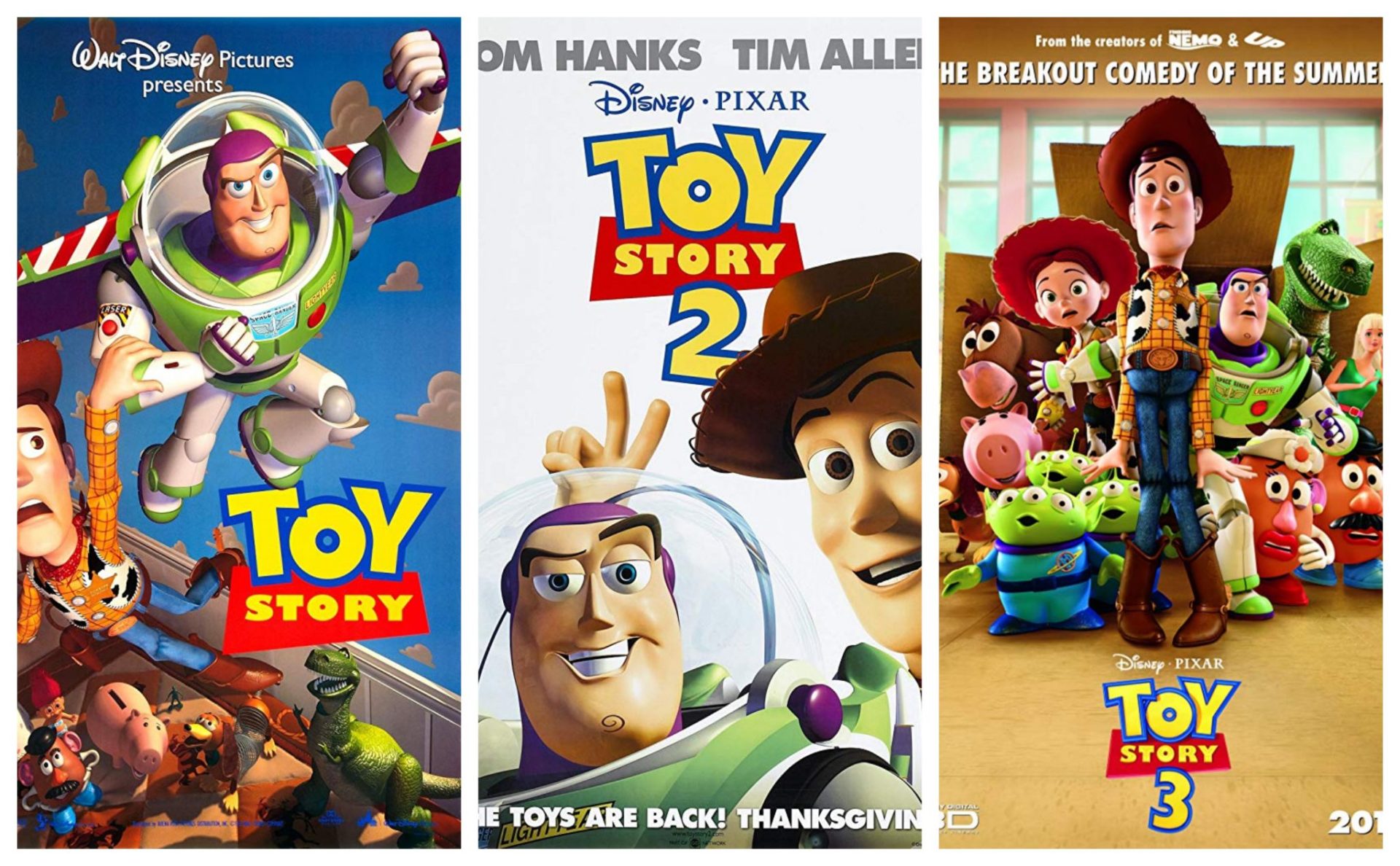
A Newcomer's Toy Story Retrospective -

Toy Story 1,2, 3


The mighty John Nolte once said that Toy Story 3 should have won the Oscar for Best Picture, but it was the only movie nominated that would still be remembered and loved decades later.  It says something about this series in how it set the gold standard for PIXAR quality, not just in terms of animation, but in story.  The first one is a simple enough adventure.  But the second amped up the emotion.  And then the third film has an utterly devastating final act.  I remember being on the edge of my seat as our heroes embraced each other while slowly falling towards oblivion.  But even that did not prepare me for the gut punch of the final scene.  The series has gone on, but they have never been able to capture the magic of those first three.


#8 The Snyderverse Trilogy

are still the best DCEU Trilogy movies to date. | Fandom

Man of Steel, Batman v. Superman: Dawn of Justice, Zack Snyder's Justice League

This is perhaps the most controversial pick on my list.  But I think Zack Snyder gave us one of the best super hero trilogies ever made.  Man of Steel is a powerful retelling of the Superman story and I have always maintained Batman v. Superman is an underapperciated masterpiece.  The theatrical Justice League was a bit of a let-down compared to the previous two.  However, the Snyder Cut expanded the story and characters in an utterly satisfying way.  In his four-hour epic, his characters finally got a chance to breath.  The weight and the pressure could build in a satisfying way so that it all converged into its final battle.  The biggest downside is that it teased a sequel that would probably never happen.  Other than that, the Snyderverse Trilogy is one of the best interpretations of the comic medium ever made.


#7 Rocky
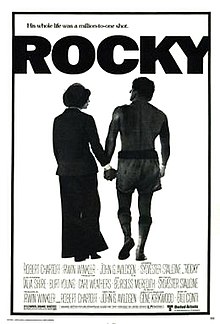

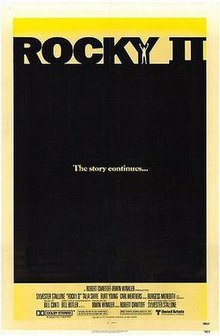
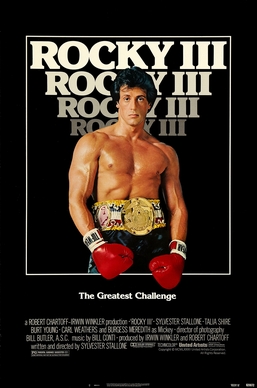
In a black-and-white poster, Rocky in his boxing outfit holding hands with another person. The tagline above the film's title reads "His whole life was a million-to-one shot." The film's credits are printed below the poster.Rocky ii poster.jpgRocky iii poster.jpg

Rocky 1, 2, 3

While I have a great affection for Rocky IV and Rocky Balboa, the first three films form a fantastic trilogy.  The first movie is so raw and gritty.  You feel every hit that Rocky takes.  That final fight feels like a gauntlet of pain, with the real prize being his own self-worth.  The second film does rehash a lot of the same beats.  But the sequence where Adrian is in the hospital are some of most beautiful moments in the film, especially in how it depicts Rocky's faith.  Rocky III feels so different from the first two, but in an important way.  In a meta-way, it was commenting on the franchise's own success and the desire to get back to basics.  It is especially satisfying watching Rocky's relationship with Apollo come full circle leading to one of the best final shots of any movie.


#6  Star Trek: the Khan Trilogy

STAR TREK's "Genesis Trilogy" Proved You Don't Need a Plan - Nerdist

Star Trek II: The Wrath of Khan, Star Trek III: The Search for Spock, Star Trek IV: The Voyage Home

The best part of the Star Trek movie franchise are the stories that form the Kahn Trilogy.  While the best of these three movie is indisputably The Wrath of Kahn, The Search for Spock is under appreciated in its power and its impact.  The emotional price Kirk has to pay to bring Spock back to the land of the living is harrowing.  But it also makes you feel the depths to which he loves his friend.  The Voyage Home is a much more light-hearted adventure in comparison to the others.  And the "Save the Whales" theme feels very of its era.  But the movie serves as a fun epilogue to the grim adventures of the Enterprise crew with a promise of a brighter tomorrow.


#5  Star Wars Prequel Trilogy

Prequel trilogy | Wookieepedia | Fandom

Star Wars Episode I: The Phantom Menace, Star Wars Episode II: Attack of the Clones, Star Wars Episode III: Revenge of the Sith

For years, I was one of the Prequel Trilogy's most ardent defenders.  I've noticed that since the Sequel Trilogy has been out, people do not complain as much about the Prequels.  In fact, I think appreciation and nostalgia for them have only grown over time.  Now, I am not blind to their shortcomings.  Lucas made a miscalculation regarding how audiences would react to Jar Jar, he did not create a strong enough through-line of characters through all three movies, and he had trouble getting the chemistry to truly work until the final film.  But when put together, the Prequel Trilogy is a wonderful series of stories that culminates in one of the best Star Wars movies made.

#4 The Godfather

The Godfather Trilogy Movie Poster Collection Set | Part 1 2 3 III | NEW |  USA | eBay

The Godfather Part I, II, III

When people think of this trilogy, they often focus on the shortcomings of the third film.  However, Francis Ford Coppola described the structure of the films as "Two parts and an epilogue."  When viewed this way, the structure makes a great deal more sense.  This is especially true when you watch the director's cut that restructures the final movie.  Understanding this helps explain the jarring change in tone and character when it comes to Michael Corleone.  With all three films together, we see not only the slow loss of a person's soul, but then finally we feel the ultimate price that is paid because of it.  

#3 The Indiana Jones Trilogy

The Indiana Jones Trilogy box art!!!

Raiders of the Lost Ark, Indiana Jones and the Temple of Doom, Indiana Jones and the Last Crusade

This is the greatest adventure trilogy, hands down.  No other trilogy of movies, not even further adventures of Indiana Jones, could compare.  Raiders set a new standard of adventure.  Temple of Doom was darker, but is still made the skill and care of the two great masters: Spielberg and Lucas.  But the final one, The Last Crusade is the best of the series.  Every part of this movie is fantastic and infinitely re-watchable.  Not only is it thematically rich in its exploration of universal relationship between fathers and sons, but it is the most exciting and most entertaining of all the films.  If this movie is on TV, I usually stop everything and watch because it completely transports me in a way that few movies can.

#2 The Lord of the Rings

Amazon.com: The Lord of the Rings Trilogy (Widescreen Theatrical Edition) :  Elijah Wood: Movies & TV

The Lord of the Rings: The Fellowship of the Ring, The Lord of the Rings: The Two Towers, The Lord of the Rings: The Return of the King

These films are almost a movie miracle.  Peter Jackson and his crew created a unique cinematic experience in how they adapted what is arguably the greatest book of the 20th century.  The most important thing they did was that they took Tolkien's world seriously.  They treated the world as lived-in world that had a history.  But more important than that, they treated the emotional journey's of the characters with great care.  Notice how Gollum/Smeagol could have been simply another antagonist, and instead they allowed him to become a figure of utter tragedy.  Jackson and company used every ounce of their skill to verbally and visually give you the full impact of this epic to remind you that while there are hundreds of high fantasy stories, there is only one Lord of the Rings.

#1 Star Wars: The Original Trilogy

Star Wars (Original Trilogy — Hopped Up Trivia

Star Wars Episode IV: A New Hope, Star Wars Episode V: The Empire Strikes Back, Star Wars Episode VI: Return of the Jedi

It should come as no surprise that this was at the top of the list.  This is the Trilogy of Trilogies.  There were trilogies before this.  But after this, trilogies became the gold standard of movie franchises.  To be sure, a series can go beyond trilogy.  But all movies that hope for franchise, hope to get to at least a trilogy.

The reason why this the Trilogy of Trilogies is because each film in the series did the unthinkable in topping the film that came before.  The original Star Wars was an absolute phenomenon that the film industry had never seen before.  But The Empire Strikes Back took the series to a completely different level.  As director Irvin Kershner said, "Something powerful had to happen in Luke's soul."  Kershner understood that it was not enough to go bigger with the sequel.  Bigger is easy.  He understood that the sequel had to go deeper.  The movie subverted expectations, but in the best possible way: it made you care about the characters and their fates even more.  That film sets it up so that it is almost impossible to create a satisfying conclusion.

But Return of the Jedi is pure magic.  All of the story threads are pulled together in a way that hits you perfectly.  This movie reminds us that the hero does not always defeat the villain in combat.  That would be too close the philosophy of "might makes right."  Instead, the movie takes the more difficult but more enlightened path of showing how the power of love and sacrifice can redeem the most lost soul.  

There has never been a trilogy like the Original Trilogy.  And I don't think there ever will.


Thoughts?

Thursday, June 8, 2023

Film Review: Spider-Man - Across the Spider-Verse


Sexuality/Nudity Acceptable

Violence Acceptable
Vulgarity Acceptable

Anti-Catholic Philosophy Acceptable

Spider-Man: Into the Spider-Verse was a movie that hit my by surprise.  In the comics, Miles Morales is incredibly lame and his stories are horribly unexciting.  So when they made a movie about him, I was less than enthusiastic.  However, I was blown away by the bold, exciting, and powerful film that they made and because of that I was very excited to see the sequel.

Based on my conversations with others who have seen it and the reaction online, I think my take will be contrary to the majority opinion:

Spider-Man: Across the Spider-Verse is not that good.

Don't get me wrong, it is not a bad movie.  In fact, it has some truly amazing parts.  

But sequels to successful films usually end up in one of three places:

a. playing it safe and being too repetitive (e.g. Iron Man 2)

b. getting full of itself and going overboard with creative freedom and budget (The Matrix sequels)

c. taking everything good in the first, but bringing to a whole new level (The Empire Strikes Back).

Across the Spider-Verse wants to be like Empire, but it ends up more like The Matrix sequels.

The story begins about a year after Into the Spider-Verse.  We begin with a LONG prologue with Spider-Gwen (Hailee Steinfeld), stuck in her universe and at odds with her police captain father (Shea Whigham).  During a fight, she encounters other Spider Heroes like Miguel O'Hara (Oscar Isaac) and Jessica Drew (Issa Rae), who invite her to a multiversal Spider-Team.  Meanwhile, Miles (Shameik Moore) is still stuck in his universe, where is father Jefferson (Brian Tyree Henry) and his mother Rio (Luna Lauren Velez) are trying plan for his future while he spends most of his time secretly fighting crime.  This tension provides much of the character drama.  Miles tangles with a seemingly incompetent villain named "The Spot" (Jason Schwartzman), whose power and danger grow throughout the film.  Eventually Miles finds his way into a multiverse-hopping adventure that will test his courage and his moral code.

The best part of this movie is once again how they handle Miles.  He is not Peter Parker and that is fine.  Miles' experience resonates on a universal level with the coming-of-age stories and sense of alienation from family that occurs in adolescents.  He has wit and charm, but he is complicated.  And I love the fact that he is written like a teenager.  Granted he is an heroic teenager, but there are some maturities that only come with age that Miles lacks.  Instead of this making the character more annoying, it instead makes us all relate to that time in our lives when we were in his shoes.

But the movie has a stylistic problem and a structure problem.

Into the Spider-Verse had such a bold and original visual dynamic that it felt like it was going to pop off of the screen, even without 3D.  The problem with this movie is that they crank that up to 11.  There are times when the movie needs a moment to breath and let the tone settle.  But it feels like directors Joaquim Dos Santos, Kemp Powers, and Justin K. Thompson had a philosophy that they should never uses a simple shot when a complex one can be used.  Backgrounds are constantly shifting and change, the camera often never settles down.  As a result, the moments that should visually blow your mind get lost in a cacophony of over-stimulation.  As I mentioned in my review of Fast X, the action scenes go on WAY too long and slowly sour into tedium.  Overall, it feels less like a dedication to beauty than it feels like the film makers showing off.

But the bigger problem is structural.  It is very difficult to explain without spoilers so be warned:

SPOILERS FOR THE MOVIE'S PLOT WILL BE DISCUSSED BELOW

The central conflict of the movie is a fascinating one.  

According to Miguel, there are "canon events" in the lives of every Spider-Hero across the multiverse.  For example, all of them have a relative who dies and teaches them a lesson of heroism.  But these canon events also involve the death of a police captain, usually Gwen Stacy's father.  But in Miles' universe, his father is about to become captain and is thus destined to die.  If he does not, then there is a risk that the entire universe will collapse.  Miguel says that he took the place of a dead Miguel O'Hara in another universe.  But because he changed things too much, that universe was destroyed.

The Spider-Heroes accept this.  That is, except for Miles.  

Miles refuses to stand by and let his father die, even if it means risking the universe.  This leads to some high-stakes drama and action.

So where is the structural problem?

Its in that the story makes you side with Miles too much.  He clearly has made the "right" choice, even though it is not that easy.  Part of the problem is how they portray Miguel.  He is clearly the bad guy.  He hulks over the other Spider-Heroes and carries with him an aspect of malevolence.  You cannot really appreciate his position.

I don't like Monday-Morning-Quarterbacking someone else's story, but the movie makes a big mistake in focusing so much on Gwen in the first 20 minutes on Gwen.  First of all, it is a mistake to think that she is as big of a draw as Miles is.  She is a fantastic supporting character, but she is not the lead.  If they were going to do a prologue, they should have done it with Miguel in the story he described about losing that universe.  If the film makers got you to carry about Miguel's new family and then make you feel their loss right at the beginning, then you would understand Miguel completely.  It would also force you to confront your feelings about Miles.

The movie also has a big problem in that it doesn't have an ending.  Back to the Future 2 and Matrix Reloaded also end abruptly with little resolution.  But there was clear preparation for the fact that these movies were made with another sequel prepared.  Across the Spider-Verse does not prepare you for this.  Thus it ends too abruptly, without enough resolution to make for an emotionally satisfying payoff.  Perhaps it will work out in the third movie, but because I did not know that going in to this film, it feels like the rug is pulled out from under you.

And I'm not sure why we have to wait until the third movie.  At 2 hours and 20 minutes, this movie feels horribly padded.  It feels like they could have easily lost an hour.  Yet even with this extra time, some things still feel too abrupt.  For example, Miles shares a few seconds of conversation with Spider-Byte (Amandla Stenberg) and a few scenes later we are to believe that she would suddenly turn against everyone else to help him.  But as I mentioned above, the film makers are clearly reveling in their newfound freedom.  And some of their choices are odd.  For example, Jessica Jones is fighting as a pregnant superhero.  This is incredibly unsettling, especially in scenes when Miguel must tangle with her.  Who thought this was a good idea?  And Spot is a horrible let-down of a villain from the mountainous Kingpin from the previous film.

Thematically, I love the themes of family, belonging, love, and sacrifice.  These work best especially when they are put in conflict with each other.  Online there have been people insisting that Gwen is trans.  There really isn't any evidence of this in the film.  She has a "Protect Trans Kids" flag in her room.  But the film makers also took it upon themselves to fill the movie with tons of not-so-subtle political messaging.  It doesn't make the movie bad, but it keeps breaking the spell that it is trying to cast on you.  Once you introduce real-world politics 

Spider-Man: Across the Spider-Verse is not a bad movie, despite these flaws.  Instead, it simply fails to live up to the hope and promise of the first film.  It loses itself in its own style and structure.  I am hopeful that it can find itself again in the next movie.


Tuesday, June 6, 2023

Film Review: Fast X


Sexuality/Nudity Mature

Violence Acceptable
Vulgarity Mature

Anti-Catholic Philosophy Acceptable


Not counting Hobbs and Shaw, this is the first Fast and Furious movie that I have seen in the theater.  I caught the original on DVD twenty years ago, but I had not kept up with the franchise really.  Then a few years ago my wife and I did a marathon of the films.  The overall impression is that these movies are just fun.

And now we are here at the tenth part of the Fast Saga: Fast X.

The story takes place a few years after F9: The Fast Saga.  Dom (Vin Diesel) is trying to live the quiet life with his wife Letty (Michelle Rodriguez) and son Little Brian (Leo Abelo Perry).  But then Cipher (Charlize Theron), the criminal mastermind who murdered Little Brian's mother, shows up injured asking for Dom's help.  It turns out that Dante (Jason Momoa), the son of the main bad guy from Fast 5 is back for revenge again Dom and his crew.  This takes them to confrontation in Rome with Roman (Tyrse Gibson), Tej (Ludacris), Ramsey (Nathalie Emmanuel), and Han (Sung Kang).  As a result, our heroes are hunted by Dante and also the shadowy government organization that they work for, now led by Aimes (Alan Ritchson).  But the daughter of Mr. Nobody, Tess (Brie Larson) tries to secretly help the group, which also includes Shaw (Jason Statham), Mia (Jordana Brewster), Jakob (John Cena), and the newly introduced Isabel (Daniela Melchior).

If that sounds like an unwieldy cast of characters with a labyrinth plot worthy of a telenovela, then you would be correct.

One of the biggest strengths of the series is that has built up a large cast of interesting characters.  The problem now is that there are too many.  Even at two and a half hours, it doesn't feel like anyone gets enough screen time.  The plot also is fractured to the point where a lot of the storylines seems to spin their wheels (no pun intended).  The script desperately tries to give everyone something do to, but then it has the audacity to add new characters we are supposed to care about on top of that.  To paraphrase Jim Gaffigan, it's like you're drowning and then someone hands you a baby.  It's just too much.  The movie even adds cameos by Hellen Mirren, Rita Morena, and other surprises guests.

The other big detriment is that the movie has a weak second act.  This is largely due to the problems mentioned above.  The first act and the third act are the strongest with the best action sequences.  As I mentioned in my review for John Wick Chapter 4, action directors are really padding their sequences.  But at some point in time, you begin to get a diminishing return on your thrills.  There were a lot of points in the second act when I kept waiting for the action scene to end so that the story could move forward.  But those scenes seemed very indulgent.

That is a shame, because the action in the first act was almost Mission: Impossible level.  The third act action devolves into pure over-the-top silliness, but it strangely had me invested enough to be locked in.  Director Louis Leterrier understands this world and what he is supposed to do.  It feels like if he was able to tighten things up a bit, the movie would flow better.

If you've seen the previous Fast and Furious then there will be no surprise in the returning performances.  We see a bit more fear in Diesel's eyes, but beyond that, everyone still maintains the same character space.  Momoa's performance is... odd.  In the first act, he comes off with a crazy charisma and an almost demonic sense of craftiness and menace.  But then in the second act, its as if the director wanted him to play against type.  His Dante begins to act strangely feminine in a way that was more confusing than it was dangerous.  Larson does an decent job, but she seems out of place with these action heavyweights.  Ritchson cuts a fine imposing figure and he gets the job done, but he doesn't leave a big impression.  Melchior has potential, but she isn't given enough to shine.

Despite all of this, I found myself generally enjoying most of the show.  Partially this is because Fast X is better than the previous two films.  The level of silliness in those two is tamped down just slightly for this one.  Of course we do have a giant, flaming neutron bomb that defies the laws for friction and inertia.  But after you spend so much time with these characters, there is comfort in that familiarity.  And this is becoming a rarer trait as long-lived characters in other stories become twisted by new writers who desperately want to make them "relevant."

People make fun of the constant reference to "family," in these movies, but that what gives the movies their strength and staying power.  We care about them and they care about each other.  And because we care about them, we don't care that it's impossible for a 1970 Dodge Charger to take out two helicopters.

Sometimes a movie doesn't try to be more than it is and it embraces all that it is with enthusiasm and affection.  And that is what you get with Fast X.