
15 words or less film review (full review to follow soon)
Some touching moments, but thoroughly mediocre with too many flat characters (especially the antagonist)


15 words or less film review (full review to follow soon)
With the passing of the great Richard Donner, I thought it would be appropriate to look at his film legacy and examine his 10 greatest films.
10. Lethal Weapon

As I wrote earlier, this movie helped change the genre. It combined good action with great performances.
9. Lethal Weapon 2

A sequel that improved on the original. The best thing about this was the growing relationship between Riggs and Murgtaugh. They didn't have to start over at square one and they began to play off of each other in a cinematic short-hand. The best part of the movie was the callback to the first film when Murtaugh rolls his neck before firing his gun.
8. The Omen

I dislike this movie very much because it makes me tense, scared, and uncomfortable. But those are the things that Donner wants me to feel. He wants me to leave the movie disturbed and freaked out. Mission accomplished.
7. Ladyhawke
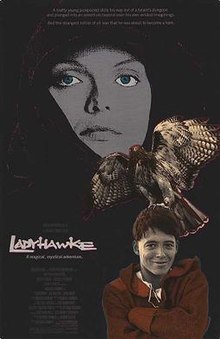
For some reason, I love the juxtaposition of the medieval setting and the modern 1980's score. The movie is actually a great deal of fun with a neat story. For some reason, I always love the solution to "A night without a day and a day without a night." Even though the main villain is a Catholic Bishop, I got the sense that it wasn't an attack on Christianity but on corruption.
6. Maverick

This movie is too long, but my goodness it is charming and a great deal of fun. Mel Gibson, James Garner, and Jodie Foster have fantastic chemistry. I get such a kick out of Graham Greene's performance as the grifter who has play into American Indian stereotypes while conning his mark. James Coburn and Alfred Molina round out the cast nicely with some other fun cameos. And Donner makes people sitting around playing cards as exciting as an action scene.
5. Lethal Weapon 3

For my money, this is the best of the series. It isn't as raw as the first two, but by this film, the main characters feel like old friends. Joe Pesci and Rene Russo compliment the actors so well that it enhances the fun of the story. The movie effortlessly shifts from comedy to action to drama.
4. Scrooged

There have been a lot of modern retellings of A Christmas Carol. Donner takes what could be a very fun, surface-level story and adds surprising depth. Make no mistake, he some of the funniest bits from any of his movies here. Every Christmas part of me wants to watch The Night the Reindeer Died. But watch what Donner does with the tone as he shifts into nightmare mode. Most takes on the story wait until the story reaches the Ghost of Christmas Future. But while still in the present, Frank finds Herman frozen to death. The scene is so eerie and surreal. It feels so out of place, but in the right way to unnerve us and realize Frank's journey is not a safe one.
And I cannot believe how much Donner trusts Murray's performance by giving him so much screen time to pull the movie together with that amazing monologue at the end. That is a a director who knows how to unleash and actor's potential and have it explode on screen.
3. The Goonies

This movie is the standard by which I measure kid adventure movies. The inherent silliness of the premise never takes away from the enjoyment of the film. The kids believe in the premise so much that it pulls you in. Re-watching it recently, it is surprisingly dark with the dead body in the freezer and the like, but Donner knows how to tap into that child-like response to such terrors with fear but also exhilaration. The movie also wonderfully balanced, with every character having a distinct voice and adding something unique to the mix. And on a personal note, as the asthmatic kid with the more athletic older brother, I loved how this character was the hero of the film.
2. Superman II (The Donner Cut)

I love the original cut of Superman II, but I was surprised how improved the elusive "Donner Cut" was upon it. Donner filmed the first two Superman movies back-to-back before the first movie was released. After the original was released, Donner was unceremoniously fired and Richard Lester was hired to fill out the rest (especially a new ending since Donner was forced to use the ending for the second film for the first movie).
The Donner Cut has all of the iconic moments from the theatrical cut (KNEEEEL before Zod!), but adds some wonderful layers. The biggest improvement is giving Lois a lot more agency. Her discovery of Clark's identity shows that she is wonderfully intelligent and cunning. But best of all, it removes a number of the more broadly comedic elements so that it fits in so much better with the epic and mythic tone of the original.
1. Superman

(the following is taken from an earlier post)
This is, hands down, the masterpiece of superhero films. It is THE standard by which all others in the genre are compared. When Christopher Nolan did Batman Begins and Patty Jenkins did Wonder Woman, they both cited Richard Donner's Superman as their template.
...
Richard Donner's genius was to not try and have Superman fit the age he was in, but to have the world be drawn to the goodness of Superman.
Donner communicates his intentions with that genius opening shot: It begins with the theatrical curtains being pulled back and the words "June 1938" appearing. We then see the pages of a comic book as a child's hand flips through the pages and begins reading. As he does, the camera is pulled in to a panel and the picture comes to life.
There is a great deal to unpack here. Using the theatrical curtains and the comic book, Donner is signaling that this movie is to be a theatrical experience but one that is firmly rooted in the experience of the comic book. The child's voice resonates with innocence and nostalgia. Many of us were first drawn to comics because of the bright colors and exciting pictures. Not only did we read them, but they seemed to come alive in our imaginations. Donner's transition from comic panel to movie image is the perfect representation of how those images would come alive in our child-like minds.
And that is what he does with Superman. Donner takes all of the wonder and imagination of reading a comic book and infuses that into a cinematic masterpiece.
Another incredibly important thing Donner did was that he decided not to make an action movie. Yes, Superman does have plenty of grand-spectacle set-pieces. But the pace and the tone do not conform to the modern sense of an action movie. Instead, Donner takes his time with beautiful, lingering shots. Compared to most superhero film today, the movie may seem to move at glacial slowness, but Donner chose to let the emotion of the film gradually sink in. Instead of an action movie, Donner made the story of an American god-hero...
Part of Donner's genius was in how he contrasts all three worlds: Krypton, Kansas, and Metropolis. Once we get to the big city, the pace picks up, the shots are tighter, more claustrophobic, and everything is noisier. After all that set-up, Donner plops our hero into the "real world," where no one knows who he is and the audience feels in on the secret (this is especially true when Clark breaks the fourth wall briefly after he catches the bullet).
...
This all leads to the most powerful moment in the movie: the death of Lois. I have watched this sequence over and over again. It is a powerful visual experience, free of dialogue, dependent on the visuals. Donner puts the camera in just the right places as you feel suffocated with Lois and helpless with Superman. Those overhead shots has he hovers over her body make the Man of Steel look so incredibly small and powerless. He goes to kiss her, but watch her fall away helpless gives him no closure. The injustice and unfairness of that moment is palpable. After only doing good things and saving so many, is this to be his reward? The sadness turned to rage is explosive.
That is why the ending works. Many have complained about the "turning back time" ending either from the illogical of the science to the narrative loophole it creates. But the reason why people accept it is because they cannot accept the pain of Superman's loss. This ending was originally planned for Superman II, but Donner was forced to move it to the end of the first where it works better. The reason it works better is because Donner created an emotional debt that the audience was willing to pay with their suspension of disbelief. Superman made us want to believe.
...
In the end, Superman is an experience that makes you feel good inside. It is a film that touches the right chord of harmony between fantastic power and moral virtue. Superman is the ideal we all strive for: using our strength for goodness. When we finish the movie a new day dawns as Superman looks right at us and smiles, we feel like everything is going to be okay. As he flies into the unknown, he does so with hope and encourages us to hold on to that same hope: hope that we can be better and that the world can be better.

15 words or less film review (full review to follow soon)

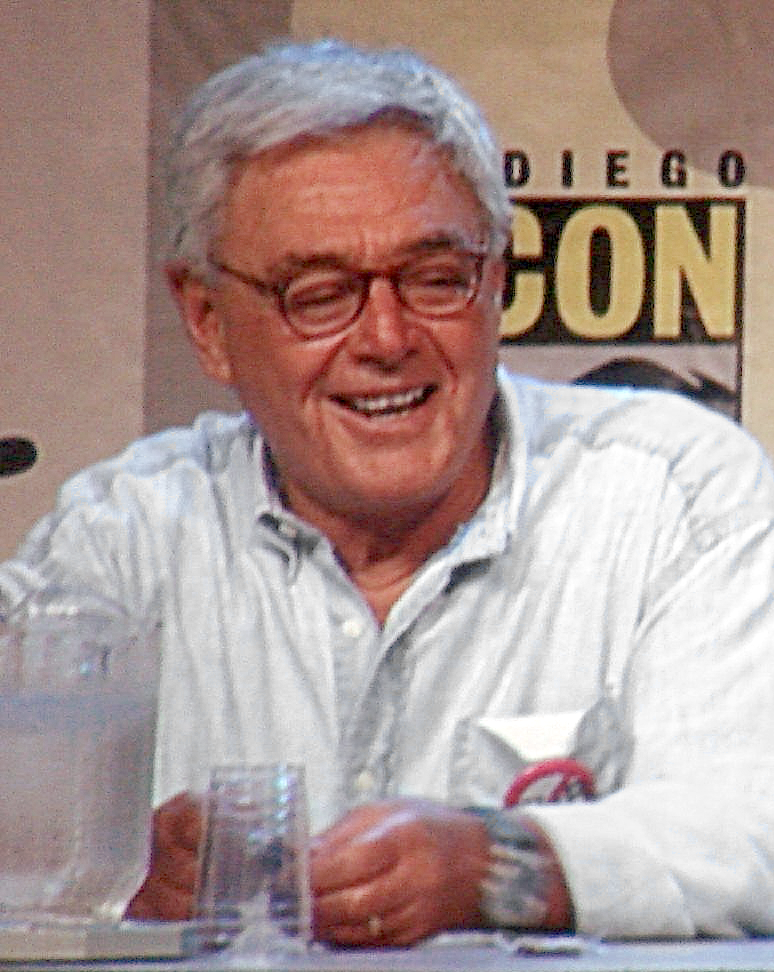 |
| photo by Tostle14 |
Earlier this week, director Richard Donner passed away.
I find that when you mention his name to people who are only casual movie-goers, they don't recognize him right away. But when you start listing his impressive credits, they respond with respect and affection. Between, Superman, The Omen, the Lethal Weapon series, Goonies, Scrooged, Ladyhawk, and The Goonies, you have experienced some entertainment and delight at the hands of this master filmmaker.
Donner started his career doing mostly television work until he directed The Omen. I don't enjoy that movie, but that is not an insult. It is disturbing and unnerving the way Donner wanted it to be. The early scene of Damian's birthday party is so horrific. Donner shoots the scene with idyllic brightness only to have the horrid public suicide break through. People remember the over-the-top choral score, but Donner knew when to use it and when not to. That early scene at the party is so disturbing because of the lack of musical manipulation. But the final shot with that musical sting hits you like a punch in the gut.

15 words or less film review (full review to follow soon)
(most of the text below is a repost from last year)


He has refused his Assent to Laws, the most wholesome and necessary for the public good.
He has forbidden his Governors to pass Laws of immediate and pressing importance, unless suspended in their operation till his Assent should be obtained; and when so suspended, he has utterly neglected to attend to them.
He has refused to pass other Laws for the accommodation of large districts of people, unless those people would relinquish the right of Representation in the Legislature, a right inestimable to them and formidable to tyrants only.
He has called together legislative bodies at places unusual, uncomfortable, and distant from the depository of their public Records, for the sole purpose of fatiguing them into compliance with his measures.
He has dissolved Representative Houses repeatedly, for opposing with manly firmness his invasions on the rights of the people.
He has refused for a long time, after such dissolutions, to cause others to be elected; whereby the Legislative powers, incapable of Annihilation, have returned to the People at large for their exercise; the State remaining in the mean time exposed to all the dangers of invasion from without, and convulsions within.
He has endeavoured to prevent the population of these States; for that purpose obstructing the Laws for Naturalization of Foreigners; refusing to pass others to encourage their migrations hither, and raising the conditions of new Appropriations of Lands.
He has obstructed the Administration of Justice, by refusing his Assent to Laws for establishing Judiciary powers.
He has made Judges dependent on his Will alone, for the tenure of their offices, and the amount and payment of their salaries.
He has erected a multitude of New Offices, and sent hither swarms of Officers to harrass our people, and eat out their substance.
He has kept among us, in times of peace, Standing Armies without the Consent of our legislatures.
He has affected to render the Military independent of and superior to the Civil power.
He has combined with others to subject us to a jurisdiction foreign to our constitution, and unacknowledged by our laws; giving his Assent to their Acts of pretended Legislation:
For Quartering large bodies of armed troops among us:
For protecting them, by a mock Trial, from punishment for any Murders which they should commit on the Inhabitants of these States:
For cutting off our Trade with all parts of the world:
For imposing Taxes on us without our Consent:
For depriving us in many cases, of the benefits of Trial by Jury:
For transporting us beyond Seas to be tried for pretended offences
For abolishing the free System of English Laws in a neighbouring Province, establishing therein an Arbitrary government, and enlarging its Boundaries so as to render it at once an example and fit instrument for introducing the same absolute rule into these Colonies:
For taking away our Charters, abolishing our most valuable Laws, and altering fundamentally the Forms of our Governments:
For suspending our own Legislatures, and declaring themselves invested with power to legislate for us in all cases whatsoever.
He has abdicated Government here, by declaring us out of his Protection and waging War against us.
He has plundered our seas, ravaged our Coasts, burnt our towns, and destroyed the lives of our people.
He is at this time transporting large Armies of foreign Mercenaries to compleat the works of death, desolation and tyranny, already begun with circumstances of Cruelty & perfidy scarcely paralleled in the most barbarous ages, and totally unworthy the Head of a civilized nation.
He has constrained our fellow Citizens taken Captive on the high Seas to bear Arms against their Country, to become the executioners of their friends and Brethren, or to fall themselves by their Hands.
He has excited domestic insurrections amongst us, and has endeavoured to bring on the inhabitants of our frontiers, the merciless Indian Savages, whose known rule of warfare, is an undistinguished destruction of all ages, sexes and conditions.


15 words or less film review (full review to follow soon)
Michael Bay-like story, fun action set pieces held together by humor and Chris Pratt's charisma

