ReasonForOurHope

Sunday, April 14, 2019

Sunday Best: The Rise of the Marvel Cinematic Universe Part II - Avengers to Civil War

In my last post on this subject, we examined the rise of the Marvel Cinematic Universe until right before The Avengers.

So far, we had two good financial hits in Iron Man and Iron Man 2.  And we had three modest successes in The Incredible Hulk, Thor, and Captain America: The First Avenger.  Marvel was not attempting to do something fairly unprecedented: bring them all together into one movie.

Cinematic universes are not new.  Universal did this with its stable of movie monsters back in the day.  But Marvel had a lot more challenges.

-Different Studios:  Because Marvel had licensed its properties to other studios, using their own characters became complicated.  The could not use Spider-Man who was with Sony, nor any of the X-Men, who are licensed to Fox.  Iron Man, Thor, and Captain America, were all distributed by Paramount.  The Incredible Hulk was produced by Universal.  And now, The Avengers was being made by Buena Vista (Disney).  This created legal and financial complications like no other.

-Balancing the Characters:  Story-wise, this movie has a gigantic logistical challenge.  Each of the four main heroes are the stars of their own franchise.  That meant that each of the main characters could not be reduced to a supporting character.  This isn't just a narrative necessity, but going forward, each of these heroes needed to still carry their own film.  Reducing them in any way would damage future films.

-Sum Greater than Parts: In order for this grand experiment to work, The Avengers couldn't just be equal to the previous hits.  It had to greatly surpass them.  The risk was high.  If The Avengers bombed or even became a modest hit, it would have derailed the entire franchise.  And Marvel had everything riding on this.  They took out a gigantic loan to finance their studio.  If they failed, they would lose the rights to their biggest characters like the Avengers, including Captain America. 

Marvel gets a lot of flack for not taking chances.  I've even hit them on this point.  But when you take a big risk that turns out to be a big hit, you often forget what a risk it was.  And Marvel took a big risk by turning the writing and directing duties over to Joss Whedon.

Whedon had a lot of credibility in the geek culture and fan base because of Buffy the Vampire Slayer and Firefly.  But in terms of bankable movie credentials, Whedon was a big risk.  He had only directed one other movie:, Serenity, which did not even make back its modest $39 million budget.   But they gave him the keys to the kingdom and he delivered.

For more detail, you can see my original film review here or my reflection its rank of super hero movies.  But suffice it to say that Avengers was a gigantic it.  It's domestic take was double of Iron Man, and worldwide it made a total of $1.5 billion. 
But the real test was to see if this success would translate into bigger box office for the individual franchises or if it was only the Avengers movies that would be hits.  The first post-Avengers movie was Iron Man 3.  This one was the most successful Iron Man film, making nearly $100 million more than the other two.  Thor: The Dark World made about $25 million more and Captain America: The Winter Soldier made about $85 million more than the original. 


This is exactly what Marvel needed.  Now Marvel looked forward to see if they could launch new franchises.  Their first attempt was Guardians of the Galaxy.  This was another gigantic risk.  In fact, from what I've gathered, Marvel was worried that writer/director James Gunn had done something too strange that wouldn't connect with audiences.  I think is evidenced by Marvel pressuring Edgar Wright into dropping his stylistic vision of Ant-Man and in the studio movie Guardians to August where box office expectations are not high.  But the bet paid off and Guardians of the Galaxy was the biggest hit of the summer.  When Ant-Man was released, it didn't resonate as well and became one of the lowest grossing films, but still ranking around the original Thor and Captain America films.


In fact, after Ant-Man, no Marvel movie has made less than $200 million at the box office.  That is an incredible track record.  Avengers: Age of Ultron did not make as much money as the original, but there were many factors as to why.  Whedon stepped away.  So who would replace him?  Marvel chose the Russo Brothers.

When the Russo brothers took over the Captain America films, they not only raised the box office, they made Captain America the heart of the MCU.  For the third film, the Russos basically made Avengers 2.5, by incorporating the entire Avengers cast but making Captain America the main focus.  This third Captain America film made $230 million more than the first one.  They proved they could handle the large cast successfully.  So they prepped for Infinity War.

Marvel's film release schedule is also part of their plan.  The timing is important to build up interest in their franchise.  It was during this time that Marvel produced their highest domestic grossing film: Black Panther.  But the challenge of bringing all of their expanded franchises together again into one film was an even bigger logistical challenge than the original Avengers.

We will examine Infinity War and beyond in our next post.

Saturday, April 13, 2019

Trailer Time: Star Wars: Episode IX – Teaser


Wow.


Wow!


Okay...


Let's address the elephant in the room: The Last Jedi.


I have been clear about my overall positive assessment of Episode VIII, despite it's flaws.  But the reality is that the last movie in the saga burned many fans.  One of my best friends, a life-long Star Wars fan has said that because of how the "ruined" Luke Skywalker, he has no interest in these movies.  That is a damning statement and I think it is a feeling shared by many, many fans.  Rian Johnson's desire to do something radically different and to defy expectations has led to intense disappointment and frustration.  I am convinced that a major reason for the failure of Solo was due to the backlash against The Last Jedi.  It is true that there many people who loved the non-traditional path that movie took.  But they are not enough to make up for the loss of the long-time fans.  Star Wars can survive without the fans brought in by The Last Jedi.  It cannot survive without the fans that were turned away.


A lot is riding on Episode IX.  The main question is can director JJ Abrams win back the fan base.


This teaser is Abram's first olive branch to that community.


I, for one, loved this trailer.  It made me giddy the same way that I was when I first saw the teaser to The Force Awakens.  Here are my thoughts:


-Great action:  The opening moment is set up so well.  It is character based, as we get into the emotional world of Rey.  But this culminates in an incredibly cool action moment.


-Luke:  The voice of Luke Skywalker featured so prominently in the trailer is a good touch.  It is a nice nod to The Force Awakens teaser, except this time the dialogue is not reconstructed from previous films, but it clearly new dialogue from this movie.  That is important because one of the things that burned a lot of fans was the loss of Luke in the last film.


-Fixing what is broken:  the shot of Kylo Ren's helmet being reforged is important for me.  The helmet, which was broken in The Last Jedi, was a symbol of the Star Wars tradition that was being rejected in the last film.  The reforging of the helmet is Abrams way of saying that he is picking up the fragments of the broken franchise and putting it back together.


-Lando!:  This made be giggle with joy.  Watching Lando laugh as he pilots the Millennium Falcon was a nostalgic shot in the arm.  I like that he's wearing his outfit from Solo.  A friend of mine said he imagined Lando putting it on, looking in the mirror and saying, "Still fits!"


-Return of the Jedi feel:  The shots of the heroes on a skiff in the desert evoke a strong sense of Return of the Jedi, which is a good thing.


-Emotional reunion:  I'm not sure of the context the Leia scene, the emotion of that moment was strong on many levels for me.


-Evil laugh: There is some debate as to who is laughing, but I think that it is clearly Palpatine.  Again, this is Abrams reaching into the Star Wars past and bringing it into the present.


-Title:  I LOVE the title!  One of the things that bothered many people, including me, was that Star Wars seemed to be rejecting the Skywalker saga in favor of less interesting story elements.  The Rise of Skywalker could mean many things: Luke, Kylo Ren (who is a Skywalker), or even Rey (I still stand by my theory about who she really is.  Regardless, this is the first Star Wars movie with "Skywalker" in the title.  And that makes me very happy.


Thoughts?

Wednesday, April 10, 2019

Film Review: Captain Marvel


Sexuality/Nudity Acceptable
Violence Acceptable
Vulgarity Acceptable
Anti-Catholic Philosophy Acceptable

Movie critics keep telling me that audiences are about to experience "super hero fatigue."  This means that the genre of comic book movies is too saturated in the film industry and people will soon become sick of it.  This will lead to waning interest and diminished box office returns.

And they've been saying this for at least the last 5 years.

But that bubble has not popped and Captain Marvel is not the one to pop it.

Captain Marvel, like Captain America: The First Avenger, is set in the Marvel Cinematic Universe before the events of Iron Man in 2008.  The story is centered on Vers (Brie Larson), a warrior for the alien Kree Empire with extraordinary powers.  These Kree have been in a perpetual state of war with the shape-shifting alien Skrulls.  Vers, under the training of her mentor Yon-Rogg (Jude Law), has a skirmish with the Skrulls and their leader Talos (Ben Mendelsohn).  This leads her to crash land on mid 1990's Earth, where she encounters a younger Nick Fury (Samuel L. Jackson) who aids her in her quest to stop the Skrulls.  Along the way, Vers begins to discover that she had a past on Earth that she does not remember and that not everything she believes is at it seems.

There was a lot of buzz going into this movie both good and bad.  I know a number of people that were turned off by star Brie Larson's comments about "white dudes."  In addition, the directors Anna Boden and Ryan Fleck indicated that the film was going to have politicized tone.  But I went into the film with an open mind and I found it to be highly entertaining.  The only time the movie feels off is when the filmmakers decide to be heavy handed with their material.  While our hero remembers training in the US Air Force, we hear the snickering of the men who say she won't fly because she's a girl.  We get obnoxious macho dudes who condescendingly tell our hero to smile.  And during a climactic fight scene they inexplicably play No Doubt's "I'm Just a Girl."  Wonder Woman was also a super hero movie that raised up a strong female lead, but that movie had a bit more grace and subtlety.  Each time Captain Marvel tried to score ideological points, it felt out of place and took me out of the film.

Thankfully, these moments were not as common as I was led to believe.  Most the film follows standard origin story fare.  The action sequences are fun and well-paced.  While this was one of the more modestly budgeted Marvel movies, nothing in it felt cheap.  The effects they used to de-age Samuel L. Jackson and Clark Gregg (who reprises his role as Agent Coulson) work well and never break the suspension of disbelief.  And the film is well paced as they set out the bread crumbs of Vers' past to make the piecing of it back together the central mystery of the story.

As a card-carrying member of Generation X, I thoroughly enjoyed the look and feel of 1990's America.  The references to Blockbuster and grunge music made me nostalgic for that era.  However, the effect could have been much more immersive.  This could have devolved into a series of gags about the era, but I also can see that the directors did not really push to make a stronger sense of the period in Captain Marvel as they did in Captain America: The First Avenger.  Most of the former feels like it could take place today.  But all of the latter feels of a particular bygone era.

Larson's performance has been polarizing, with some loving it and some hating it.  I think her work is being judged through the lens of her words and actions outside of the movie.  Her character is a smug, cocky, smart Alec.  If you do not like Larson, you will find these traits insufferable.  If you like her, you will find them charming.  Based purely on the context of the movie, Larson infused her character with enough charm to make her arrogance endearing in the same way that Robert Downey Jr. does with Tony Stark.  She struts into the room full of confidence so that we buy into the idea that she is often the most powerful person in the room.

Nick Fury tends to be the person in the MCU who holds all the cards.  But it is a refreshing turn to see him almost like a wide-eyed innocent.  Jackson plays him as a skilled but slightly fumbling agent who is on his way up.  Law's performance is fine, as is Annette Benning who plays (among other things) the manifestation of the Kree AI Supreme Intelligence.  Mendlesohn still chews the scenery as he does in all his other movie roles like the ones in Rogue One and Ready Player One, but when done under Skrull makeup, it feels a little less overwhelming.

Captain Marvel wrestles with some big ideas like war, identity, and dignity.  These are very strong areas of interest for a Catholic world-view, but the movie does not go as deeply as it thinks it does.  For example, it tries to say that seeing your enemy as simply evil is wrong.  The movie thinks it enters into some deep insight.  But then it returns to this same outlook by the end of the movie, even if it doesn't mean to do so.  I am not opposed to either theme being presented, but the film is not consistent about what it wants to say. 

All-in-all, Captain Marvel is one of the better origin movies that could have been great if they avoided agenda over story.

Add caption

Sunday, April 7, 2019

Sunday Best: The Rise of the Marvel Cinematic Universe Part I - Pre-Avengers


Currently standing at over $18 billion in revenue, the Marvel Cinematic Universe is the most financially successful movie franchise in history.  To make this an even more incredible feat, the MCU is only a little over 10 years old. 

How in the world did this happen?

PRE- IRON MAN

X-MenfilmPoster.jpg

We've had super hero films for decades, but they tended to be sporadic, not like the ubiquity we find today.  In 1997. Batman and Robin, was such a critical and commercial bomb that most studios that were developing super hero properties halted production.  A year earlier, Marvel had declared bankruptcy and cut a number of staff members.  To make money, Marvel had licensed film rights to its characters to various studios (many of whom halted development).  Universal had Hulk.  Sony had Spider-Man.  Fox had X-Men.  New Line had Blade and Iron Man.  Blade became a moderate hit and X-Men a full-blown hit (which has since been credited with re-vitalizing the super-hero genre).  But Marvel made little to no money from these deals.

So that's when they decided to form their own production studio so that they could manage their own cinematic properties.  This also gave them the idea to do in the movies what they had always done in the comics: build a cinematic universe.

But in order to do this, they had to start with just the right property.

IRON MAN

While he was known well by comic book readers, Iron Man did not have nearly the same name recognition as Spider-Man or Hulk.  But director Jon Favreau was tapped to bring this character to life.  In order to guarantee a huge box office return, Marvel wanted to cast as Tony a big movie star... Tom Cruise!

Jon Favreau instead fought tooth and nail to have them instead hire Robert Downey Jr.  It seems incredible to think of this now, but Downey Jr. was considered an incredibly risky choice.  His personal struggles with addiction and prison had been well-documented in the press.  He even lost out on some jobs because insurance companies would cover him for the film shoot.  Also, his highest grossing film to date was Back to School at $91 million, in which he played a supporting role to star Rodney Dangerfield.

But Favreau went with his instincts and pushed hard for Downey Jr.  Now, I think that Cruise is an excellent actor and would have made a good Tony Stark.  But one thing is clear:

Robert Downey Jr. is one of the most important reasons for the success of the MCU

This is not to lesson Favreau's vision or the word of studio heads Avi Arad and Kevin Feige.  But someone had to become the face of the MCU and that was Robert Downey Jr.  The opening scene of Iron Man  was crucial because in those few moments, we get a strong sense of Tony's character and charisma in a way that only Downey Jr. could do. 

Downey Jr. is a fantastic actor.  A look at some of his work in films like Chaplin should be proof enough.  But audiences had to fall in love with Tony Stark.  And in his performance, Downey Jr. created somebody who, even at his worst, was so incredibly cool and likeable that men wanted to be him and women wanted to be with him.  At the same time, he gave an incredibly deep performance as a man who comes to terms with his own redemption.  I still am so moved by how Downey Jr. delivers the lines to the dying Yinsen: "You saved me."

Incorporated in this was Favreu's solid action direction while crafting the classic hero origin story.

One of the reasons these film resonate is that in order to be harmonious with the universal hero myth, the story has to touch on essential eternal truths about human nature, morality, and goodness.  The hero can be flawed, as Tony clearly is.  But his path to heroism must be a growth out of selfishness to selflessness.  And we saw this begin in Iron Man.

And then at the end, the bold introduction of Nick Fury and the Avengers Initiative hinted at something much larger than a mere sequel.

POST-IRON MAN/ PRE-AVENGERS

Marvel developed another movie at the same time as Iron Man: The Incredible Hulk.  This character had much more name recognition, but it was a reboot of the character a mere 5 years after another reboot that was poorly received by critics and audiences.  This movie had a great actor in Edward Norton in the lead.  It was also a much better film than Ang Lee's muddled mess.  But audiences did not respond strongly.  In fact, The Incredible Hulk did less than half of the box office as Iron Man.  This did not bode well for future plans, even as Tony Stark made a cameo at the end of that film pointing to the upcoming Avengers. 

It would appear that this gave Marvel a bit of pause.  While The Incredible Hulk was not a bomb, it reminded them that there was no guarantee of success.  In fact, in order to build to the Avengers,  each film leading up to it had to be successful enough to not only gain a good return, but build enough interest so that The Avengers would be more successful than all of them.

This pause led to one of Marvel's greatest box office strengths, but also it's greatest creative deficit: course correction.  Marvel will experiment a bit with their film formula, but only inasmuch as it gives them a bigger return.  They hire very talented directors, but they keep tight control over a number of the creative aspects so that the films look and feel incredibly similar. 

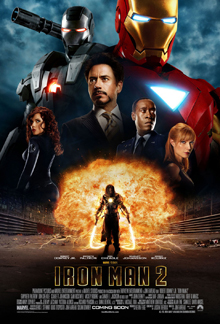
Tony Stark is pictured center wearing a smart suit, against a black background, behind him are the Iron Man red and gold armor, and the Iron Man silver armor. His friends, Rhodes, Pepper, are beside him and below against a fireball appears Ivan Vanko armed with his energy whip weapons.

We can see this play out in Iron Man 2.  Reportedly Favreau wanted to take the movie in some new creative directions.  Marvel wanted to a repeat of the original hit (you can see this allegory play out in Favreau's following indie film Chef).  The Incredible Hulk lacked a lot of the dry wit and humor of Iron Man, so Iron Man 2 was heavy with the quips.  The sequel was about as successful as the original, but it did not generate the kind of love that people had for the first Iron Man. 

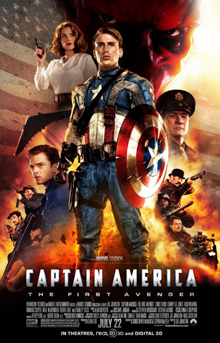
Armor clad and wearing a red cape, Thor is crouched, holding the handle of his hammer to the ground, and rock debris is being blasted away. In the background are four panels showing the faces of Jane, Loki, Odin, and Heimdall.Captain America The First Avenger poster.jpg

Marvel held its breath as it released the its last two set up movies the following year: Thor and Captain America: The First Avenger.  For Thor, they cast relative unknown Chris Hemsworth in the lead.  To direct they picked Kenneth Branagh, best known for his Shakespearean films.  This film introduced other worlds and magic.  But like Iron Man, it mixed in good deal of jokes with the action.  Thor made $130 million less than Iron Man, but it was enough to not a moderate hit.  Captain America, played heavily into the tone and format of old 1940's serials in an over-the-top style.  This movie did about $10 million less than Thor, but again it was enough to not be a bomb.

But everything in the great Marvel experiment hinged on the next film The Avengers.  This movie only matched the average box office of the previous Marvel movies, then the MCU would have been a failure and Marvel would have lost more than you know.  Why?

We will find out next week.

Thursday, April 4, 2019

Film Review: SHAZAM!


Sexuality/Nudity Acceptable
Violence Acceptable
Vulgarity Acceptable
Anti-Catholic Philosophy Acceptable

I loved Batman v. Superman: Dawn of Justice.  It was an excellent piece of writing and directing that took the super hero genre and used it to ask big questions about God, power, right, and wrong.   It was a serious movie that took its characters and subject seriously.

And most people hated it.

DC has since been attempting to do a course correction to the tone set down by Man of Steel and BvS.  Suicide Squad attempted to be dark and funny, with mixed results.  Justice League tried to blend Zack Snyder's serious tone with Joss Whedon's lighter tone which did not seem to please audiences.  Aquaman embraced a much lighter and more fun vibe and has become one of DC's biggest hits.

And now we come to SHAZAM!, which is the exact opposite of BvS.  SHAZAM! is a full-out comedy.

The story centers around Billy Batson (Asher Angel).  He is a 14-year-old kid who has bounced around from foster home to foster home as he tries to find his parents.  Hardened, cynical, and crafty, Billy gets caught in one of his scams and is sent to live with foster parents Victor (Cooper Andrews) and Rosa (Marta Milans).  These two are former foster kids who no run a group home.  Billy is taken in by this new foster family that includes:

-Freddy Freeman (Jack Dylan Grazer): an awkward handicapped boy around Billy's age who is obsessed with super heroes.
-Mary Bromfield (Grace Fulton): the over-achieving oldest of the fosters who is applying to colleges.
-Eugene Choi (Ian Chen): a nerdish child obsessed with video games and technology
-Pedro Pena (Jovan Armand): a rotund, silent teen who wants to become "swole"
-Darla Dudley (Faithe Herman): the youngest of the group who is as precocious as she is sweet.

Billy is reluctantly drawn into their world, but through circumstances not of his choosing, he finds himself in the magical Rock of Eternity, where he encounters the elderly Wizard (Djimon Honsou) named "SHAZAM."  For years the Wizard has been trying to find a person "pure of heart" to whom he can transfer his power.  Circumstances are forcing the Wizards hand.  One of the people he test years earlier, Thaddeus Sivana (Mark Strong), has found his way back to the Rock of Eternity and let loose an evil power.  The Wizard has no choice but to use the flawed and self-centered Billy to be his champion.  When Billy says the Wizard's name, he transforms into the super hero of the same name: SHAZAM! (Zachary Levi).  The rest of the movie explores his new life as a caped crusader.

As I wrote earlier, the most important thing to keep in mind when going into this movie is that it is not like most super hero films, which are action films with some comedic elements.  SHAZAM! is primarily a comedy with big action set pieces.  Because of the highly subjective nature of comedy, enjoyment of the movie will probably vary a bit more than standard super hero films.  But the humor is broad and varied, with plenty of silly jokes and slapstick.  The main source of the film's humor is in the concept of a young, immature child with the powers of someone like Superman.  The comparison to the Tom Hanks movie Big are unavoidable and the filmmakers lean heavily into it, even making a funny visual reference to that movie during a scene in a toy store.

Director David F. Sandberg has taken a break from his usually horror movie work to give us a movie that fun and light-hearted.  The movie is delight to watch.  The film is set in a Philadelphia winter, which creates a bleak, colorless background.  But this makes the over-top look of our hero pop out of the screen even more.  He is magic brought into a cold world.  He knows how to stage a good action scene, but has an eye for comedic framing.  You can see the two styles blend together when SHAZAM and Freddy go to try and buy beer at a local convenient store which then is accosted by robbers.

The biggest issue with the movie is the script.  Henry Gayden's script hits all of the major story and character beats well and he does a good job of giving each of the kids in the foster home distinct voices and personality.  In addition, the movie tries to bring up larger thematic questions like "What does it mean to grow up?" and "What really makes a family?"  But every once and a while there is a shallowness to the writing where there should be greater depth.  I often got the impression that the script was originally written as a pilot for a series and that a lot of the character development was back-loaded for later.

But this quibble about the script is overcome by the performances.  Zachary Levi is perfectly cast as child in an adult body.  His sense of wide-eyed excitement, his selfish immaturity, and fear and confusion at adult responsibilities all ring true.  His work as the lead on the TV show Chuck made good preparation of this movie, since both the show and this film often require him to radically shift in tone from the comedic to the dramatic without feeling false.  Strangely Asher Angel as Billy seems more world-weary and mature than Levi.  But the two of them create enough of a character cohesion that it works.  You can see the exuberance in Levi as Billy is released from the constraints of childhood.

Mark Strong does a superb job as the villainous Sivanna, just as he did as Sinestro in Green Lantern.  He brings a gravity to his work that acts as an emotional anchor to ground our hero's comedic adventures.  Jack Dylan Grazer is also excellent as Freddy.  He has to play a tricky balance because Freddy has to be at least somewhat annoying and off-putting in order to make his position as a social pariah understandable.  But Freddy must be relateable and likeable enough to be the audience's surrogate as he walks through exploring Billy's powers and abilities.  He is the fanboy whose super hero obsession comes to life.  The rest of the cast does a very job as well, especially Faithe Herman whose man job is to be horribly adorable, which she accomplishes wonderfully.

I was especially pleased with a good deal of subtle Catholic imagery throughout the film.  For example, in the foster home, there is a statue of Jesus of the Divine Mercy in the background.  Before each meal, the family prays together.  One of the movie's main themes is "Family is what you decide it to be."  I'm a little conflicted about this from a Catholic point of view.  There is a great message here about seeing people who are not blood relatives as brothers and sisters in Christ.  Jesus told us that whoever does the will of God is mother, brother, sister to Him.  I have not problem with expanding the view of family to include others.  But my one reservation is that this message seems to de-emphasize the importance of our natural family relations.  God gave us very specific parents (and maybe siblings) that He chose from all eternity.  This is a bond that is permanent, even if the ones to whom we are bonded are horribly flawed.  Perhaps I am reading too much into the movie's message, but it felt a little more like an "either/or" choice rather than a "both/and."

The humor also gets a little bawdy, with some references to strip clubs, but it never becomes vulgar.  It reflects the moral compass of an undisciplined child with sudden access to adult vices.  Despite his cynicism, Billy is more innocent than he lets on, so the film never gets too racy.

As a comic book fan, I thought they nailed the tone and feel of the SHAZAM! story from Geoff Johns and Gary Frank.  That story has one of my favorite comic book reading moments of my life.  I wasn't sure if this film would have that moment.  But when it happened, I was filled with a child-like joy.  This feeling overwhelmed any flaws in the film-making.

SHAZAM! is not Batman v. Superman, and it is not trying to be.  In fact, SHAZAM! is not like any other super hero movie I have seen. 

And that is a very good thing.


Tuesday, April 2, 2019

Trailer Time: Marvel Studios’ Avengers: Endgame | Special Look


The key to this teaser is emotion.


Avengers: Endgame has been very stingy with details.  For that I am thankful.  But they had to give away a few things in order to hit a few key emotional moments.


I think the marketing for this film has been great in that they are focusing on the catharsis of saying goodbye to our beloved heroes.  And unlike a lot of other franchises, we do not know how our heroes are going to exit.


The most emotional moments for me:


-Rocket and Nebula holding hands.


-Tony looking at a photo of him and Peter


-Pepper and Tony finally reunited.  This one got me because it seems like this will be a brief reunion and Tony will have to leave her again to face Thanos.


-Tony asking Steve if he trusts him and their hands clasping.


Thoughts?

Monday, April 1, 2019

New Evangelizers Post: The Prodigal Brothers


I have a new article up at NewEvangelizers.com.  
 I think that most of us are familiar with the Prodigal Son parable. It is one of the longest and most memorable of all of Jesus’ stories. It is filled with vivid detail and heartfelt emotion. And yet, as many times as I have heard or read this tale, it was not until I read Pope Benedict XVI’s reflection on it that I realized I was missing a big part of the story.

The word “prodigal” means “wasteful.” The younger son takes his share of the inheritance from his loving father, essentially telling him “I wish you were dead.” He wants to be free of his father and his father’s rules. Many of us have gone through this stage, not only with our own parents, but with God himself. We want to be free of His burdensome commandments and find happiness in the exercise of freedom without limits. We see this often as our children go off to college and embrace a licentious view of freedom that takes as good anything that rebels against the old order. This is the mindset of this prodigal son.
This son then wastes all of his money on things like prostitutes. And it is only when he is at the end of his rope and on the brink of starvation that he returns to the father. He plans to tell the father three things:

1.I have sinned against heaven and against you.
2.I no longer deserve to be called your son.
3.Let me be your servant.

The prodigal son believes that he has forfeited the right to be a member of the family. What kind of a son would take half of the father’s wealth and squander it? The most that he hopes for is some kind of base employment. He hopes that the father will tolerate his miserable presence enough to hire him out for labor. But there is no hope for the affection from of old.
When the younger son returns, the father runs to him. The son is able to tell him:

1.I have sinned against heaven and against you.
2.I no longer deserve to be called your son.

But he never gets a chance to say the third thing to his father. Instead, the father cuts him off and orders three things brought to his son immediately:

1.A robe
2. A ring
3. Sandals.

Each of these are significant. In the Bible, when you cloth someone, you are placing a share of your power and authority on them, as when Elijah covered Elisha with his cape. The ring would have been the family ring that was used as a signet. This ring could be used to prove to someone in a business transaction that you had access to the family wealth. This would be the equivalent of giving the son the family credit card. And finally, in the ancient world, one of the ways you distinguished between who was a slave and who was not was that slaves would walk around barefoot. By placing sandals on his feet, this son is fully restored as a son. The father will not let him be reduced to a servant. And so they kill the fattened calf and have a party.

The older brother, upon finding out what has happened, becomes very jealous. He refuses to go in. The father pleads for the older brother to return. But the older brother cannot understand why such expense and extravagance is being spent on someone so wasteful. The older brother never was given such material rewards even though he has been faithful from the beginning.

I always thought that Jesus was simply making a point about jealousy with the older brother. But Pope Benedict XVI looks deeper than I did. In his book Jesus of Nazareth, Vol 1., Pope Benedict examines the older brother and sees so much of the prodigal son in him.

“The older brother knows nothing of the inner transformations and wanderings experience by the younger brother, of his journey into distant parts, of his fall and his new self-discovery. He sees only injustice. And this betrays the fact that he too had secretly dreamed of a freedom without limits, that his obedience has made him inwardly bitter, and that he has no awareness of the grace of being at home, of the true freedom that he enjoys as a son.” (Jesus of Nazareth, Vol 1, pp 208-209)

You can read the whole article here.