ReasonForOurHope

Tuesday, June 9, 2015

Of Woody and Whedon (or the Power of Redemptive Art)

There is no God.

That is the belief of two very famous filmmakers: Woody Allen and Joss Whedon.

Woody is an Academy Award winning director who has made such critically acclaimed films as Annie Hall, Manhattan, Bullets over Broadway, Midnight in Paris, Blue Jasmine, and other for a total of around 50 feature films.  

Joss Whedon came to fame as a hot young script doctor who was called in to save big-budget movies from bad stories.  He achieved cult status with his amazing TV show Buffy the Vampire Slayer, followed by others like Angel, Firefly, and Dollhouse.  But he hit another stratosphere when he directed the outlandishly successful Avengers feature and help shepherd Marvel's other Phase Two projects.

Woody and Whedon: atheists.

They both subscribe to the same existential view of life, the universe, and everything.  Both men believe that life is ultimately void of meaning or purpose.

Woody made this clear in an interview he gave a few months back.

Ultimately, life is meaningless:  “I firmly believe — and I don’t say this as a criticism — that life is meaningless….I think it is a lot of sound and fury signifying nothing.

Nothing we do in this life, even his own art will have any lasting meaning:  “And the universe — as you know from the best physicists — is coming apart and eventually there will be nothing. Absolutely nothing. All the great works of Shakespeare and Beethoven and Da Vinci. All that will be gone. Now, not for a long time, but gone. But much shorter than you think, really, because the sun is going to burn out much earlier than the universe vanishes. So, you won’t have to wait for the universe to vanish, it’ll happen earlier than that and there will be nothing.

Woody's solution to all of this is to simply distract himself from the horror:
“The distractions take many forms… In my life, I distract myself by turning on the baseball game or going to the movies and getting lost in the movies, or obsessing over the third act of my play — you know, a lot of stuff that’s annoying and puzzling and stimulating, but not terrifying.”


And you can see this clearly reflected in his work.  Annie Hall begins with a boring, self-indulgent monologue about life’s emptiness.  His characters often are amoral creeps who slide about through life, all the while obsessing over younger girls.

If Woody is correct, what should it matter if an older man lusts after the young female form, no matter the age.  As long as you don’t get caught, why shouldn’t someone with a tendency to much younger girls indulge in his sensual desires.  After all, according to Woody, none of it matters.  What better distraction could you have from existential terror than for the overwhelming ecstasy of lustful indulgence?

You see this in his characters and, dare I say, you see this in his life.  Woody is living in a way that is completely consistent with his world view.  Whether it is marrying his step-daughter or molesting other children (allegedly), no one is really shocked by this.  The characters in his movies are empty and soulless.  And even when they are not, Woody only admires them as pleasant distractions.

And his movies are not that good.  I know this might be a very controversial point, but I (and I know this is anecdotal), have never met anyone who thought that Annie Hall deserved Best Picture over Star Wars.  Woody makes for a horrible leading man, lacking all masculinity and relatability without any moral compass.  

And that is fine with Woody since his movies don’t need to be good.  They only need to be distracting.

Contrast that with Whedon, who also believes that life is meaningless.  You can see that idea creep into his serialized stories.  It comes up a bit in Buffy, a lot in Angel, and is there from the beginning in Firefly.

Whedon once tweeted something very Woody-esque: “Everything is a drug. Family, art, causes, new shoes… We’re all just tweaking our chem to avoid the void.”

In an interview with Entertainment Weekly, he elaborated: “Everything we do really is just a little marker on the long road to death. And sometimes that’s overwhelmingly depressing to me, and sometimes it makes me feel kinship and forgiveness. We’ve all got the same ending to the story.... I can’t believe anybody thinks we’re actually going to make it before we destroy the planet. I honestly think it’s inevitable. I have no hope.”

And yet this is not reflected in his art.

Unlike, Woody’s main characters, Whedon writes about heroes.  A hero is someone who will put the good of others, the greater good, above themselves.  For Woody, there is nothing above the self.  And according to Whedon’s philosophy, he would have to agree with Woody.

But Whedon taps into the universal idea that human beings are called to be moral heroes.  

When I wrote my first film review on this blog about The Avengers, I made reference to how Whedon is much like the doctor in existentialist novelist Albert Camus’ The Plague.  In that story, the main character believes 3 things that all cannot be true at the same time:

  1. The purpose of life is to be a saint.
  2. You cannot be a saint without God.
  3. There is no God.

And the character goes through the novel trying to be a moral hero all the while unable to give an intellectual reason why, since God does not exist.  Camus is most famous for writing the critically acclaimed existentialist The Stranger.  But Camus struggled with his atheism.  Toward the end of his life he was meeting regularly with a priest.  I believe that if his life was not cut short, he would have converted.

And I believe that the way he began that journey away from bleak emptiness towards the light was through his art.

I can see that in Whedon’s writing.  Now I cannot see into Mr. Whedon’s soul (nor Woody’s for that matter).  I am not making the case that his conversion is somehow a forgone conclusion.

What I am saying is that I see great hope for him because of his hope.

As mentioned above, he has no hope for himself.  But in that same interview, he goes on to say, “My stories do have hope because that is one of the things that is part of the solution—if there can be one. We use stories to connect, to care about people, to care about a situation. To turn the mundane heroic, to make people really think about who they are. They’re useful. And they’re also useful to me. Because if I wrote what I really think, I would be so sad all the time. We create to fill a gap—not just to avoid the idea of dying, it’s to fill some particular gap in ourselves. So yeah, I write things where people will lay down their lives for each other ...Hopefully, that need gets translated into somebody relating to it and feeling hope. Because if we take that away, then I’m definitely right. I want to be wrong, more than anything. I hate to say it, it’s that line from The Lord of the Rings—“I give hope to men; I keep none for myself.”

You cannot be a hero unless you have hope, not for yourself, but for others.  

Whedon struggles because he wants his characters to have hope but he cannot give them a reason.  Save a life?  That person will die anyway?  Save the world?  The world is going to be destroyed anyway?  

Sometimes he grasps at intellectual straws.  On Angel, the main character concludes life is meaningless but still helps others because (and I’m paraphrasing), “In a meaningless world, an act of kindness is a rare, beautiful thing.”  But of course even if it is rare, there would be nothing objectively beautiful about it.  

In his movie Serenity, a priest (or he calls them “Shepherds”) inspires an atheist hero to action saying, “I don’t care what you believe.  Just believe!”  This is also irrational gibberish.  Beliefs not based in truth are wrong.  No rational person would ever apply that statement to someone who believe stomping on infants was a means to salvation.

My point is that Whedon the man has intellectually accepted existential despair.  But Whedon the artist still has hope.  And in that hope, in that art, he might find illumination.

And that is the best thing that art can do, particularly storytelling.  Woody is right when he says that every work of art will eventually go away.  But art can still be what Tolkien understood it to be: a window into Beauty Itself.

Both Woody and Whedon have closed the door on God.

But if Whedon opens the window to Beauty, he just might find Him.

Monday, June 8, 2015

Film Review vs. Film Analysis

I had a discussion with Rick O. the other day (I'm not referring to the fictional ones from the Catholic Skywalker Dialogues), about my film reviews.

He said something, and I'm paraphrasing, along these lines: "Catholic theology and pop culture seem to be your bread and butter.  So why don't you do more specifically Catholic points in your movie reviews?  Why don't you make your reviews essentially 'the Catholic view of this movie?'"

I've thought about it a great deal.   And while I do often bring up the Catholic perspective in my reviews, I must admit that it is not the most dominant.   I don't believe it is because there must be a divorce between my critic nature and my Catholic nature.  This tradition we have from JFK of compartmentalizing our Catholicism is, I think, a bad legacy.

And I've come up with 2 reasons for why my film reviews aren't more "Catholic."

OBJECTIVE

The objective reason is the nature of modern film review.  The purpose of a review, the reason why people read it, is to:
-get a general sense of the plot
-get a general sense of the tone
-get a general sense of the theme
-get a general sense of the quality
-get a general sense of how much they will or will not enjoy it.

As you can see, the key word here is "general."

The tightrope a film reviewer must walk is explaining enough without over-explaining.  The purpose of the review is not to do a step-by-step breakdown of the film.  That would defeat the purpose, which is to give a general overall experience of watching the film and giving the reader the best information so they can choose to see or not see the film.

And to be sure, the Catholic perspective should be raised.

But the problem is that there is much of the film that cannot be adequately analyzed in a film review regarding Catholic morality.

Take, for example, a movie like Interstellar.  In my review I make vague mention of Catholic themes about love and belief.  But I would not get into too much detail because to do so would spoil the plot.  If I spoil the plot I rob the viewer of an important element in choosing whether or not to see the movie.

However, after my initial review, I could then do a more in depth film analysis.  These would not be predicated on the question of whether people are making the decision to see the film.  In these, I assume that the reader has already seen the movie and we are now discussing its particularly theological and philosophical merits.

Look at it this way:

Imagine a friend came up to you and was curious to see a movie that you had seen.  So they asked you what you thought.  You would probably give them your general overall impression, but would be careful not to spoil details in case they choose to see it.

That is a film review.

But imagine another case where you and your friend just finished walking out of a theater after seeing a movie together and you begin to argue about what the meaning of the film was.

That is film analysis.

And for a good deal of the Catholic analysis of a movie, it requires addressing things that would be considered spoiler territory for those who have not seen it.  For example, look at the Godfather series.  You can talk about the quality of directing, acting, editing, etc without giving away the plot.  But to answer the question about the morality espoused by the film, it would require talking about how Michael's story ends.  Without that piece of information it becomes unclear.  You can talk about all of his evil actions, but without the consequences explained it is difficult to ascertain what the filmmaker is trying to say about these actions.


SUBJECTIVE

However, it should be noted that there are many Catholic writers out there who can successfully integrate the two above types of film writing.  The problems presented above are difficult but not insurmountable.

My subjective reason for not integrating them more is my own lack of skill.

I have not adequately found a way integrate both sides in an organic way.  Instead, what I tend to find in my writing is a general review of the film's quality based on artistic merit.  And then I make some ham-fisted attempt to insert the Catholic perspective into that review.

Sometimes I am more successful than other times.  But as of yet, I have not cracked the code.

I am contemplating simply doubling up on my critic duties: start with a film review for those who are unsure about seeing the film and then later write a Catholic film analysis for those who have seen the movie.

If you think this would be interesting or helpful, let me know in the comments section below.

Thoughts?

Sunday, June 7, 2015

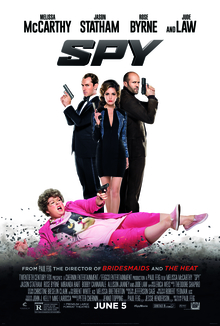
Film Flash: Spy


15 words or less film review (full review to follow soon)

Imagine a remake of Get Smart (2008) with genders switched and not as funny. 2 out of 5 stars

The Catholic Skywalker Dialogues: Part 1 - On Defining the CentralProblem


Rick O: Hello there, Catholic Skywalker.
Catholic Skywalker:  Hello, Rick O.  What brings you by?
RO: I was just walking past when I saw you here at this coffee shop typing away on your computer.  Blogging?
CS: As always.
RO:  What are you writing about now?
CS:  I’m just finishing up my review for Pitch Perfect 2.  
RO:  Oh.  Did you give it a favorable review?
CS: Not so much.  It wasn’t as good as the first.
RO: But you thought the first one was a good movie?
CS:  Yes.  I found it very enjoyable.
RO:  But wasn’t there a good deal of underage drinking and pre-marital sex?
CS:  It wasn’t graphic.  It was PG-13, after all.
RO:  That isn’t the point.  This was a movie that had characters engaging in moral depravity.
CS:  Yes.
RO:  And you gave it a good review?
CS: Yes.
RO:  Don’t you see a problem with this?  You are a Catholic movie blogger.
CS: Among other things.
RO: Regardless, you are someone who critiques the popular culture from the point of view of a faithful Catholic.  How could you as a faithful Catholic give a positive review to something that is morally bad?
CS:  Have we determined that it is morally bad?
RO:  I believe we have.
CS:  I do not think so.  Perhaps you are correct, we shall have to return to this question soon.  But first, let us lay out the essential problem.
RO: Certainly.
CS:  I take it that you would say that most of the pop culture has a great deal of moral depravity?
RO: Yes.
CS:  And you would agree that the popular culture is pervasive.  It is almost impossible to avoid it?
RO: Yes.
CS:  Should we avoid it?
RO: What?
CS:  It would seem that morally depraved things are bad for us.  Would you agree?
RO: Of course.
CS:  And if they are bad for us, we should avoid them, correct?
RO:  Not necessarily.
CS:  How so?
RO: There are a number of things that you cannot avoid that also have within them moral depravity.  The world is full of such dangers.  If you are a cop, you have to encounter criminals.  But even in the less extreme sense, all of us have a bit of moral depravity in us and we cannot shut ourselves off from each other completely.
CS:  Then what is the principle?
RO:  I would divide the encounters in 3 ways:  1)  You encounter moral depravity to fight it.  In this case you do not shut your eyes to the evils of this world, but you enter into the fray.
CS: So this would be, as in your example, a police officer investigating the world of, say, human trafficking?
RO:  Yes.
CS:  Would you also include those who wish to encounter the popular culture as a way to combat its influence?  For example, a person who watches The Last Temptation of Christ in order to accurately assess its moral depravity?
RO:  Yes, but there this leads to my second type of encounter.
CS:  Please tell me.
RO:  2) You encounter the depravity and enjoy it.  These are people who seek out things because they are morally depraved and take pleasure in it.  These are the people who seek out pornographic sex and violence for the thrill that it gives.  These are people that seek out works that are blasphemous because they hate God or the Church.
CS:  Then how does the first lead to the second?
RO:  Nietzsche said that when you stare into the abyss, the abyss stares into you.
CS:  You are quoting an atheist to support Christian morals?
RO:  Truth is truth, no matter who says it.
CS:  Well said.  But back to the matter at hand.  You are saying that someone engaging in 1 is in danger of 2?
RO:  That is correct.  If the morally depraved thing has the power to tempt and ensnare the soul, a person could enter into the encounter only to corrupted by it.
CS:  Like Anakin Skywalker in Revenge of the Sith.
RO:  Please don’t bring up those horrible prequels in any of your examples.
CS:  Hmm… we’ll have to discuss that later.  But for now, what is your third encounter?
RO:  3) You encounter the depravity and excuse it.
CS:  How is that different from 2?
RO:  In 2, you actively support and enjoy the elements of depravity.  In 3, you ignore them.
CS:  So to sum up, the three ways we encounter moral depravity in the popular culture are: 1) We encounter it to fight it, 2) we encounter it and are corrupted, 3) we encounter it and we ignore it.
RO:  That is it exactly.
CS:  And is 3 as bad as 2?
RO:  It certainly can be.  Take your praise of Pitch Perfect.  I would say that you think you are doing 1, you actively avoid 2, but you have fallen into 3.  You are praising a piece of art which is also morally depraved.
CS:  Then if I engage in 3, doesn’t it appear that I have been corrupted by that depravity at some level?
RO:  How do you mean?
CS:  To say that evil is good is a corruption, correct?
RO:  Yes.
CS:  But to ignore evil or to come to some kind of detente with evil is also a corruption, correct?
RO:  It would appear so.
CS:  Then isn’t 3, simply 2 on your view.
RO:  That follows.
CS:  So you would say that in the end the only reason to interact with the moral depravity in the popular culture is to fight it, but even then it is perilous and can lead to corruption.
RO:  Yes, that is what I would say.  And you agree?
CS:  I did not say that.
RO:  Then what are you saying?
CS:  What am I saying?  I’m not quite sure yet, but I find this dialogue very illuminating to what I am trying to say.
RO:  I do not understand.
CS:  I have not yet formulated my conclusions, but I find our conversation very helpful in doing so.
RO:  So do you agree with me or not.
CS:  I agree with you that 1 is dangerous and 2 is bad.
RO:  What about 3?
CS:  I am not sure if we stated 3 properly.
RO:  How do you mean?
CS:  You used my review for Pitch Perfect as an example, correct?
RO:  Correct.
CS:  You and you would say that in my review because I praised what was good even though there is moral corruption in it, I have fallen into some kind of corruption myself.
RO:  It would seem so.
CS:  You may be right, but I am not quite ready to agree.  Let us at least agree that we have discovered the central problem that needs to be resolved.
RO: And that is?
CS:  Is it morally acceptable for a Catholic to enjoy an immoral movie?  For brevity’s sake, I am using the term “movie” to mean “any film, TV, show, internet video, or anything else in the audio/visual arts.”  Would you accept that this is the central problem?
RO:  I would.  How do we resolve it?
CS:  We shall have to first determine how a movie is morally bad.
RO:  Isn’t that obvious?
CS:  I do not know.  We shall have to see.


End Part I.


Friday, June 5, 2015

Tolerance and Truth (or How Bruce Jenner is the New Origen)

I have really tried to avoid blogging about anything even tangentially related to the Kardashians.  I find the culture that they promote repugnant, especially as it is sold as "real life."  My normal method for dealing with them is to ignore them and hope that the next fad will take over and they will go the way of Snooki and Pet Rocks.

But now the pop culture has been embroiled in a new push to normalize transgenderism.  A lot of internet ink has already been spilled, so I decided to throw my two cents into the fray.

When trying to formulate something interesting to say about this, I could not help thinking of Origen.

Origen, who lived in the 2nd-3rd Century, is one of the most influential of the early Church fathers, pioneering some of the most intriguing methods of Biblical criticism that we still use to this day.

But Origen will never be known as St. Origen.  Some of it has to do with some of his contradictory theologies that were opposed to the teaching of the Apostles.

And there's the fact that he castrated himself.

"Call Me Origennifer!"


According to the story, Origen took literally the passage "if your right hand causes you to sin, cut it off."  And since he struggled with lust, he decided to remove the source of his mental turmoil.

Now, I want you to imagine that you encountered Origen right before he was was about go through with his plan.  I imagine the conversation would go something like this:


You: Hello, Origen.
Origen: Hello, stranger.
You: Where are you going with that rock.
Origen: I'm going to cut off my genitals.
You:  WHAT?
Origen: I SAID I'M GOING TO CUT OFF MY-
You: No, I'm not hard of hearing, I just was incredulous.
Origen:  Oh.  My apologies.  Now, if you'll excuse me, I have some genitals to destroy.
You:  Wait!
Origen: What is it?
You:  You don't want to do that.
Origen: Of course I do.
You: Why would you mutilate yourself so?
Origen: I have been struggling with my inner self.  I am constantly plagued with the feelings of lust.  In order to be rid of my temptation, I am going to cut off my genitals.
You:  But isn't there a less extreme way to deal with this?
Origen:  Yes.  Goodbye.


Now, I think anyone who has struggled with lust can at least have a modicum of sympathy for Origen.  There are some who find their sexual temptations so overwhelming that they would do almost anything to be rid of them.

Almost.

But mutilating the body is not the answer.

And this brings us back to Bruce Jenner.  There are many who have expressed sympathy for his plight: he has always felt like a woman in a man's body.  To not feel comfortable in your own skin is a terrible thing.

But aren't there less extreme ways of helping him than cutting off his genitals?

Bruce is not a woman.  He never can be.  He has been made from his very moment of conception to be a male.  Surgery will not change that.  Biologically, he still has the Y-Chromosome.  Cutting off his genitals will not change that.  Spiritually, he still has the masculine soul.  This also cannot be changed by surgery.

We live in a country where we say that people should be free to live however they want.  And for the most part this makes a good deal of sense in a country founded on liberty.  For that reason we pride ourselves on our tolerance.

But what good is tolerance without truth?

We are told to stop being so judgmental and let everyone live the life they choose.  Fine and dandy.  But there's a problem.

I remember I was asked by a student why I didn't want gay people to be happy?  I was flummoxed by the question and responded: "Of course I want gay people to be happy.  I want all people to be happy."  She then asked if that was the case, why didn't I simply say that they should be allowed to engage in sexual relationships with people of the same sex.  I said, "Because that isn't going to make them happy."

My answer is incomprehensible to a person who believes that we make our own happiness.  If I am the author of my own happiness and if I can find it on my own terms, then whatever I freely choose for myself, if I want it and aquire it, should make me happy.  If I believe that drugs will make me happy, then using them will make me happy.  If I believe money will make me happy then acquiring wealth will make me happy.  If I believe sex will make me happy than sharing my genitals with another will make me happy.

I think most of you can already see the problem.

If the above idea was true, that achieving whatever I desire makes me happy, shouldn't we have a lot more happy people.  And by happy, I do not mean momentary pleasure.  I'm talking about that peace and contentment that does not shake a person, even in times of trouble.  I'm talking about that sense of completeness and fulfillment that surpasses all understanding.

But our world seems decidedly less happy, rather than happier.

Part of the reason is that we have gotten away from truth.

Human beings are made with a certain nature.  Socrates understood that a successful and happy human would be one that lived according to human nature.  He was only interested in ethics because that is the branch of philosophy that deals with living rightly.  Socrates knew that the only way to happiness was to live rightly.

This is not a snobbish judgment of those who do not live according to my own personal standards.  My iPhone has the nature of a smartphone.  I could use it as a hammer.  But that would not be in keeping with its nature and so it will do harm to it and it will also probably not achieve the results that a hammer would.

The same thing is true of human beings.  Acting against our nature means we will not function properly and that will not be able to live rightly.  Thus happiness will be out of our reach.

But sometime in the last 50 years, our culture has done everything it could to untether human beings from human nature.  Things which were natural to human society were said to mere changeable social constructs.  And this lie went further to say that we can be the authors of our own happiness apart from what people called "nature."

In the movie TransAmerica, the main character is man who is transitioning into a woman.  When confronted about the contradiction of his Christian beliefs and his transgenderism, the main character responds, "My body may be a work in progress, but there is nothing wrong with my soul!"

What an inversion of nature!

Are we not as God made us physically?  Broken in these bodies, yes, but maleness and femaleness are not disorders to be cured.  And aren't our souls a work in progress?  Aren't I supposed to work out my salvation with fear and trembling, as St. Paul says?  The purveyors of our popular culture would have us stake our entire identity on our mortal, dying bodies and give up any hope of healing the sickness and sin in our immortal souls.

You are born male or female (even hermaphrodites are essentially male or female based on the presence or absence of the Y-Chromosome).
There is something wrong if you think of yourself as one sex and you are biologically another.  Even Mr. Jenner would agree with that last statement.  It appears that there are two possibilities then:

a.  I am the sex that I am and I must come to terms with how best to live as I am.
b.  My sex is a mistake and I will have surgery to correct that mistake.

Unlike, say, a deficient heart valve or even an abnormally shaped nose, sexual reassignment surgery does not fix or enhance nature.  It mutilates it.

This is what Bruce Jenner has done and is planning to do to himself.  And millions are applauding him for doing so.  In fact, notice the subtle and not-so subtle pressure to join the chorus of those who celebrate this.  Even our president has glorified Mr. Jenner's action.  If you speak critically of this course of action you are threatened to be labeled transphobic (you cannot say homophobic because Mr. Jenner has made no real indication that he has an attraction to other men).  In fact, it has gotten to the point where it is not enough to be tolerant.  We must now also celebrate his transformation or we are labeled haters.

Yet truth is truth even if no one believes it.

A lie is a lie even if everyone believes it.

I'm sorry, but the emperor has no clothes.  Or in this case, the pop culture celebrity has no ovaries.

I make no judgment on Mr. Jenner.  I do not know what it is like to deal with his internal struggles. I will keep in my prayers.  I want him to be truly and permanently happy.

But just like Origen, I would probably suggest another way to find happiness than cutting off his genitals.

Tuesday, June 2, 2015

The Curt Jester on John Oliver's Anti-Papal Rant

I sometimes have to fight the sin of envy when I read bloggers as wonderful as The Curt Jester.

I am especially jealous because Pop Culture Catholicism is my wheelhouse and he swoops in and writes circles around me before I can even begin to formulate a semi-cogent thought on the topic.

Recently, HBO's John Oliver went on a rant against Pope Francis.  I would comment on it, but the Curt Jester has written about it so well.

Read the entire article here.


Monday, June 1, 2015

Film Review: Pitch Perfect 2


The original Pitch Perfect was a low-budget musical romp that became a sleeper hit after it left theaters.  It was insubstantial but incredibly charming.

So of course Hollywood green-lit an inferior sequel.

The story picks up 3 years after the first and the Barton Bellas are the reigning national a capella champions.  But after a wardrobe malfunction in front of the President, the Bellas are suspended from competing.  Their only hope is to win the world championships.  Meanwhile, Becca (Anna Kendrick), the de facto leader of the Bellas is planning for a post-graduation career producing music and begins a secret internship away from her teammates.

The plot feels like a mishmash of two different ideas: world championships and life after college.  It seems like the writers could not decide which story to do, so they did both and it shortchanged the film.

Tonally, the  movie is all over the place.  At times it wants to be a sweet romance and other times it wants to be a PG-13 American Pie.  It goes from salty to sugary at 100 mph.  The nonchalant sexuality in a movie with this rating is a bit disturbing, as it was in the original.  While it is never graphic, fornication seems to be the implied normal passtime in college life.

The characters are for the most part flat with little character development.  The villains are a German a capella group that feels like they walked right out of a Sprockets skit from Saturday Night Live.  As for the rest of Bellas, there isn't much to write about because they are given very little to say or do but exist as a means to the story.  Even the romantic subplot from the last film has for the most part fizzled.  Becca boyfriend Jesse (Skylar Astin) is reduced to being a cheerleader for Becca' life.

The filmmakers tried to recreate some of the magic, like the riff-off from the last movie.  But whereas that one felt fun and spontaneous, this one felt retread and over-rehearsed.  First time director Elizabeth Banks has moments of spark and energy, but there isn't really anything there.

The film's saving grace are a couple of the performances.  Kendrick's acting isn't earth-shattering, but she is completely likeable and charming.  She uses all of her charisma to carry the story forward.  Also Rebel Wilson is incredibly funny as "Fat" Amy.  She doesn't have great material to work with, but she wrings as much humor as she can from the script.  Also a wonderful surprise was Keegan Michael-Key as Becca's boss.  His takedowns of ridiculous hipster culture are some of the best in the movie.

Speaking of Key, he helps introduce some real maturity into the film.  In the real world, you have to contribute something of value to become noticed.  Becca does this, and Key's character encourages her, but he doesn't baby her.  He pushes her to become better.  This is an important theme that is even addressed in "Fat Amy's constant hook-ups with Bumper (Adam DeVine), the villain from the last movie.  Their purely carnal relationship ultimately becomes unsatisfying.  At least the movie acknowledges the truth that sexual pleasure alone cannot make you happy.  The two move closer towards commitment which is, I guess, a step in the right direction.

The music, almost a character in itself, is also inferior in this version.  There are some nice musical moments, but nothing like the magic of the first.  The finale does deliver as the Bellas sing an original song from their newest member Emily (Hailee Steinfeld).  But those moments are rare.

In the end, if you enjoyed the first movie, you will like spending a bit more time with the characters that made you laugh time around.  You may not laugh as much, but you'll smile a bit.

2 and 1/2 out of 5 stars.