ReasonForOurHope

Sunday, March 23, 2014

Sunday Best: Actors of All time #3 - Gary Oldman

CORRECTION:  in my original post,  I incorrectly said that Oldman played Mozart in Immortal Beloved.  Astute reader Poppabear pointed out that he played Beethoven.  I have since made the correction below.   
 

GREAT PERFORMANCES

The Dark Knight Rises
The Dark Knight
Harry Potter and the Order of the Phoenix
 Batman Begins
 Harry Potter and the Prisoner of Azkaban
Air Force One
 Murder in the First
 Immortal Beloved
Léon: The Professional
 Dracula
 JFK
Rosencrantz & Guildenstern Are Dead

Gary Oldman is the film world's greatest living actor.

In terms of chameleon actors, who can lose themselves completely in a role, Oldman is unsurpassed.  I cannot tell you how many times I've mentioned to people how Commissioner Gordon is Sirius Black and they are shocked.  This is not simply a matter of makeup and costume but Oldman's total commitment to becoming his character.

As with #4 Johnny Depp, Oldman swings for the fences and sometimes he strikes out.  His villain in The 5th Element is a horrible cartoon caricature.  You can also see unimpressive performances in The Scarlet Letter and The Book of Eli.

But his body of amazing work overwhelms any misfires.  Even in bad movies, Oldman can shine.  In Rosencrantz & Guildenstern Are Dead, Oldman plays a simpleton/savant against Tim Roth's more cerebral character.  Oldman brings an openness and an optimism to his character that also comes off as vacant as Bill and Ted in their excellent adventure.  The movie itself is pretentious and boring, but Oldman makes it watchable by making Rosencrantz simply likable.

My first experience of Oldman was in JFK, where he plays Lee Harvey Oswald.  It is actually a fairly restrained performance and he must perform as a character mostly from people's memories.  He infuses Oswald with a seething anger under a stoic exterior.

But where I first took notice of Oldman was in Bram Stoker's Dracula.  His performance as the title monster is larger-than-life and requires him to chew scenery like crazy.  And yet what grounds all of it is that it fueled by an intensity of emotion.  He is absolutely fascinating to watch as he plays old man Dracula, monster Dracula, young gentleman Dracula... he transforms in body and voice while keeping the consistency throughout the performance.  And I love all of the small looks and gestures he puts into his scenes, like where he catches himself before drinking his own blood in front of Harker and then covers his mistake with his creepy, plastered smile.


And his corrupt cop Stansfield in Leon: The Professional might be his most over-the-top performance, but it is a controlled insanity.  There is a menace in the big moments and the small moments.  His is a drug-addled psychotic that is absolutely terrifying in a way that Dracula was not.  In the hands of any other actor, this would have been just another one-dimensional bad guy.  And while Oldman performs him without any redeeming qualities, only he could pull off that craziness in a believable way.  I can't think of the word "everyone" without thinking of Oldman screaming it.


His commitment to his craft is evident in Immortal Beloved.  He committed himself to learning how to play piano like Beethoven in order to play the famous composer.  Like his previous characters, Oldman's Beethoven has little to no redeeming qualities.  But he burns with his trademark intensity.  Watch the overwhelming sadness as he lays his head on the piano and plays the notes he cannot hear.


I should pause a moment here to talk about his intensity a bit more.  I don't want to confuse intensity with simply large emotional displays.  By intensity, I'm talking about the emotional energy that fuels the character.  And each display of that intensity is distinct from each other.  You can feel how his Dracula's passion for Mina is a much different  kind of passion that Beethoven has for his great love.  And the violence of Stansfield comes from such a different place as the monstrous actions of Dracula.  Bruce Lee once said (quoting Eastern Philosophy) that you should be like the nature of water which takes the shape of whatever vessel it enters.  Oldman brings his rich skill to every role but he shapes it to whatever is necessary.

While he plays villains very well, he has also broken out in some fantastic heroic roles.  His Sirius Black from the Harry Potter series is a fantastic take on a man who is almost broken by injustice.  In Prisoner of Azkaban, you can watch his big reveal scene on multiple levels.  He has to appear like an insane murderer, but you have to be able to see the same performance again through the lens of a man who is about to get righteous vengeance after years of torture.  Oldman also let his character evolve into a man of quiet sadness.  His speech to Harry about good and evil is beautiful and fatherly.  And yet Sirius is a broken man.  He is too wounded by his life.  He delivers his final line in Order of the Phoenix with an exhilaration that only enhances the underlying sadness.

But one of my favorite performances of Oldman's is that of Jim Gordon in Nolan's Dark Knight Trilogy.  You can see none of Dracula, Stansfield, Beethoven, or Black in Gordon.  He is a completely changed.  Gordon is a multi-layered character, but he might be the most virtuous person in the series.  Playing villains gets more attention (see the series' Joker and Bane).  But Oldman's Gordon is one of the best performances of Oldman's because he plays him as a good, straight-as-an-arrow man while making him fascinating to watch.  The thing that underlies his entire performance is a deep and abiding sadness.  He is a good man who is surrounded by evil.  Watch him in the first movie when he puts a jacket on young Bruce.  He is kind and comforting, but even there you can see a sense of helplessness.  As Lt. Gordon, you can see how trapped he feels.

In The Dark Knight, he brings that intensity to fuel his righteousness.  And when it all falls apart in the final scene, he has to be alternately confrontoational, apologetic, consoling... all while keeping his character consistent and intact.  And as a good man who has done wrong, he shows the weight of his choices in his character in The Dark Knight Rises.  He is a man who has lost so much but cannot stop doing what he is doing.  He is a wounded warrior going once more into the breach.  And he keeps his character in control and resists most scenery chewing in order create a stable spine on which the Dark Knight Trilogy can rest.

I am amazed by Gary Oldman.  He can contort his behavior in ways that few actors can.  For that reason he is the greatest living actor and the #3 greatest actor of all time.

Friday, March 21, 2014

Lack of Updates (part III)

Dear faithful reader,

I know that I have been lax in getting up essays and more articles. 

About a week and a half ago, my basement flooded.  In and of itself, that would be a chore to deal with, but the leak that caused the flood was right above my comic book collection of 26 years!

So most of my free time has been dedicated to salvaging what I could, cataloguing my losses for the insurance, and beginning the general cleanup.

I know that when I shared this news with my friends they were devastated for me, and I love them for their sympathy.  They have been and continue to be incredibly helpful.

But in the end, I know that it is just stuff.  There are a lot worse things in this world than the loss of toys and comics.  And this tiny, tiny cross just makes me more grateful for all of the blessings in my life.

When things settle down, I will return with more of my ramblings including:

-a rant against pornography in television
-a layout of Summer Movie Season
-my #3 Actor of all time (who is also today's greatest living actor)
-my review of Forever Evil
-thoughts on fighting pessimism


Thanks for your patience!

Sincerely,
CatholicSkywalker

Wednesday, March 19, 2014

New Evangelizers Post: St. Joseph - Wonder Worker

I have a new article up at NewEvangelizers.com

I pray to St. Joseph every single day.

Someone once said to me that St. Joseph actually had it pretty hard in his house.  He sat down at the dinner table between the Incarnate Word and the Immaculate Conception; if someone was screwing up in that house, it had to be him.

But in seriousness, Joseph did not have it easy.  Very little is known about his life with certainty.  There are stories from things like the non-canonical Proto-Gospel of James, but we take those traditions with a grain of salt.  The Bible itself doesn’t give us that much information.  Was he young?  Was he old?  Was he popular?  Was he charismatic?  None of this is in the Scriptures.
The Gospel of Matthew tells us that he was a righteous man.  This meant at the very least that he was consciously religious and he kept the law.  But it is his action that reveals his character.

Matthew tells us that when he found Mary was with a child not his own, he decided to divorce her quietly.  I know some people point to this as a moment of selfishness or weakness.  But there is a great deal we can learn about Joseph in this moment.

At this point in the story, Joseph mistakenly believes that Mary is with child by another man.  The penalty for adultery could be death.  If Joseph wanted to exact his righteous indignation at his tarnished honor, he could expose her to the law.  But the fact that he was to divorce her quietly means that he would subject her to trial.  Yet Mary would still be pregnant.  Who would people think was the father?

Joseph, of course.


You can read the entire thing here.

Trailer Time: The Maze Runner

I am completely ignorant of this book series, but the trailer looks very good.  It conjures for me thoughts of Theseus, Cube, Lord of the Flies, and The Hunger Games.  I know there is a lot of hype on Divergent, but I just can't get too excited for that. 

Thoughts?

Sunday, March 16, 2014

Sunday Best: Actors of All Time #4 - Johnny Depp

photo by Anne Althiede
GREAT PERFORMANCES
 Sweeney Todd: The Demon Barber of Fleet Street
 Pirates of the Caribbean: Dead Man's Chest
 Finding Neverland
 Secret Window
 Pirates of the Caribbean: The Curse of the Black Pearl
 Donnie Brasco
 Don Juan DeMarco
 Ed Wood
 What's Eating Gilbert Grape
 Benny & Joon
 Edward Scissorhands


If you look past all the celebrity hype and the sometimes painfully quirky projects he chooses, Johnny Depp is one of the greatest living actors around.

He is one of the great chameleon actors who morphs into whatever role he needs.  The transformation from part to part is nearly unparalleled (except by our #3 actor).

Depp has always been a bit of an iconoclast.  He seems to intentionally choose parts that are strange.  While not every attempt at this works (see the awful Dark Shadows), it has given him a diverse body of work that highlights his particular set of skills.

His first great performance was as the title character in Edward Scissorhands.  Depp had very little dialogue to perform.  He had to get his character across mostly with non-verbals like facial expressions and body language.  Considering his horrific appearance, Depp had a huge challenge ahead.  But he delivered beautifully.  Who doesn't remember Edward's gentle soul when thinking of that film?


Depp continued to use his physical skills in Benny and Joon.  As Sam, the Buster Keaton enthusiast, Depp had to be able to mimic the physical genius of silent movie stars like Keaton and Charlie Chaplain.  And Depp rose to the occasion and became so physically dynamic that he completely stole the show.

He toned things down physically for his solemn performance in What's Eating Gilbert Grape?  People often point to Leonardo DiCarpio's Oscar nominated performance here.  But just as powerful is Depp's Gilbert who is a young man trapped by a family that he loves.  Depp plays him as guilt-ridden and hypocritical; Gilbert is a man of contradictions.  And through it all Depp makes us care about him and his relationship to his family.

One of my favorite performances of his is as Edward D. Wood Jr. in Tim Burton's Ed Wood.  It is a heavily stylized performance with quirky accents and tones.  But Depp does not turn Ed into a caricature. He plays him as full of optimism and frustration and feeling beneath his manic smile and wide-eyed enthusiasm.  I think of the scene where he confesses to a girl on his first date that he likes wearing women's clothes.  He doesn't lose any of his outward affectations, but he uses them to get deep into the vulnerability of the character.

Depp then does a complete 180 in his performance as of the title character in Don Juan DeMarco.  What is incredible is the absolute and supreme confidence of the performance.  Depp seduces the audience with his absolute conviction and charm.  He projects a charisma that you could chalk up to being simply natural to him as a person, but I think does a disservice to his skill.  He is able to project that confidence because Depp is able to give his character everything that he needs.

This acting-witin-acting is even more potent in Donnie Brasco (I never noticed until now how many movies Depp is in where he plays the title character).  The challenge of the undercover cop movie is that you have to be able to see both sides of the character without it being too obvious, or we would not believe that they could pass as criminal.  One of the things that I liked about the performance is that as he gets pulled deeper in, he pulls away from his family and the audience.  He makes us care about him getting lost in his own lies.

His first Oscar nomination was as Captain Jack Sparrow in Pirates of the Caribean: Curse of the Black Pearl.  In retrospect, we can see how wonderful Depp's choices were.  But at the time they were a risk. What I love about his take on the character is how fully he committed to an unorthodox take on the script.  I think of Heath Ledger's performance as the Joker, where all of his acting choices were things I never would have thought of.  Depp did this same thing with Sparrow.  But, like Ledger, he infused such conviction and believability into the life of Sparrow, that he made the material soar.

And Depp once again threw out all of his acting tricks to play the very straightforward part of JM Barrie in Finding Neverland.  Instead of covering his character with too many quirks, he tones down all of those instincts and plays the part straight.  But with Depp that does not mean dull.  His Barrie is as alive and vibrant as any of his other characters.  And he gives him a reality that makes his emotional journey so fulfilling.

Depp is a risk taker when it comes to his roles as an actor.  And while this means making plenty of mistakes, it also leads to great success.

Wednesday, March 12, 2014

Wednesday Comics: Charles Soule

When new writers come onto the scene, it usually takes awhile for me to take notice.  But there is that wonderful discovery when I'm reading that I'm enjoying and then I see that it written by someone I know writes another title I enjoy.

This is the case with Charles Soule.


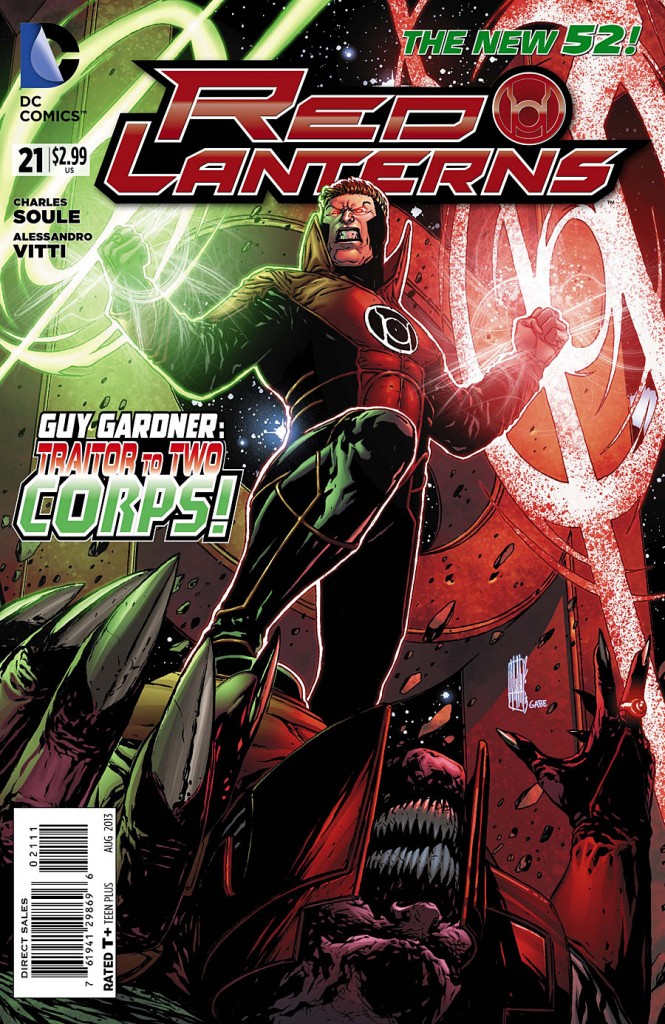
I have only noted his work in the last few months.  After the complete revamp of the creative teams in charge of the Green Lantern universe, Soule was given the reins to Red Lanterns.  I had been collecting that title, but more out of continuity to the other Lantern stories.  It followed the rage-fueled Reds who are led by the sympathetic but brutal Atrocitus.  One of the problems for the book was that the inherent ugliness of the characters (both moral and physical) made it hard to connect to the stories.

Soule's solution is excellent.  Guy Gardner has been tasked by Hal Jordan to go undercover as a Red Lantern.  In and of itself, that is interesting, but in Donnie Brasco like fashion, Guy not only has embraced the Reds, but he ousted Atrocitus as their leader.

Soule has given us a hero we can root for.  Not only that, but he has given strong personalities to the other Reds that makes us care about them.  And even though the Reds are still violent, Guy has taken them on a more heroic bent.  I'm not sure where it will go, but I am greatly enjoying the ride.


I started buying the Superman/Wonder Woman title because I thought the idea was intriguing.  I didn't realize Soule was writing it until I finished the 3rd issue.  This has so far been one of the consistently best books each month.  Soule does a fantastic job of exploring these unique characters and their relationship while setting against a heavy action backdrop.  I love his insight that Superman doesn't think of himself as above humanity because he was raised in a human family.  Wonder Woman is in many ways more of an alien than he is because of this.

The romance is handled delicately but not schmaltzy.  What could have been a simple gimmick book is actually a fun exploration of the different corners of the DCU.


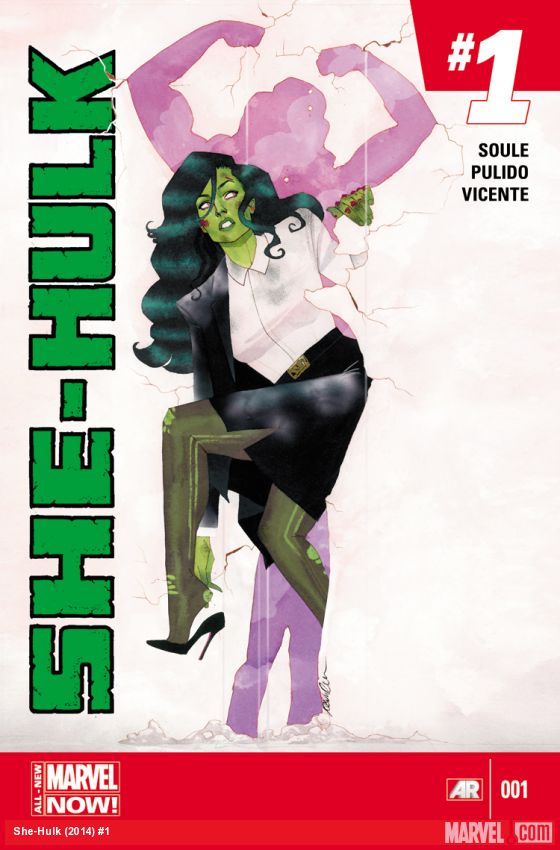
After realizing how much I enjoy his writing, I was in the comic book store and saw that he started writing for Marvel's She-Hulk comic.  So I picked up the 1st issue and it was very good.  Unlike the action heavy books that he also writes, She-Hulk focuses on the character as a celebrity lawyer.  Soule's background is that he is a licensed attorney, so he brings a great deal of inside-baseball insight into the story.  While there is some punching and action, the book reads much more like a legal procedural show set against the characters of the Marvel Universe.  In the first issue, she takes on a woman suing Tony Stark aka Iron Man for stealing a technology design from her late husband.  Oh, and her late husband was a super villain.

If you get a chance, I would pick up something Soule is writing now.  I look forward to even bigger and better things from him in the years to come.

Sunday, March 9, 2014

UPDATED -True Detective: The Most Anti-Christian Show on Television?


UPDATE AT THE BOTTOM--

I just caught up with every episode of HBO's True Detective in preparation for the finale tonight.  This show has been talked about quite a bit on the inter-webs.

The Good:
The acting is great.  McConaughey is fantastic and Harrelson does a very good job.  The directing and cinematography are superb.  There is a much-mentioned single take sequence in episode 4 that is mind-boggling good.

The Bad:
It's mostly boring.  This is a series from the same guy who made AMC's The Killing, a show that took a 5-episode story arc and turned into 13.  The same applies to True Detective.  The show meanders and lingers in ways that strain the patience.
The sexual content is explicit.  In an upcoming essay, I'm going to tackle this topic in more detail, but suffice to say that it is unnecessary and distracting.
Also, the characters are completely unlikable.  I struggle to care about what happens to our leads because they are such jerks.

But what I want to focus on for this article is the anti-Christian sentiment on display on the show.

Unlike channels that take on sponsors, HBO has less to worry about regarding offending viewers.  So they can make a full court press on Christians.

Below are examples of the anti-Christian point of view the show has.

SPOILERS BELOW

1.  The main villains appear to be Christian leaders.  A Billy Graham character is a participant in child sexual abuse and murder ring that includes satanic rituals.  I am not saying that a Christian character shouldn't be a villain.  We have plenty of those in history.  But the show goes out of its way to tie the hypocritical evangelist to horrible crimes.

2.  Christian schools are scams.  The Billy Graham preacher started a number of religious schools.  They were places to collect and victimize children.  Also, he was making money off of the state by using a voucher system to fund his house of horrors.  The implication is that school vouchers help to sponsor child abuse.

3.  Christians are hypocrites.  While no one will deny that all of us are sinners, anyone who espouses Christian beliefs on the show appears to be horribly two-faced.  The only person with integrity appears to be the nihilistic atheist, Rust Cohle (McConnaughey).    This brings us to the next point.

4.  Christians are idiots.  At a tent revival, Cohle muses about the collective IQ of the Christians gathered.  The show goes so far as to make one of the main helpers at the revival a mentally retarded man, just to emphasize that Christian preachers prey on the weak minded.  This could have been a nice moment that showed the Christian faith is for all people, and even those with mental handicaps are treated with love and dignity.  Instead, it is clear that the producers are implying that all Christians lack brains.

5.  The show ignorant of Christian faiths.  It is clear that the Billy Graham character is some kind of Protestant minister.  And yet all of his Christian schools are filled statues of the Virgin Mary.  Seeing as how most Protestants believe that Catholics honor Mary too much, it is very unlikely that the schools would be decorated in that manner.  This is a common problem in television and movies.  Producers don't know how actual devout Christians live in their various denominations, so they grab an religious iconography that they think is evocative.


I could go into more detail, but I think that this will suffice.

Now, there is one more episode left.  It is possible that I have misunderstood the producers' intentions.  Maybe the character will come to some kind of epiphany and that the earlier parts will be seen in a new light.

But I'm not holding my breath.

UPDATE…

So I watched last night's finale.  And most of what I've said about the show holds up.  But there are 2 very interesting, redeeming things in the end.

MORE SPOILERS AHEAD

After Cohle and Hart track down the killer, both are wounded, possibly mortally.  Hart wakes up, but Cohle is in a coma.  After Hart wakes, his ex-wife and daughters come to his side.  He is then overwhelmed with tears.  I took this to mean a real acknowledgement of the goodness of family life that he rejected by his infidelity.

But Cohle eventually wakes from his coma.  There is a moment where he is lying there all in white that he looks quite Christ-like.  Cohle's nihilism stemmed from the loss of his little daughter years earlier from a drunk driver.  After that, he was convinced life was purposeless and void of meaning.  But in the final scene of the show, Cohle confesses that while he was in his coma he could feel his daughter in the afterlife.  He wasn't critical of the feeling, he accepted with ontological certainty.  He finishes the show with certainty that there is life and love after this world.

The last line of the show is about the stars.  It reminds Cohle of the battle between good and evil, and while there is a whole lot of dark, the light is breaking through.  Cohle ends by saying that the light is winning.

That is a huge turnaround for the characters.  So it turns out that the characters did come to some kind of epiphany.  Whether this is redemptive enough, I will leave that up to you.