ReasonForOurHope

Thursday, July 31, 2025

Film Review: Fantastic Four - First Steps


Sexuality/Nudity Acceptable

Violence Acceptable

Vulgarity Acceptable

Anti-Catholic Philosophy No Objection

The Fantastic Four have long been a comic book property that has been difficult to crack in cinema.  Every ten years since 2005, the characters have been rebooted.  The first two original Fox movies are fine, but never quite made the upper echelon of the genre.  The 2015 movie is widely derided.  I will have to say that the 2025 film was not getting me very excited.  The trailers made it seem like a middling entry in the Marvel Cinematic Universe.

But I am so glad that I was wrong.

Fantastic Four - First Steps takes place in an alternate universe from the main MCU.  As a result, it does not feel bogged down by the decades of continuity.  The movie also takes place in the 1960s and that retro look is one of the most charming things about the film.  In this universe the Fantastic Four have been operating as the only superhero team for a number of years Reed Richards/Mr. Fantastic (Pedro Pascal) leads the way with his unparalleled intellect.  Sue Storm/Invisible Woman (Vanessa Kirby) is Reed's wife and helps unite the world into a united coalition called the Future Foundation.  Ben Grimm/The Thing (Ebon Moss-Bachrach) is a beloved neighborhood hero.  Finally Johnny Storm/Human Torch (Joseph Quinn) is that impulsive, young hotshot.  The story begins with Sue telling Reed that she is pregnant.  But this joy is cut short with the arrival of the Silver Surfer/Shalla-Bal (Julie Garner) who informs the people of Earth that Galactus (Ralph Ineson), the destroyer of worlds, is coming to consume them all.  With the only hope of the planet in their hands, the Fantastic Four travel to intercept Galactus.  But their dillema for them and for the world gets horribly complicated.

One of the things this movie gets right are the characters and their relationships.  Previous Fantastic Four movies involved our characters meeting and becoming a team.  Because we catch our heroes years into their tenure, their relationships to each other are clearly established.  Pascal and Kirby have very good chemistry as husband and wife.  They are partners through-and through, even when they are at odds.  In one of my favorite bits of dialogue, Sue is horrified by some of the things that Reed is thinking about.  Reed says, "I have to think about horrible things so that I can stop them from happening."  Sue responds, "The way you think hurts me."  There was something so insightful and honest about this and the different mindsets of fathers and mothers.  

I also like the way they handle Johnny.  The Chris Evans version was fine, but a little one-dimensional.  Quinn infuses Johnny with a boyish mischief, but not at the expense of his empathy or intelligence.  His Johnny is no dummy, nor is he emotionally oblivious.  In fact, in the last few minutes of the movie, he has one of the most moving lines.  While I miss the gravely voice of Michael Chiklis, Moss-Bachrach does a very good job of Ben's low-key heart and humility.  His chemistry with Johnny has a strong older brother/younger brother vibe.  I feel like a lot of his story was left on the cutting room floor.

They even got Galactus right.  Instead of being some amorphous alien cloud, he was presented as a comic-accurate giant.  He is hunger itself who acts like a force of nature.  He looks at humans as insects that he must wipe away in order to feast.  He does not see himself in our moral terms, but sees himself as above such concerns of lesser mortals.

Visually the movie looks fantastic (pun intended).  As mentioned before, the retro-'60's look sets the movie apart from almost every other superhero film.  Not only that, but its visual tone harkens to a more optimistic and innocent time.  It reminds me of being a kid and being filled with a sense of child-like wonder.  This is incredibly helpful in helping us feel how and why the characters react the way they do.  If this movie had been set in modern times, there would be too much cynicism to make the story work.  On top of this, director Matt Shakman has a wonderful visual style, capturing both grandeur and heart.  He knows how to set gigantic spectacles as well as deeply emotional and personal set pieces.   Especialy in the last act, he marries big, bold action with emotional stakes.  And he does so with impressive use of special effects.  In particular, there is a chase scene in hyperspace that was beautifully presented and one I cannot wait to see in IMAX 3D (which I plan to do soon).

As mentioned, the performances are all very good.  Pascal sometimes comes off as a bit dour, but it fits exactly the fear and panic of a first-time father who is terrified of all that could harm the child.  Kirby is easily my favorite Sue Storm.  She carries with her intelligence, grace, and maturity.  She is at all times feminine and powerful.  Quinn knows when to push the comedy with Johnny and when to pull back just enough for the drama.  He feels like he is playing with the audience, trying to get us to smile.  Garner does a decent job as the Silver Surfer.  While I prefer the original Norrin Radd version, I wasn't bothered as much by the gender swap because it was relevant to the story they were trying to tell.  The rest of the supporting cast is serviceable but not very memorable, except for Paul Walter Hauser as Mole Man, whose silly fun always makes me laugh.

As good as all of this is, what really set this movie apart its theme about the value of life.  As I mentioned, this is the most pro-life film I have seen in a long time.  I don't believe that this was the intent of the film-makers, but the pro-life themes almost smack you in the face.  Every human life has value.  Galactus represents a culture of death, seeking to devour the lives of others for his own survival.  Even the Silver Surfer represents this, as someone who looks at other people's lives as bargaining chips to get what she wants.

But the Fantastic Four are clearly on the side of life.  They find dignity in everyone, including Mole Man and Silver Surfer.  They are dedicated to saving everyone on the planet from Galactus, but they are not willing to trade unwilling lives.  At one point Johnny even tries to offer himself for the world to be spared.

But the most beautiful moment was a simple one early in the film.  Reed wants to run another test on his unborn son.  Sue says that her child is fine.  She then uses her invisibility powers to maker herself transparent to reveal the baby in the womb.  It was such a tender but overwhelming moment for me.  I was in shock that the movie would do this.  Understanding what they were showing, there is no doubt that a baby in the womb is beautiful and innocent life deserving dignity and protection.  This was not an agenda-pushing moment.  Instead, it was an important part of investing the audience in the story to come.  Seeing that baby, you feel the need to protect him at all costs.  And this re-enforces my pro-life convictions.

I cannot tell you how touched I was as a Catholic to see all of this in a major superhero movie.  It was pro-marriage, pro-family, and pro-life.  While not explicitly Christian, the movie was not hostile towards faith.  In fact, Ben begins a relationship with a woman named Rachel (Natasha Lyonne) who helps at their local synagogue.  I left the theater happy, moved, and dare I say, a little inspired.

If you were on the fence about this movie, I highly recommend you go see it.  I didn't know the MCU had it in them.

Star rating 4.5 of 5.png


Tuesday, July 29, 2025

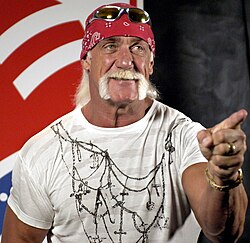
Rest in Peace, Hulk Hogan


File:Hulk Hogan.jpg

I encountered Hulk Hogan at just the right time in my childhood for him to leave a lasting impression.  

The first time I can remember seeing him was in Rocky III where he played "Thunderlips."  I was impressed by his larger-than-life persona and his sheer size.  

I'm not sure how I first started watching professional wrestling, but it was always in the WWF (now the WWE).  Weeknights on the USA network and for two hours every Saturday on syndication you could watch.

For a child my age, this was high drama.  Like the superheroes and villains of the comics and cartoons I loved, here were bold and colorful characters who provided action and drama.  There were challenges, betrayals, battles, and redemptions.

And at the center of it all was Hulk Hogan.  

Born Terry Bollea, he worked his way into wrestling when it was primarily a regional affair.  But in the early 1980's he was raised to prominence as the Heavyweight Champion.  

A striking figure of size and intensity, he was someone who looked like he was 50 from his 30's through his 70's.  He spoke and you listened.  He projected a rough sincerity.  He was unrefined but also unpretentious.  His body was like that of a superhero in terms of size and muscle.  He even seemed super-heroic to someone my age.  When they started putting the big matches on VHS, I would beg my parents to take me to the video story to rent them.  I watched in awe as he escaped from the unescapable Camel Clutch of the dreaded Iron Sheik.  He would be beaten and broken, but just like the comic book Hulk, he would reach a point where he would find some kind of super strength and win the day.

He was definitely the image of a hero to build the wrestling brand around.  He urged his young fans to "say their prayers and take their vitamins."  He always wore a gold cross around his neck and his entrance song, "I Am a Real American," is unabashedly an anthem to patriotic masculinity.  As a kid I had his wrestling figure along with so many others.  I owned a Hulk Hogan mask and slept in Hulk Hogan Rock'n Wrestling bedsheets.  I even sent away for his Hulk Hogan exercise kit.  He was the leader of the rough and tumble band of heroes.  He was the Optimus Prime of professional wrestling.

My mom (God bless her) would take me to see the wrestling matches live.  It was like watching the drama of good vs. evil play out to cheering fans.  I had the privilidge of seeing Hogan several times and he never disappointed.

I was too young to realize that wrestling was fake.  I remember so distinctly that Wrestlemania 2 was only available on pay-per-view and my dad would not order it for the house (given the price, I don't blame him).  King Kong Bundy had recently broken Hogan's ribs in a match and they were set to be the main event in a cage match for the belt.  But I remember the day that it happened and in the early evening, I remember turning to my brother and saying with great concern, "Do you realize that we could have a new heavyweight champion right now?"  No one in the house shared my distress.  I had to wait until Monday at school to talk to the lucky kids who got to watch it.

Looking back, my anxiety seems rather silly.  But the point of the story is that Hulk Hogan got me to care about him.  I was rooting for him even when I couldn't see him.

My heart broke for him as his best friend, Andre the Giant, betrayed him and challenged him for the belt.  I was filled with awe as he did the unthinkable and body-slammed and pinned the undefeated Andre at Wrestlemania III.

Within two years, I could no longer accept the illusion that wrestling was real.  For many people today, this doesn't matter.  For me, the drama seemed much less important.

But Hulk Hogan always seemed larger than life.

But that was the character I saw in the ring.  Outside of the ring, Hogan had several struggles.  The wear and tear of years of wrestling and steroid use caused him to have severe pain problems, especially with his back on which he had 25 surgeries and receiving little relief.  

He was married three times.  He first wife accused him of repeated infidelity, but he always denied these claims.  After losing her and most of his fortune, he even thought about ending his life.  Another low point came when a few years after his divorce he befriended a married couple.  They encouraged him to commit adultery with wife, not knowing that he was secretly video-recorded.  Not only did the video show someone who was once a childhood hero engage in debauchery, but he was also recorded saying some outrageously racist things.

Especially because of this last detail, there are many who still hold Hogan in contempt.  If you look on social media you can see that this alone has soured many people on the man's life.  And yet there are many who forgave him completely and still held him up as a hero.

I do not know what demons Hogan struggled with, but I do know that less than two years ago, he was baptized.  On speaking about it he said, "It broke down that fourth or fifth wall... it set me free.  I wasn't that perfect vessel that I should be or should have been.  Once I was baptized I felt like I was all-new."  He went on to say, "I accepted Christ as my savior when I was 14, but I derailed.  It wasn't my life.  He has given me the opportunity to prove that I'm faithful and I'll never make those same mistakes again." 

I am not the man's judge.  As a child he was a hero to me.  As an adult, I saw a man with fame and adulation but deep sin and brokenness.  Yet in the end he took all that he was, the light and the dark, and handed it over to Jesus.  It is my prayer that the sanctifying grace of God covered him and carried him through these last few months of life.   According to his daughter, when he talked to her about death he said that meeting God would be the greatest championship that he would ever have.

Hulk Hogan died of cardiac arrest last week at the age of 71.  He leaves behind a wife and two adult children and two grandchildren.

Eternal rest grant unto him, O Lord, and let Perpetual Light shine upon him.

May his soul and all the souls of the faithful departed, through the mercy of God, rest in peace.  Amen.

Rest in Peace, Hulk Hogan


Monday, July 28, 2025

New Evangelizers Post: The Call of Gideon - An Old Testament Archetype


I have a new article up at NewEvangelizers.com.  

The Book of Judges describes the actions of men and women called to save the people of Israel between the time of Joshua and the monarchy. In particular, Judges 6:11-24a describes the call of Gideon to be a judge. What we find is that the call of Gideon falls into the archetype of God’s call of Old Testament heroes, particularly Moses.

To understand Gideon’s call, we must look at the context in which it takes place. As had happened before in this chapter, the Israelites turned away from God, so God let their enemies overcome them. God’s messenger goes to Gideon and tells him that he will deliver the people from their enemies. Gideon protests, saying that he is insignificant, but the messenger assures him that God is with him. He then asks for a sign from the messenger. Gideon offers a food sacrifice, which the messenger burns with heavenly fire. Gideon thinks that he may die from being in the presence of the Lord’s messenger, but he is reassured. He then names the place of the encounter “Yahweh-shalom.”

There are a few essential questions that may be investigated. For example, why does God choose someone so lowly? How is this call similar to other calls in the Bible? What is the significance of the offering? Why does Gideon think that he will die?

It would seem that God chooses the lowly to make His power known. The repeated patterns of the Divine call is consistent with the repetition in the stories in the Bible. Offerings to God are a central part of Jewish worship. Others who were in the presence of God also thought the experience was too overwhelming to survive.

In the larger context of the passage, this story takes place in the cycle of sin and deliverance from the book of Judges. The people turn away from God, and God lets them be oppressed until they cry out to Him for help, and He sends a judge.
In the immediate context of the passage, the Israelites had been under the Midianites for seven years. God sent a prophet who proclaimed to the people that someone would be sent to rescue the people from Midian the way that they were delivered from Egypt.

Trying to discern the historicity of these stories is difficult. According to scholars, the stories started as scattered oral traditions and only later were brought together into one narrative. Culturally, the people of the story would have been influenced greatly by their geography. Even though the soil in Canaan was fertile, water was not abundant. It would appear that the worship of other gods was done out of fear of starvation. As the lack of water is a perennial problem in the land, it could explain why this fear would keep returning to the people.

But it is in the formal analysis of the passage that we can see how it fits into the calling narratives of the Old Testament, particularly the call of Moses. In both stories, we have someone who is hiding, but they are called forth to be sent. In both, there is a protestation as to being unfit, but God gives assurance and a sign despite the fear.
First of all, when looking at the situation in which both Moses and Gideon are called, they are in similar circumstances. Moses fled Egypt and was in Midian living as a shepherd (Exodus 2:11-22). Gideon is trying to hide from the Midianites by “beating out wheat in the wine press to save it from the Midianites.” (Judges 6:11) Both men appear to shrink from the spotlight so as not to be noticed and so avoid trouble.

When looking at the language directed at both Gideon and Moses, there are similarities. The messenger to Gideon uses the same phrase of sending that was used with Moses: “selahtika.” This means “I have sent you.” God says to Moses, “I will be with you; and this will be your sign that I have sent you.” (Exodus 3:12) This is the same phrase used towards Gideon in Judges 6:14: “Go with the strength you have, and save Israel from the power of Midian. Is it not I who send you?”
In both the Moses narrative and in Gideon’s, there is a claim of unworthiness. Gideon at first does not answer the call because he does not think he is an appropriate candidate. He says, “Please, my Lord, how can I save Israel? My family is the poorest in Manasseh, and I am the most insignificant in my father’s house.” (Judges 6:15) Moses responds to his call by saying, “Who am I that I should go to Pharaoh and bring the Israelites out of Egypt?” (Exodus 3:11)

As mentioned above, this statement of unworthiness is also found in the call of others like Isaiah and Jeremiah. Isaiah says, “Woe is me, I am doomed! For I am a man of unclean lips, living among a people of unclean lips, and my eyes have seen the King, the LORD of hosts!” (Isaiah 6:5) And Jeremiah says, “I do not know how to speak. I am too young!” (Jeremiah 1:6) In all of these cases, the one called by God is reluctant because of some kind of perceived deficit in the character or their station in life. The word that Gideon uses, “poorest,” is similar to the same one Saul uses to describe himself in 1 Samuel 9:21 when he is called to be king. The comparison to Saul is of note because of the larger context of the book of Judges as it lays down the set-up for the time of the monarchy.

In both the call of Moses and in Gideon, there is an assurance that God will be with him, as seen above in Exodus 3:12 and in Judges 6:12, “The Lord is with you, a mighty warrior.” And this assurance is also accompanied by a sign of fire. God appears to Moses in the form of the Burning Bush (Exodus 3:2). For Gideon, “fire came up from the rock and consumed the meat and unleavened cakes.” (Judges 6:21). There is some ambiguity regarding the nature of the offering. The amount of food being offered is an overwhelming amount. It says Gideon “went off and prepared a young goat and an ephah of flour.” (Judges 6:19). Moses has the Burning Bush and sees God “face to face.” (Exodus 3:11) Gideon has the physical Messenger present and also the voice from heaven.

You can read the whole article here.


Film Flash: Fantastic Four - First Steps

The Fantastic Four team. In the background are a flying car and city buildings including the Fantastic Four headquarters.


15 words or less film review (full review to follow soon)


Best Fantastic Four film. Strong themes: family, marriage, love, sacrifice. Surprisingly pro-life superhero film.


Star rating 4.5 of 5.png

Thursday, July 24, 2025

Reflections on the Stage

 As I have mentioned on my blog already, I am in the process of Diaconate Formation.  This means that God-willing I will be ordained a deacon in a little less than three years.

With that in mind, I realized that what I call my free time is going to be given more and more in service to God's service.  That means that there is a narrow window of opportunity for certain things that I will have to give up permanently.

One of these things is acting.

I have not acted on the stage in decades, but I always thought in the back of my head that I would one day return.  I don't know that I am very good, but theater was such an important part of my life and finding my voice that I've always felt the desire to return.

This summer, I auditioned for a musical and I got a nice supporting role.  We open in the next few days and I was thinking back on the experience and had a few reflections.


1. Homework

I had forgotten how much homework is involved in acting.  Even though I've directed a number of shows and I tell my actors to work at home, the reality of it hits differently.  Even though I only have a supporting part, you feel like you have pressure to learn everything right away and it always feels impossible.

I am an audio learner, so my method was to record all of the lines and to listen to them over and over again, speaking along with the audio until I had them down.

Even still, I am gripped with the fear that I am going to forget something so I am constantly reviewing.  My poor wife has to listen to me as I walk down the hallways of our home constantly repeating lines over and over again.

But it strikes me that even though it seems impossible at first, there is a strong sense of accomplishment when are able to internalize them.  Yet part of me thinks that all of this is punishment for the times I had my actors memorize Shakespeare.


2. Fear

There were several times throughout this process I had the same thought cross my mind: 

"What was I thinking?"

I am not a young man any more and even taking the steps up the stage is done with more care than most of my cast mates who bound directly of the stage into the audience.  Trying to keep up with my fellow actors reminds me that even though I used to do this all the time, I am not that same man.

Every time I forget a line in rehearsal or hit a sour note, all of my anxieties fall on my head.  When you are on stage in front of a live audience, there is nowhere to hide.  

Though I will say this fear has pushed me to work harder than I had anticipated.  To increase my energy and stamina, I even joined a gym.  Exercising most days has given me more strength to keep up.  

But as the opening gets closer, that gnawing pit in my stomach grows.  This is typical for me, as I recall.  But as a good friend of mine reminded me: "You're not nervous, you're excited."  Thinking of it this way helps.


3.  Neediness

I am actually not a person with a great deal of self-confidence.  But acting on the stage reminds me of this fact more than most things.  During rehearsal, you try different things in terms of performance.  Improvisation, by nature, is mostly terrible.  While rehearsing I tried, different accents, voices, improvised lines... anything I could do to get a laugh.  

The problem is that most of the time, I have no idea if it looks good or awful.  I found myself walking up to the production staff after rehearsals pestering them for feedback.

I wonder if this behavior is caused by insecurity or is only enhanced by the experience.  I also wonder if one of the reasons I gravitated toward acting when I was young was because I could get direct feedback as to how I was presenting myself.


4. Community

I had a former student who is in the cast say "I'm so glad that we got to act together on stage."  I understood what this person was saying.  Even though we had done shows together as director/actor, there is something different about being in the trenches of the performance.  

One of the things that I always loved about theater is that you find a community of people.  It is true that there is often a lot of drama in the drama.  But, as one student once described it, theater is where some people find their "forever people."  Going through the intense experience can bond you together in a way that few things can.  We come to rely on each other on that stage.  If someone doesn't do their job, we all begin to fall apart.  

And then when all is said and done, you know that no one else will ever have that experience.  People may put on the same show, but it won't be with those same people.  And you have created something you unique, something that only this small group of people will understand.


5. The Art in You

Stanislavski once said "Don't love you in the art, love the art in you."  

As nervous and as needy as I can get, there is something special about standing on that stage and entering into the art.  Athletes talk about being "in the zone," which is an apt description as any.  All of the rehearsal makes the words and actions second-nature, but there is a life that it takes on all on its own.  

Part of you feels like you are taken out of yourself and you become someone else and yet you are still you.  You transform and remain.  It is such a difficult thing to explain, but in losing yourself on stage, you find yourself again.  

This is something I have missed for many years.  And I am grateful to have the opportunity once again.


If I am eventually ordained a deacon, then I believe this door will be closed to me forever.  

But for now, the show must go on.

Sunday, July 20, 2025

Sunday Best: Jurassic Park Movies Ranked

 I think that most of us can agree that there has been a diminishing return on the Jurassic Park film franchise over the years.  However, the first film is so amazing that hope springs eternal that we will have the same thrills with one more outing.  

Since we have seven movies in the franchise now, I thought it would be a good idea to rank them.


7.  Jurassic World: Fallen Kingdom

A man and a woman take cover behind a spherical vehicle, while various dinosaurs run from an erupting volcano.

From my review:  


There are several places that this movie goes wrong:

First, it makes the same mistake that Spielberg made when he directed The Lost World.  It is important to understand that the dinosaurs represent nature itself in all of its horror and glory.  The first Jurassic Park and Jurassic World had very real scares and thrills.  But they also filled you with a sense of wonder at these creatures.  You not only felt fear, but you felt grandeur and majesty.  Both The Lost World and Fallen Kingdom remove the awe and leave only the action and the fear.  These sequels devolve into monster movies.  You can see this most clearly when the main evil dinosaur literally climbs through the bedroom window of a little girl (Isabella Sermon) and stalks over to her bed to eat her.  There's nothing wrong with monster movies per se, but when dealing with the Jurassic franchise, you disengage one of your strongest emotional tethers.

Second, the story is really stupid.

Please forgive this digression, but it will help illustrate my point.  The dumbest part of the first Jurassic World was Vincent D'Onofrio's character wanting to weaponize the dinosaurs.  This is pure idiocy and I think most of the audience understood that.  The makers of this movie built the entire storyline around this idea.  At one point in the movie, an evil auctioneer (Toby Jones) introduces their assassin-sauraus and demonstrates how to us it:  A man with a rifle and laser scope will point the red dot laser at the target.  He will then hit a button that makes a siren noise.  This will cause the assassin-sauraus to eat the the target.

[Hand raised in the back]  I have a few questions:
1.  Why use the dinosaur when the laser is attached to perfectly good rifle that can be shot at a distance?
2.  If you can afford the gun, why are you spending millions on a dinosaur assassin?
3.  Why would make it so that both the gunman and the dinosaur had be both within line of sight to the target and earshot?
4.  How much would it cost to transport that large dinosaur from location to location to kill people?
5.  How do you sneak the dinosaur close enough to the target without them noticing that a large, snarling predator  is getting closer?
6.  If the target has even a small security detail, wouldn't their bullets (like the ones in the gun with the laser pointer) kill the dinosaur?
7.  Once the dinosaur has eaten the target, how do you escape unnoticed?  Do we have dino-disguise with an oversized trench coat and fedora waiting?
8.  If this works with dinosaurs, why hasn't anyone tried it with lions and tigers and bears? (Oh my!)


As you can see, the filmmakers decided to abandon reason and instead embrace mindless thrills.

Third, there is absolutely no character development.  In the first movie, Claire goes through a journey where she comes to connect to the dinosaurs emotionally and grows closer to her nephews.  In this movie she does have a connection to the little girl Maisie, but it is too fast and forced.  The script doesn't give any of the characters room to grow.  And all of the new characters are flat.  The sadistic military man (Ted Levine, who played Buffalo Bill in The Silence of the Lambs), is given every nasty trait imaginable for no reason other than the plot depends on it.  He has this horrible desire to pull teeth out of living dinosaurs simply because it makes him look more evil.  Zia is just a tough girl and Franklin is a wimp.  The only character that has any layers is Benjamin Lockwood, but the story doesn't explore the emotional depths and secrets he holds.

Fourth, the movie has an insane moral view.

Animals are not persons.  One human life is worth more than an entire island of dinosaurs.  The thing I hated the most about The Lost World was the Vince Vaughn character.  Because that character tried to save the dinosaurs, he is responsible for every death on that island.  The only way you could see him in any way other than a villain would be to say there is some sort of moral equivalence between humans and dinosaurs.  Fallen Kingdom seems to fall into this trap.  When dinosaurs die, we are supposed to feel sad.  When most of the humans dies, we are supposed to cheer.  I don't care if the humans who are killed had questionable morals.  Even Denis Nedry's death wasn't played for laughs.

One of the only things preventing this movie from spiraling into a complete disaster is Pratt.  He retains all of his well-earned charisma.  He brings life and enjoyment to every scene that he is in.  He isn't in the movie enough, which is saying something since he is in most of the movie.  Like Jurassic World, the sequel tells the story primarily from Claire's perspective when Owen is so much more interesting.  He is the voice of reason and logic.

The second thing is that director JA Bayona actually managed to put in some real thrills in the movie.  As I said, it devolves into a monster movie, but that doesn't mean that is a bad monster movie.  There is a sequence with a tranquilized T-Rex that is incredibly fun to watch.

Bayona also has one scene with a dinosaur on a shipping dock that pulls at your heartstrings in a way that I wasn't prepared for.  It is a moment of visual excellence that makes you wish the entire movie was made with the same care.

If you want a movie of the quality of Jurassic Park or Jurassic World, then skip Fallen Kingdom.  But if you want to shut your brain off for two hours and enjoy the dumb roller-coaster, then this is worth your money.

6. Jurassic Park III

Film poster with a logo at the center of a skeleton of a Spinosaurus, with its mouth wide open and hands lifted. The logo's background is red, and right below it is the film's title. A shadow covers a large portion of the film poster in the shape of a flying Pteranodon. At the bottom of the image are the credits and release date.


This is just a terrible movie.  It is a soulless exploitation of a franchise that killed it for decades.  It has none of the grandeur, wonder, or thrills of the previous films.  The filming is flat and uninspired.  The story structure is weak and it builds to an anti-climactic ending.

The only reason this movie is still remembered is one line of dialogue:

"Alan!"


5. Jurassic World: Dominion
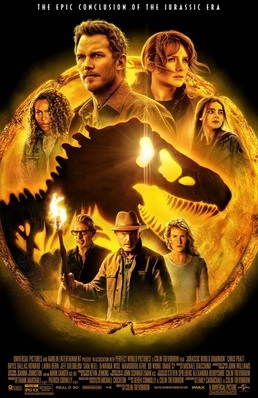
undefined

From my review:


I've said this before, but I am very easy to please as a moviegoer.  I am willing to forgive a lot as long as the movie can make me feel something, whether it is wonder, awe, fear, excitement, romance, or humor.  But if you fail to make me feel anything, then your movie is a failure.

And that is the case with Jurassic World: Dominion.

...

So the good news is that you get two Jurassic movies for the price of one.

The bad news is that both movies are terrible.

...

All movies have logic problems, but we forgive them because we invest in the story.  But if we don't invest, we don't forgive.  It's hard to explain how asinine the story elements are so

WARNING: SPOILERS BELOW

-lumberjacks immediately listen to a 12-year-old they don't know about how to handle dinosaurs.

-Blue is reproducing asexually in the wild.  This means that she must immediately be captured or killed because the deadly raptors cannot remain unchecked.  No one brings this up.

-Only our heroes find it suspicious that the Megalocausts don't eat the crops made by the bad guys.

-Maisie is the clone of Charlotte Lockwood.  We find out that Charlotte made Maisie and gave birth to her, thus making her the mother of her own clone.  I turned to my wife during the movie and said "Is it me or is this absolutely grotesque."  But no, it is meant to be a heart-warming moment.

-why would guest lecturer like Ian be given access to a top-secret lab?

-Maisie is told that her and Beta's DNA can be used to save the world from the Megalocusts.  Her response is to run away and set Beta loose.  At the end of the movie, with no new revelations or motivation, she agrees to help.

-Claire gets hunted by an herbivore

-the sealed off lab with the Megalocusts has it attached to a large vent that they can swarm out of and into the park.

-some dinosaurs have vision based on movement until they don't.

-Awful Tech-, sorry, BioSyn hits a button that recalls all of the dinosaurs into the main campus out of the park.  And yet, it doesn't effect the dinosaurs that have to remain to kill someone the plot wants dead.

-Why do the T. Rex and the FreddyKrugersaurus team up Tag Team Style?  They use the same trope in the original Jurassic World, but this fight was so unearned that it defies logic.


4. The Lost World: Jurassic Park

undefined

I give credit to Spielberg that the wanted to do something different than his first film.  He compared this movie to Hatari, which is about hunting and the struggle against nature.  There is something to that.  

From my review:

Jurassic Park is a incredibly tough act to follow.  If the second one was not as good as the first, I would completely understand.  But it wasn't just a matter of having a slightly worse sequel.  The Lost World is dark in a way that the original was not.  Sure, people got torn apart and eaten, with some incredibly scary moments in the first.  But Lost World lacked a lot of the humanity that we had in Jurassic Park.

One of the things that the first movie did very well was that it reduced the cast at the crucial time.  Instead of the island populated with a lot of nameless extras, the mayhem occurs around people you know and mostly care about.  We even feel fear for the villainous Dennis Nedry.

But Lost World fills the story will people we never get a chance to care about.  These people are dinosaur fodder waiting to be killed in interesting ways.

The movie lacks a sense of moral balance.  The Vince Vaughn character is an eco-terrorist who gets nearly everyone on the island killed.  And yet he is never given his comeuppance or even forced to understand the horror of his actions.  

True, there are some genuine thrills, but there is no heart.

3. Jurassic World: Rebirth

undefined

From my review:


When it comes to the Jurassic Park franchise, hope springs eternal.  I think it is safe to say that most of the movies in this series are not very good.  And yet people keep coming back again and again hoping for the thrills and the awe of the first.

And while Jurassic World: Rebirth is not the worst in the series, it isn't great either.

I will say this, I got my money's worth because of the thrills the movie provided.  When Ruben's sailboat gets attacked and someone is plunged underwater with the giant Mosasaur, that hits me on a primal level of fear.  Watching that same person swim for their life as the dinosaur gives chase also gripped me.  This and the sequence where a T-Rex comes after people doing down river in a life raft was something right out of the original book.  In 3D, there is a cliff rappelling scene that also put a pit in my stomach.  3D is great for giving a sense of height and I am terrified of heights.

For those reasons alone, I enjoyed myself while watching the movie.

But the movie has serious flaws, many of which may be too much for the average viewer.


2. Jurassic World

A man in a motorcycle rides through a forest, accompanied by raptors running beside him.

From my review:  

You can find hundreds of fan films on YouTube.  A "fan film" is when people who are devoted to the original story make their own movie set in that world.  In these fan films we see a deep devotion to the source material even though it usually cannot capture the magic of the original.


And that is what I see in Jurassic World: the biggest budgeted fan film ever.

Director Colin Trevorrow's love for the original Jurassic Park is evident in nearly every frame of the film.  As someone who saw the movie 5 times in the theater back in 1993, I was swept up in the love and nostalgia that I saw on the screen.  


This movie was able to get the thrills along with the wonder and awe that had missing from this series for a long time.  It isn't perfect, but it made me come back to the theater to see it again.

1. Jurassic Park
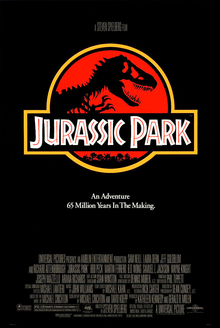
A black poster featuring a red shield with a stylized Tyrannosaurus skeleton under a plaque reading "Jurassic Park". Below is the tagline "An Adventure 65 Million Years in the Making".


From my review:


This could have been a simple monster movie.  And if you look at many of the sequels (including Spielberg's own The Lost World), you can see how quickly it can fall down that rabbit hole.

But Jurassic Park holds such a high place on this list because Spielberg didn't just terrify us.  The scares were real, but they came from a place of pure awe.

The opening scene is a work of genius where so much is communicated without a word having to be said.  The utter terror of the workers as they get ready to place the raptor in the cage is enough to scare you without any violence being shown.  The dramatic lighting makes the experience of the dinosaurs less a scientific experiment gone wrong.  Instead it feels more like a supernatural experience of contacted something from another world, as in Poltergeist.

I remember being in the theater on opening night, not knowing exactly what to expect.  But it is around the 17-minute mark that the whole world opens up.  

Spielberg gives you that incredible sequence of the helicopter arriving to the island.  Just as those green mountains appear, John Williams' genius score swells.  Much credit must be given to Williams here for creating such a majestic melody, but it is Spielberg who marries the visuals to the music.  How many movies have scenes like this where the helicopter arrives and yet they are as forgettable as they are bland.  Here, Spielberg in announcing himself and he is announcing Jurassic Park.  This beginning sequence does not have any dinosaurs, and yet you are filled with a sense of ancient awe.  He tries to capture the feeling you have of leaving the old world behind and entering Fairyland.  It is the equivalent of Dorothy opening the door from her black and white world to the technicolor MunchkinLand.  

But just four minutes later, Spielberg hits us with the first real look at the dinosaurs and they are awesome in the literal sense.  The YouTube channel "Film&Stuff" points out Spielberg's genius in choosing the aspect ratio that he did for this film.  Normally, aspect ratio would be a super-technical, superficial area to talk about for general audiences.  But Spielberg knew he needed to choose an aspect ratio that was not ultra-wide, but instead one that had a greater height to width ratio.  The reason for this was so that he could capture the dominating height of the dinosaurs and put the humans into diminutive scale next to them.  It is a subtle choice, but one that is incredibly affective.  The entire movie, Spielberg puts the humans in the position of ant beneath the boot-heel of the dinosaurs.

That isn't to say that it they are all fearsome.  The moment with the sick triceratops is amazing.  The best part about it is how Spielberg films the scene with such tactile intensity.  You watch as the characters touch this once-extinct creature.  The pure joy of watching Grant rise and fall on the breathing creature makes you feel as if you could almost reach out and touch it yourself.

A lot of credit has to go to screen-writers Michael Crichton (based on his book) and David Koepp.  Unlike a lot of big budget movies today, Spielberg knows how to use the script to build up the tension.  Notice we don't see any of the scary dinosaurs (not counting the baby raptor) until over an hour into the film.  

Before this, we have lots of character building with fantastic dialogue and snappy jokes.  Don't overlook how hard it is to film dialogue to make it visually interesting. He has a four-minute philosophical conversation about cloning that is as richly framed and lit as any scene in the film.  And even after that, he still won't show you everything yet.

He teases you the way he did with the shark in Jaws.  But those teases are promises.  The movie builds story debt that it pays off.  It explains how raptors hunt, it teases the spitting dilophosaurus, it leaves the helpless goat in front of the T-Rex paddock.  In fact, I remember so clearly that awesome cut when Hammond asks "Where did the vehicles stop?" and it cuts immediately to the goat.  Everyone in the theater groaned in fear.  And even then, Spielberg let the fear build deliciously.  The visual cue of the water vibrating is beautiful and affective.  In order to get the effect, they had to tighten a single guitar string under the cup.  They would pluck it because it was the only way to get that exact surface ripple that makes the perfect visual.  

And once the T-Rex appears, the entire movie is pandemonium.  That scene alone should have gotten him a second Oscar nomination that year.  If you want to see someone who knows when to use a practical effect and CGI and how to blend them seamlessly, watch that scene.  The shot where Lex turns on the flashlight and the T-Rex sees it is genius as Spielberg has a real dinosaur head in the shot and then moves the camera to seamlessly replace it with a CGI copy.  The effect of this is that makes the computer animated monster more concrete.

The entire scene is contracted with such tense genius that you can hardly look away.  In fact, it is so well-done that Spielberg doesn't need to use any of John Williams' score to heighten the emotion.  In fact, the lack of score makes it more intense.  The only "music" we hear are the screams and roars of the people involved.

And even in all of this, the sense of awe is never lost.  This is what the other Jurassic Park films were never quite able to have.  In Jurassic World: Fallen Kingdom, we are supposed to empathize with the trapped dinosaurs at the end of the movie and so understand the inexplicable choice of the little girl.  But that movie reduced dinosaurs to animal monsters so the feeling never materializes.  But here, even in the worst moments, there is a sense of respect for nature.  In the scene where the T-Rex is hunting the gallimimus, the humans are utterly captivated by seeing this apex predator live out its nature.

The scariest sequence is by far the scene in the kitchen.  Again, notice how the situation deteriorates so quickly.  The two kids should be safe, they've made it back to the main building and are gorging themselves on deserts.  But now, they are alone for the first time since Gennaro left them in car.  Grant cannot help them.  The monster comes to the window of the kitchen.  I cannot tell you how many people jumped when it fogged up the glass.  Then it figures out how to open the door.  And then not one, but two raptors enter.  This scene is also the best one that holds up the main theme: man vs. nature.

The dinosaurs ruled the world and now humans are the dominant species.  As Grant says, what will happen when the two are put together.  We've spent the entire film watching the dinosaurs tear apart humans.  But the only things the humans have to defend themselves are their wits.  The entire scene is about out-thinking the dinosaurs and will that be enough to save them.

Everything builds to a head until that final moment when T-Rex comes in to "save the day." The moment is the punctuation on the theme which says that nature always wins.  But nature is not malevolent, it is merely indifferent.  The T-Rex is not there to save the humans.  It is only hunting.  And by acting according to its nature, the T-Rex claims its dominance.  I know some find that moment hokey when the banner saying "When Dinosaurs Ruled the World" falls before the T-Rex, but I always loved it as a perfect, if not unsubtle, point.

Jurassic Park is a perfect popcorn film.  And I don't mean that as a detriment.  Spielberg does not dumb down the material but he makes it accessible to everyone.  It is filled with visceral thrills, deep questions, thrilling visuals, and real heart.  After almost three decades it has not lost a single ounce of its power.  When the heroes fly off into the sunset, you feel as though you have been through an epic journey and through it all you have been changed.

Dare I say... evolved.


Thoughts?

Tuesday, July 15, 2025

Film Review: Jurassic World - Rebirth


Sexuality/Nudity Mature

Violence Acceptable

Vulgarity Acceptable

Anti-Catholic Philosophy Mature


When it comes to the Jurassic Park franchise, hope springs eternal.  I think it is safe to say that most of the movies in this series are not very good.  And yet people keep coming back again and again hoping for the thrills and the awe of the first.

And while Jurassic World: Rebirth is not the worst in the series, it isn't great either.

The story takes place after the events of Dominion.  Most dinosaurs have died and the ones that survive are in tropical places along the equator.  Martin Krebbs (Rupert Friend) hires mercenary Zora Bennett (Scarlett Johansson) to go to a defunct research island to get the DNA from the three largest dinosaurs so that they can unlock the key to fixing heart disease.  The bring along Dr. Henry Loomis (Jonathan Bailey), a dinosaur expert, to come along with them.  They then charter a boat with Zora's friend Duncan Kincaid (Mahershala Ali).  However, divorced father Ruben Delgado (Manuel Garcia-Rulfo) is sailing with his young daughter Isabella (Audrina Miranda), his teenage daughter Teresa (Luna Blaise) and her boyfriend Xavier (David Iacono).  But when they are attacked by a Mosasaur, Zora and her team rescue them and take them on the mission where things go wrong quickly.

I will say this, I got my money's worth because of the thrills the movie provided.  When Ruben's sailboat gets attacked and someone is plunged underwater with the giant Mosasaur, that hits me on a primal level of fear.  Watching that same person swim for their life as the dinosaur gives chase also gripped me.  This and the sequence where a T-Rex comes after people doing down river in a life raft was something right out of the original book.  In 3D, there is a cliff rappelling scene that also put a pit in my stomach.  3D is great for giving a sense of height and I am terrified of heights.

For those reasons alone, I enjoyed myself while watching the movie.

But the movie has serious flaws, many of which may be too much for the average viewer.

First of all, the acting is very flat.  Johansson is a very good actress, but it feels like she is sleepwalking through this movie for a paycheck.  The same is true for most of the cast.  I wouldn't say that the performances are necessarily bad, but they are also nothing exceptional.  That's not entirely the fault of the actors.  The characters have no real depth.  Evil guy is obviously evil.  Good-guy scientist is there to be the Jiminy Cricket of the group.  He even goes so far as to say that it is a sin to kill a dinosaur.  Which, if you will pardon me, seems like much less of a sin than allowing a human being to be eaten.  

Plot-wise, when they get to the island, the Delgados are separated from the main group and the two stories have almost nothing to do with each other.  It's almost as if they are two separate movies that are woven together, but don't mesh very well.  

This is also one of those sci-fi movies where characters do things that make no sense for the sake of the plot.  As they are racing towards the island, their boat is being chased by predator dinosaurs.  Teresa falls into the water and Xavier dives in after her.  Ruben then tells Isabella that they have to jump into the water because the boat is going to crash and Teresa is in the water.  

Excuse me?

Replace dinosaurs with sharks and tell me what human being would ever jump into those waters with his little child because the boat is going to crash (on the beach)?  How does that make any sense?  It was done purely so that they two groups can be separated.  

Also, a Snicker's bar wrapper destroys an entire security system.

One of the biggest drags on the story for me is Xavier.  He is so inherently unlikeable.  But then he will suddenly become heroic because that's what the script needs him to do in that moment.  I don't mind characters with contradictions, because people are messy and complicated.  However, Xavier's actions don't comport with his character at all.  He is not a deep person with a shallow persona, like Tony Stark.  He is a shallow person who inexplicably acts heroically.

Okay, this last part is something that may be very particular to me, but it soured me a lot on the characters.  When we are first introduced to the Delgado family, it is very heavily implied that Ruben's teenage daughter Teresa is having sex with her boyfriend on the same boat that Ruben has also brought his young daughter Isabella.  And Ruben just kind of bites his tongue and lets Xavier have his run of the boat.  I could not help but be disgusted by this failing of fatherhood.  Leaving aside that he is allowing his daughter to fornicate on his own boat, but to do so in the presence of his younger daughter seems unconscionable.  This led me to care less about the characters than I should have from the beginning.

Again, despite its flaws, this movie is better than the previous two Jurassic movies, though admittedly, that is a very low bar.  But if you want to watch a movie with some fun, mindless thrills, Jurassic World: Rebirth may be worth you time and money.


Monday, July 14, 2025

New Evangelizers Post: Elements of the Gospel of Mark


I have a new article up at NewEvangelizers.com.  

When studying the Bible, there is a vast wealth of scholarship and commentaries over the centuries. Because of this, it can be daunting to know where to begin.

The Gospel of Mark is the shortest of the four Gospels. Many scholars believe that it is the first Gospel ever to be written. When teaching the New Testament, I find that it is very helpful to begin teaching my students the story of Jesus through Mark’s Gospel.

Here are a few elements of Mark’s Gospel to keep in mind as you begin to study this work.

1. MARKAN PRIORITY
“Markan priority,” refers to the idea that Mark was the first of the Gospels written. We date Mark’s Gospel to after the year 70 AD because his Gospel references the destruction of the 2nd Temple, which happened in the year 70 AD. If Mark included that and the Temple had not already been destroyed, it would have been very problematic. It was probably written to Christians in Rome. Raymond Brown points out that his Greek sometimes borrows Latin expressions, which would imply that his primary audience was Latin speakers like the Romans.

His focus on suffering would coincide with their lived experience of surviving the persecutions under Emperor Nero. These Christians suffered greatly, and the Gospel portrait of Jesus focuses heavily on His suffering and how it is an essential part of the Gospel message, but with absolute hope in the Resurrection.

2. MANY LAYERS
The Gospel portrait of Jesus in Mark has many layers. First, He is the Son of God, as expressed in major ways at His baptism, the Transfiguration, and by the Centurion at the cross. Jesus is the Son of Man, which is a reference to the Book of Daniel. This emphasizes Jesus’ humanity and how He is the one who will bring about the kingdom that shall never be destroyed. Jesus is a servant Messiah.

The Jewish expectation was that the Messiah would bring about a “basileia” similar to that of the Romans, except the Jewish nation would be on top. This means that the Messiah would be a warrior who would subdue the enemies of Israel. Instead, He is a Messiah who serves others with (as the notes state) the simplicity and defenselessness of a child. He is also a suffering Messiah. This was scandalous in the ancient world.

3. CORE OF THE GOSPEL
The Core of Mark’s Gospel is in the center from Mark 8:22 through Mark 10:52. It is bookended by the healing of blind men. It starts with the healing of the blind man at Bethsaida and ends with the healing of Bartimaeus at Jericho.

Throughout all of these, Jesus is pointing to the cross, but the disciples are slow to understand. They either deny the cross or are focused on who is the greatest among them. But as we see in Bartimaeus, he casts off his cloak, representing his possessions. He is healed and then follows Jesus up to Jerusalem where He will be crucified. That is because for Mark, the disciples truly see when they give up everything and follow Jesus to the cross.

In Mark 10:45, Jesus says, “For the Son of Man came not to be served, but to serve and to give His life as a ransom for many.” Jesus is flipping the script of expectations. The leaders are to be servants, because that’s what He is doing. To follow Him is to be a servant who eventually gives everything away.

But for Mark, this is so important that the last 6 chapters of his Gospel (which is only 16 chapters long) is dedicated to the week leading up to and including His Passion, death, and Resurrection. This is to show us that the cross is at the heart of the Gospel. Jesus tells His disciples that they have to deny themselves, pick up their cross and follow Him. In other words, they have to give their lives away for the sake of the Gospel.

You can read the whole article here.